



SAN FRANCISCO — While much of the attention surrounding autonomous trucking has focused on long-haul highway operations, one technology startup is taking a different approach: Humble Robotics is developing driverless, electric Class 8 trucks specifically for regional freight transportation.
The company announced Nov. 5 that it has raised $51 million in Series A funding to advance its technology and prepare for commercial deployment. The investment brings the San Francisco-based company’s total funding to $75 million less than a year after its founding.
Rather than concentrating on long-haul routes, Humble is targeting freight movements of less than 250 miles, particularly those connecting ports, rail terminals, warehouses and distribution centers. According to the company, these shorter routes account for 87% of US truck tonnage, representing a significant opportunity for autonomous and electric freight technology.
Why start with regional freight?
Regional operations present a different set of opportunities and challenges than long-haul trucking.
Routes connecting established freight facilities often involve repeated trips between known locations. Those relatively predictable movements could make it easier to plan vehicle operations, establish charging schedules and evaluate autonomous technology under specific operating conditions.
Electric trucks also may be better suited to operations that allow vehicles to return regularly to established facilities for charging, rather than depending on public charging infrastructure along interstate corridors. Humble says its vehicles are designed to use existing charging infrastructure wherever possible, and they can recharge at depots while freight is being loaded.
However, shorter distances don’t necessarily mean simpler operations.
Vehicles serving ports and distribution centers must navigate crowded facilities, loading docks, tight turns and interactions with other vehicles, equipment and workers. Humble says its technology is designed to handle those challenges, including the complex maneuvers required for dock-to-dock freight transportation.
Building the truck and technology together
Rather than installing autonomous driving systems on conventional diesel trucks, Humble is developing its vehicles and autonomous technology as an integrated system. The company calls its approach “unified autonomy,” combining vehicle design, autonomous driving software and operational requirements from the beginning of development.
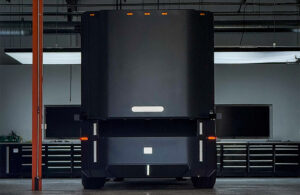
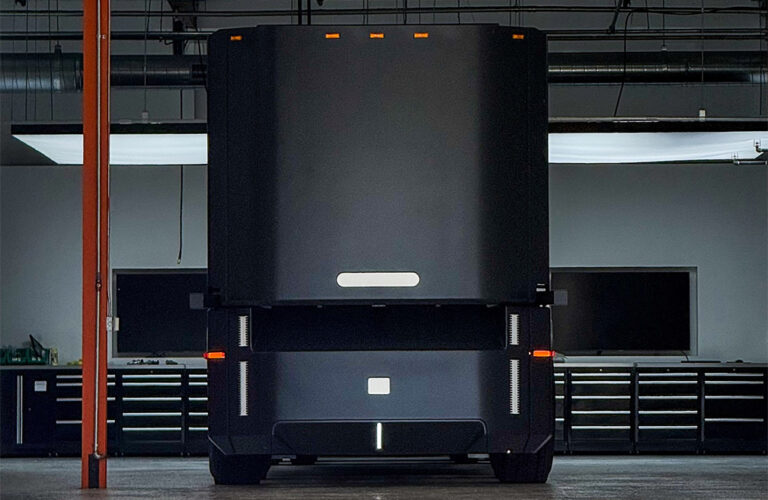
Its fully electric Humble Hauler is a purpose-built Class 8 vehicle designed to transport freight without a conventional driver’s cab. The vehicle uses a combination of 360-degree cameras, lidar and imaging radar to monitor its surroundings, along with redundant safety controls designed to support operations under varying conditions, including darkness and adverse weather.
Humble says its autonomous driving software uses a vision-based artificial intelligence model with safety constraints and rules tailored to customers’ operating environments.
The company’s modular vehicle platform also is designed to support different configurations and freight applications without requiring an entirely new vehicle design for each operation.
According to Humble, integrating the vehicle and its autonomous technology from the ground up could provide advantages over retrofitting conventional trucks, particularly when it comes to operating costs, maintenance and vehicle utilization.
Those benefits, however, will need to be demonstrated as the technology moves into commercial operations.
Potential benefits for freight operators
Humble identifies several potential advantages of combining autonomous driving with electric propulsion. Without a traditional driver’s cab, the company says its vehicles could provide additional room for freight. It also points to the federal weight allowance for electric trucks as another potential payload advantage, depending on vehicle configuration and applicable weight limits.
The company believes electric propulsion could reduce fuel and maintenance expenses, while autonomous operation could allow vehicles to remain in service for longer periods.
Humble also says its vehicles could help address driver availability challenges in the freight industry.
However, actual cost savings and operating efficiencies will depend on factors such as vehicle acquisition costs, charging infrastructure, maintenance requirements and the ability of autonomous systems to operate reliably in real-world conditions.
Preparing for commercial deployment
The $51 million funding round was led by Obvious Ventures, with participation from existing investors Eclipse, Energy Impact Partners and others.
Humble plans to use the investment to support customer pilot programs, testing and validation, early manufacturing and development of additional vehicle configurations. The company is also working with customers, industry partners and regulators as it prepares for commercial deployment.
“We’ve spent years proving that a truck can drive itself,” said Eyal Cohen, founder and CEO of Humble Robotics.
Cohen, who has experience with autonomous vehicle development at Apple and Uber, leads a team whose members have worked on projects at companies including Tesla, Waymo and Cruise.
Although Humble has developed its initial vehicle, the company has not announced a specific timeline for widespread commercial operations or identified the routes where its trucks will be deployed.
Questions remain about how autonomous electric vehicles will perform under everyday freight conditions, particularly in complex logistics environments where vehicles must interact with workers, equipment and conventional trucks.
For carriers and logistics providers, however, the regional approach offers a potential way to evaluate autonomous and electric transportation within defined operations before considering broader adoption.
And while long-haul autonomous trucking continues to attract significant attention, Humble’s strategy highlights another possible path for introducing the technology into commercial freight transportation: starting with shorter routes and expanding as the systems demonstrate their capabilities.

Linda Garner-Bunch has been with The Trucker since 2020, picking up the reins as managing editor in 2022. Linda has nearly 40 years of experience in the publishing industry, covering topics from the trucking and automotive industry to employment, real estate, home decor, crafts, cooking, weddings, high school sports — you name it, she’s written about it. She is also an experienced photographer, designer and copy editor who has a heartfelt love for the trucking industry, from the driver’s seat to the C-suite.