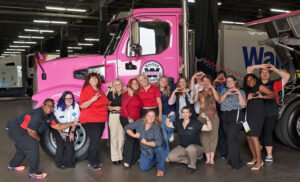




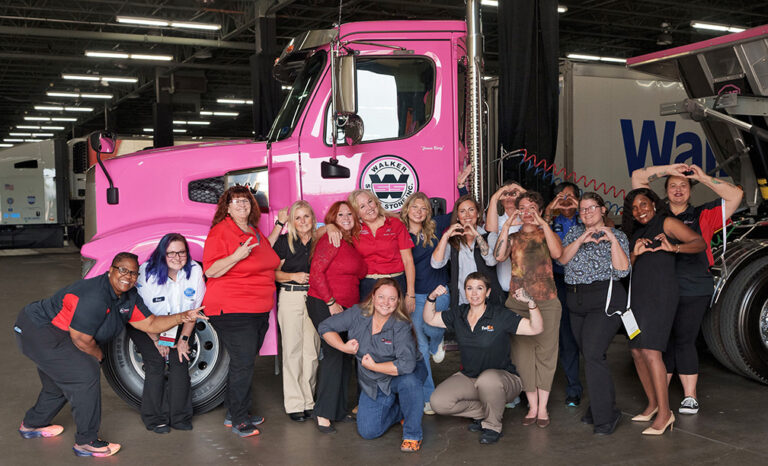
DALLAS — When 19-year-old Jenna Walker pulls up in her hot-pink Western Star, she doesn’t have to tell anyone she’s a young woman making her mark in the trucking industry. Her truck makes quite an introduction on its own.
But Walker, a third-generation member of her family’s trucking business, Walker Sand & Stone, wants people to look beyond the paint job and recognize the professional behind the wheel.
“I’m not sitting here telling you I’m a woman driving. I just show it,” she said. “I don’t have to sit here. It’s happening, it’s been happening, and it’s gonna keep happening.”
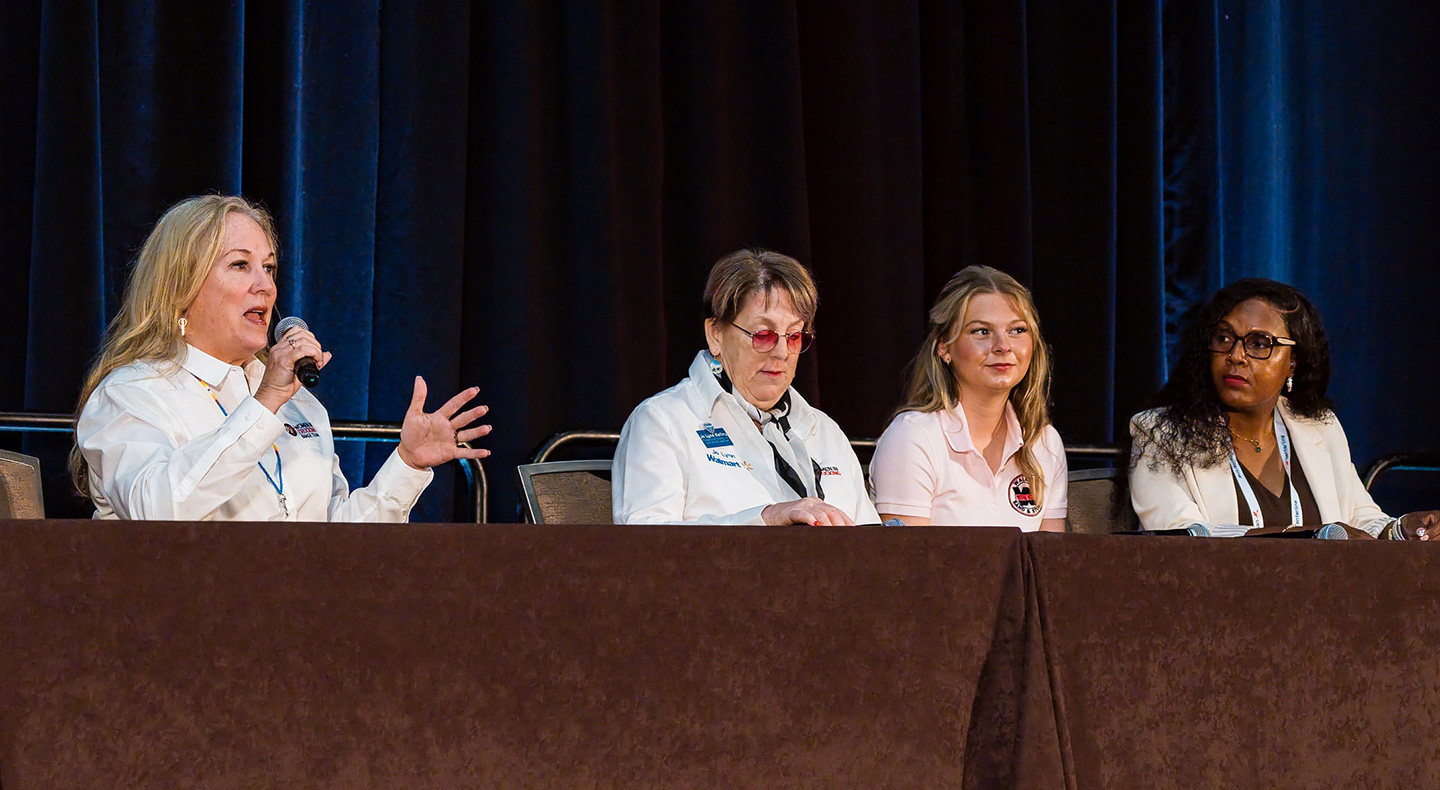
Walker was among three professional drivers who shared their experiences during an “Ask the Driver: Real Conversations with the WIT Image Team“ panel at the Women In Trucking Association’s 2026 Accelerate! Conference, held in October in Dallas.
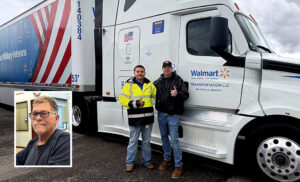
Joining Walker were Jo Lynn “JJ” Kelley of Walmart Transportation and Shawnta Wortham of Boyle Transportation. The discussion was moderated by KellyLynn McLaughlin, a professional driver with Clean Harbors and former WIT Driver Ambassador.
Representing different generations, career paths and types of trucking operations, the women challenged misconceptions about the profession while offering candid perspectives on safety, health, career opportunities and the relationship between drivers and motor carriers.
More than miles
One misconception the panelists were quick to challenge was the notion that truck driving involves little more than sitting behind the wheel and moving freight from one location to another.
“I wish driving was just sitting behind a wheel,” Walker said, explaining that professional drivers must remain constantly aware of their surroundings and the potential consequences of even a small mistake.
For Walker, who drives for her family’s business while also working in its operations, that responsibility extends to protecting the company’s reputation and ensuring the safety of employees, customers and other motorists.
Kelley, who spent three years driving for Schneider before joining Walmart’s private fleet, emphasized the constant concentration and awareness required of professional drivers.
“A lot of my job is mental,” she said, noting that professional drivers must account for motorists who lack their training and experience. “I constantly need to remind myself that I am the professional out there.”
McLaughlin, who transports hazardous materials throughout the U.S. and Canada, pointed out that driving represents only part of her workload. Inspections, other non-driving duties, recurring safety training and keeping up with regulations all demand time and attention.
The panelists also rejected the idea that truck driving isn’t a legitimate career with opportunities for advancement.
Wortham, who began driving professionally in 2017, has worked as a company driver, lease operator and owner-operator. Along the way, she purchased her own truck and trailer and established her own operating authority.
Walker noted that experience behind the wheel can also lead to positions in safety, operations and other areas of the transportation industry.
The challenges no one sees
While the panelists agreed that professional driving offers rewarding opportunities, they had differing opinions about the physical and mental health challenges associated with life on the road.
Wortham emphasized the importance of personal responsibility, including proper nutrition, exercise and maintaining a positive outlook.
“Trucking do not make people unhealthy. We make ourselves unhealthy,” Wortham said, arguing that workers in many other occupations face similar challenges.
McLaughlin respectfully disagreed, pointing to the long hours, high-stress situations and difficult working conditions that can make healthy habits harder to maintain.
“I found it incredibly hard to stay healthy and be a driver,” McLaughlin said.
Kelley offered a personal perspective, acknowledging that she’s gained weight during her trucking career and that she’s struggled with both physical and mental well-being, particularly during her first three years, when she lived in her truck while traveling throughout the 48 contiguous states.
“I have, throughout my career, found it incredibly challenging to maintain health, as well as mental health,” Kelley said. She also spoke candidly about experiencing significant emotional lows during her years on the road.
The discussion highlighted an important reality: Although drivers can make choices to support their health, the demands of trucking can make those choices difficult to put into practice.
Closing the communication gap
When the conversation turned to relationships between drivers and motor carriers, the panelists agreed that understanding needs to flow in both directions.
Kelley said she’d like more dispatchers, fleet personnel and other support staff to experience life on the road firsthand. At the same time, she believes drivers can benefit from learning more about the work that happens behind the scenes.
During her time with Schneider, Kelley arranged to spend time with dispatch, fuel and maintenance personnel at the company’s headquarters in Green Bay, Wisconsin. The experience helped her better understand how different departments work together to keep trucks moving.
“I think there’s just a communication gap between all the pieces of the puzzle,” Kelley said, emphasizing that each plays a necessary role in the transportation process.
Walker, who also participates in the business side of her family’s operation, offered a similar perspective.
Keeping trucks moving involves much more than assigning loads, she explained. Dispatchers and other personnel must manage customer expectations, fuel costs, equipment availability, changing road conditions and the constant challenge of minimizing empty miles.
Wortham brought an owner-operator’s perspective to the discussion, noting that increasing fuel prices and other expenses can make it difficult for independent operators to remain profitable when freight rates fail to keep pace.
The drivers also discussed what makes a carrier a desirable place to work.
For Walker, equal treatment and opportunities are essential. Wortham agreed, adding equal pay to the list of priorities. Mentorship, supportive company policies and practical assistance — including reimbursement for parking and other expenses — were also part of the conversation.
Making room for the next generation
Throughout the discussion, the importance of mentorship emerged as a common theme.
Wortham credited several people who helped guide her career, including experienced drivers and the woman who trained her when she entered the industry. Rather than naming a single mentor, she described those who provided encouragement and guidance at critical moments as “angels.”
Today, Wortham is helping other women explore opportunities in trucking, including a prospective driver who wanted to change careers but wasn’t sure where to begin. Her advice to that would-be driver included researching potential employers, asking questions and, when possible, visiting a carrier’s facilities before committing to a training program.
Walker hopes to encourage young people who might never have considered trucking as a career. Through social media and her work with the WIT Image Team, she wants to demonstrate that age and gender need not prevent someone from pursuing opportunities in transportation.
“I just want to keep showing young girls and any woman who wants to get in this field or any field they think is too hard for them … that they can do it,” she said.
For Kelley, joining the WIT Image Team offers another opportunity to share what she’s learned throughout her career — including both the successes and the struggles.
“Hopefully, all my experiences, whether they be positive or negative, will spark someone to do something that they think they cannot do,” she said.

Linda Garner-Bunch has been with The Trucker since 2020, picking up the reins as managing editor in 2022. Linda has nearly 40 years of experience in the publishing industry, covering topics from the trucking and automotive industry to employment, real estate, home decor, crafts, cooking, weddings, high school sports — you name it, she’s written about it. She is also an experienced photographer, designer and copy editor who has a heartfelt love for the trucking industry, from the driver’s seat to the C-suite.