



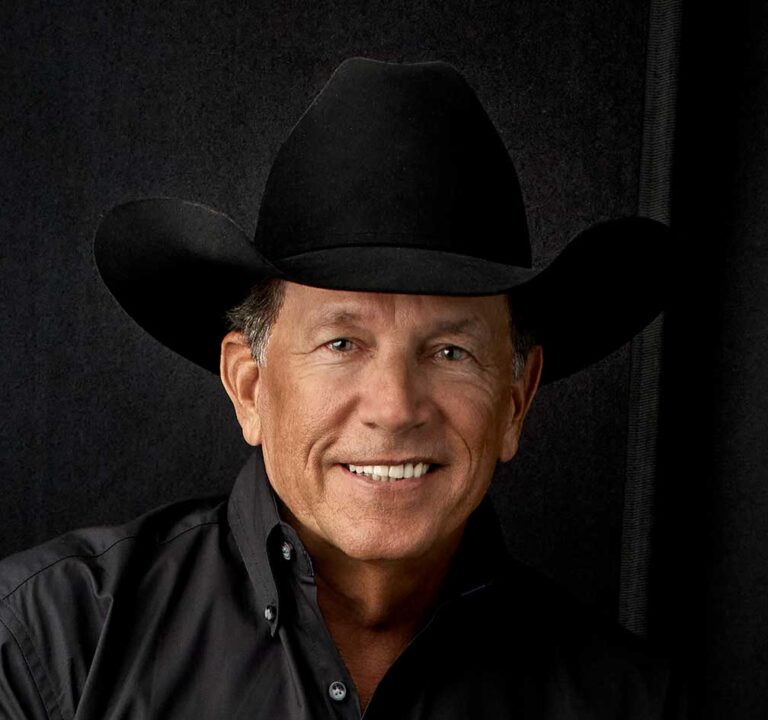
In Rodney Atkins’ 2011 hit “Take a Back Road,” he makes mention of the comeback of classic country music in the early 1980s. While sitting in “six-lane backed-up traffic,” Atkins sings about how his mind transforms the freeway into a back road when the radio plays “a little George Strait 1982.”
Return to ‘Strait Country’
Let’s take a minute to review the music Strait recorded in 1982 — and how some of those “B” side songs that never became singles have become ingrained in so many hearts, representing a resurgence in a day when country music seemed lost.
At the dawn of 1982, George Strait was still getting his start and gaining traction from his first album “Strait Country,” released on Sept. 4 of the previous year.
This album — one that’s best remembered for the hit songs “Unwound,” “If You’re Thinking You Want a Stranger” and “Down and Out” — is rounded out with seven other singles that never made it to the radio airwaves. Looking back, more than one could have become a hit song, but that was the nature of the music business. It just wasn’t in the cards to release more than three or four songs from one album … especially for an “upstart” artist like Strait was at the time.
Perhaps the best song NOT released from “Strait Country” (and arguably the best song on the album) is “Blame it on Mexico.” The tune, one Strait performed live before he ever earned a recording contract, recalls the aftermath of an evening the narrator spent in a Mexican bar with a young lady: “One thing led to another in the evening.” The chorus from the song offers classic lyrics that would have served Strait well on commercial radio:
“Blame it on Mexico, if you need a reason,
Say too much guitar music, tequila, salt and lime.
Blame it on Mexico, but she’s the reason
That I fell in love again for my last time.”
I’ll always think of “Blame it on Mexico” as “the one that got away” for Strait.
The album includes a few more tunes, two of which are memorable for their humorous outtakes. Chances are neither would have ever been a hit, as they border on almost being novelty songs, a form of music for which Strait has never been known. Even so, with titles like “Every Time You Throw Dirt on Me (You Lose a Little Ground)” and “She’s Playing Hell Trying to Get Me to Heaven,” the tunes offer hilarious looks at relationships and what keeps them together.
As for 1982, the year was notable for Strait. He’d become THE up-and-coming artist that all of country music was watching. His signature Resistol hat and cowboy boots were a return to country music’s past, and his live performances paid homage to Texas music and the likes of Bob Wills, the King of Western Swing.
Singing ‘Strait from the Heart’
But Strait’s albums, along with his concerts, proved the singer’s versatility as he gained favor among country music fans. The release of his second album, “Strait from the Heart,” on June 3, 1982, gave listeners seven more Strait originals, four of which were singles: “Fool Hearted Memory,” “Marina Del Rey,” “Amarillo by Morning” and “A Fire I Can’t Put Out.”
Inarguably — at least to my thinking — “Amarillo by Morning” is the song from Strait’s second album that had the most lasting impact on country music. This is another song he was performing in concert long before he ever landed a recording contract. The rather short tale tells of a rodeo cowboy who’s making the long trek from San Antonio to Amarillo in an overnight trip in hopes of entering yet another contest. The now-classic lyrics, “I’ll be looking for eight when they pull that gate, and I hope that judge ain’t blind,” helped the song become a standard-bearer among country singles.
Many online lists that claim to rank the best country songs of all time place “Amarillo by Morning” in the Top 10, and the tune is one of Strait’s multiple signature pieces. “Marina Del Rey” and its sultry lyrics perhaps run second from the “Strait from the Heart” album, while “Fool Hearted Memory” is a typical example of a smooth George Strait country song with instrumentals and lyrics that please the senses.
Other songs from “Strait from the Heart” that are worthy of note include “I Can’t See Texas from Here” and “Heartbroke.”
The first, one of the few songs actually written by George Strait, is somewhat biographical if you consider Strait’s upbringing in the Lone Star state. He notes how no matter where he is, “from down here, up North and in-between,” it’s a shame because, “I can’t see Texas from here.” It’s one man’s perspective of what being outside of Texas does to the soul of one born and bred in the state.
“If you see me looking down, I’m trying not to show this frown,” shows the singer doesn’t want people to recognize his homesickness. He continues, “I can’t say I don’t like Tennessee. The people here have all been good to me,” offering insight into the idea that his yearning for Texas isn’t anything that can be blamed on anything — except maybe Texas itself. “Please don’t take offense, if I start to get intense; it’s just ’cause I can’t see Texas from here” is a lyric that sums up the attitude of the singer as he tours the country.
“Heartbroke” is Strait’s western swing-style cover of a song that’s been recorded by many artists, perhaps most notably Ricky Skaggs. Skagg’s version, coincidentally, was released in 1982. Whether Strait and his producers knew that Skaggs was going to release “Heartbroke” as a single isn’t known.
But back to my original topic….
All in all, when Rodney Atkins refers to “a little George Strait 1982,” he’s recalling some of the best music ever recorded by a young, yet-unproven singer.
The style of those early Strait recordings begins to fade around 1985, as future albums become more refined and Strait leaned into songs that become staples of a career that, to date, has seen 60 No. 1 hits — a record for all forms of music. No doubt, he’s recorded another 60 tunes that could have reached the top spot on the charts if only time and the music business had allowed.
Until next time, like I always say, keep an eye on those “B” side recordings. There are gems in the rough to be discovered.

Since retiring from a career as an outdoor recreation professional from the State of Arkansas, Kris Rutherford has worked as a freelance writer and, with his wife, owns and publishes a small Northeast Texas newspaper, The Roxton Progress. Kris has worked as a ghostwriter and editor and has authored seven books of his own. He became interested in the trucking industry as a child in the 1970s when his family traveled the interstates twice a year between their home in Maine and their native Texas. He has been a classic country music enthusiast since the age of nine when he developed a special interest in trucking songs.