



Spring is just around the corner — the time of year that even those who love winter’s cold, snow and ice often look forward to. The days are warmer, the sun is just a bit brighter, the flowers are starting to bloom and those frozen roads are starting to thaw. That means easier driving, especially for over-the-road truckers.
Keep in mind, however, that winter isn’t a “here one day, gone the next” kind of season.
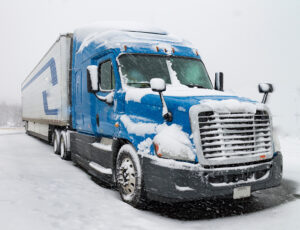
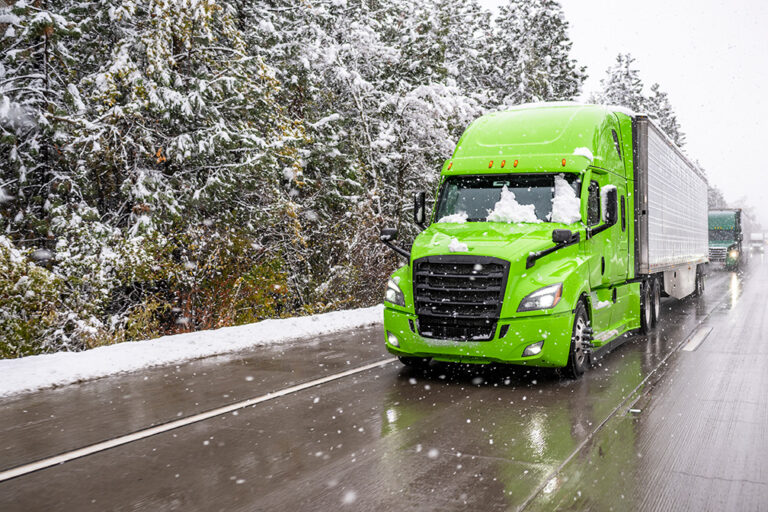
Even after the first day of spring (March 20), temperature fluctuations can transform a gentle spring rain into black ice, sleet or snow without warning. State highway departments can be caught by surprise by spring snowstorms, and if the winter was especially harsh, they may be short on supplies of salt and de-icing chemicals.
Professional drivers know to be on their guard, especially when temperatures are expected to drop into the 30s or lower.
Weather systems that pass through can have a severe impact on driving conditions. Generally, warm fronts bring moisture while cold fronts tend to bring dry, clear weather. It’s the line where the fronts meet that can be dangerous. When warm, moist air meets a cold front, it tends to shed its water as rain, snow or something more dangerous.
In some cases, changing weather can be violent.
Severe thunderstorms that bring with them high winds, heavy rain and possibly hail can occur even before spring officially begins, and tornadoes are also a possibility. It’s always best to stay up to date on the weather throughout the area you’ll be traveling. When the worst conditions are expected, consider shutting down.
Be aware of — and prepared for — potential hazards.
Of course, it’s usually colder at night, no matter the season. In spring and fall, daytime temperatures can be well above freezing but then fall below 32 degrees Fahrenheit (that’s 0 degrees Celsius for our Canadian readers) at night. Wet roads can become icy after dark, and areas that are shaded during the day can be cooler — and icier — than areas warmed by the sun. Changes in altitude make a difference, too. In mountainous regions, it’s not unusual for rain in the valley to become sleet or snow at higher elevations.
Bridges and overpasses don’t have the insulating effect of soil underneath, so they can develop icy conditions when the rest of the road seems fine. Pay particular attention to bridge surfaces that appear wet. If there’s a chance that wet patch could be black ice, hold steady as you cross it. Don’t accelerate or brake, and avoid turns until you’re on the other side. If you encounter black ice on one overpass, you can expect it on others as well.
It’s a good idea to test your brakes on changing road surfaces to make sure you have enough traction to stop. If the surface seems wet, look for road spray coming from truck tires around you; frozen water doesn’t spray. CB antennas can also be an indicator of freezing rain — if they’re moving from side to side or in a circular pattern, ice may be forming on them, causing them to act strangely in the windstream.
Don’t put those winter chains away just yet — and watch weight limits.
Chain laws vary from state to state, but some western states require chains to be carried well into the spring season, in some cases through the month of May (click here to read our handy state-by-state chain guide).
During the winter, the best advice is to shut down until roads are clear. In spring, sometimes chains are needed to get through a mountain pass or to reach a place of safety. Like fire extinguishers, it’s better to have chains and not need them than to be without them at the wrong time.
Many northern jurisdictions have “frost laws” that require reduced weight limits, slower speed limits or both during the spring season.
Water that has seeped into the subsurface of the pavement freezes solid during the winter and, as anyone who’s accidentally frozen a can of soda or other liquid can attest, water expands as it freezes. When spring sunshine warms the road surface, the ice just underneath can melt — but the still-frozen ground underneath can’t absorb the water. The melting ice leaves voids under the pavement, leaving it unsupported. Under these conditions, large vehicles can severely damage the road surface.
Off the road, surfaces in parking lots can vary greatly. Be careful in gravel or dirt lots where softer ground isn’t always easy to see. It’s difficult to tell by sight how deep puddles are, or whether the surface under the water is solid or soft mud. If you plan to drop a trailer, make sure the surface under the trailer supports is solid enough to hold up the trailer. You may need to place boards under the landing gear pads (or find a different spot to drop the trailer).
Watch out for wildlife.
Even when the weather is pleasant, there are still things to be mindful of this time of year. Many animals are coming out of hibernation and may be moving to different areas in search of food, living space or a mate.
Depending on what part of the country you’re traveling in, you could see anything from turtles to bears to moose crossing the road. A bull moose with romance on his mind doesn’t pay much attention to traffic, and anyone who’s ever seen an Iowa pheasant strut out into the road to challenge passing vehicles understands that highway safety is NOT for the birds during mating season.
Another “critter” to watch for in spring has only two legs. Yep, I’m talking about humans. People who’ve been cooped up during the cold winter months are eager to get outside.
You may encounter increased traffic, and younger motorists could be behind the wheel. Schools often break for a week or two during spring, with families taking trips and teenagers trying out their new driver’s licenses.
Stay alert for farmers and equipment.
In rural areas, the end of winter brings out farmers and ranchers. You can expect to see farm vehicles on the road as they prepare fields for planting, rotate livestock or move seasonal equipment. Tractors and farming implements aren’t usually equipped for highway speeds, and many are too large to fit into traffic lanes. Additionally, since they’re equipped for working in fields and not on highways, many may be harder to see than on-road vehicles. They may be lacking mirrors, warning or signal lights, and more. Use caution when operating around farm machinery and exercise patience.
Spring can be a warm, wonderful season — but that doesn’t mean it’s without driving hazards. Stay weather-aware and ready for anything.

Cliff Abbott is an experienced commercial vehicle driver and owner-operator who still holds a CDL in his home state of Alabama. In nearly 40 years in trucking, he’s been an instructor and trainer and has managed safety and recruiting operations for several carriers. Having never lost his love of the road, Cliff has written a book and hundreds of songs and has been writing for The Trucker for more than a decade.