




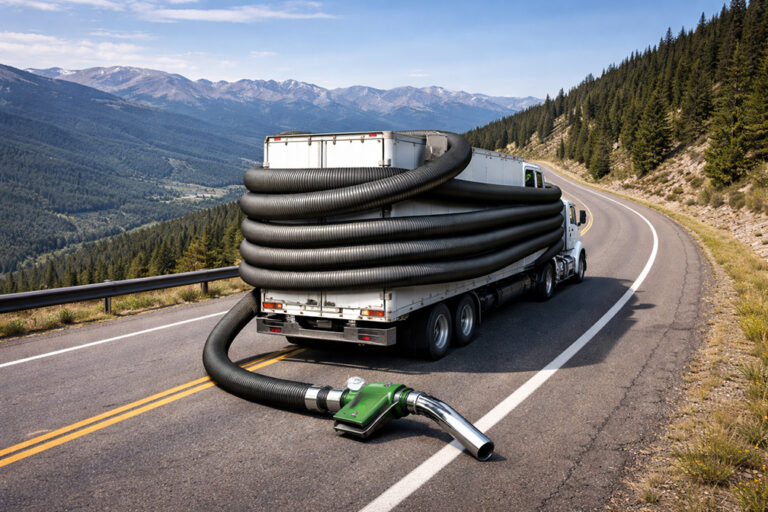
While freight volumes and rates are still a topic of conversation, the spinning numbers on diesel fuel pumps are currently getting a lot of attention. The national average price per gallon for diesel remained under $4 per gallon through February — but it’s ballooned to over $5.37 to date in March, topping $6.87 in California, according to the Energy Information Agency (EIA).
The war in Iran and the threat of the closing of the Strait of Hormuz have resulted in wild speculation on crude oil prices because about 20% of the world’s oil supply is transported through the strait. Although very little of that oil is used in the U.S., the oil market is a global one, and a shortage anywhere in the world has global impact.
In response, member countries of the International Energy Agency (IEA) have agreed to release millions of barrels of oil from their strategic reserves in an effort to increase the supply and drive prices downward. It was the largest ever release of emergency oil stocks, according to IEA Executive Director Fatih Birol, who called the war “the largest supply disruption in the history of the global oil market.”
The trucking industry hasn’t seen $4 per gallon diesel since April 2024, and the national average gallon price has been under $5 since November 2022.
With fuel costs remaining steady for the past two years, some carriers have not been as diligent in requiring fuel surcharge contracts with their customers, while those obtaining freight from the spot market haven’t had to adjust their rate demands … until recently.
As prices rise, truckers are having to absorb some of the additional costs while holding out for the best rates they can get.
The good news is that freight rates continued to rise in February. Unfortunately, the increase hasn’t kept pace with inflation in general and fuel costs in particular. According to the Cass Freight Index for Expenditures, freight expenditures for February rose 5.1% from January and were up 2.1% over expenditures in February 2025.
The flip side of the freight coin is volume.
The Cass Index for shipments increased 4.3% in February, but much of that increase was due to low volumes in January caused by major winter storms. Compared with February 2025, shipments dropped 7.2%, according to Cass.
Bob Costello, chief economist for the American Trucking Associations (ATA), speaking at the annual convention of the Truckload Carriers Association in Orlando, Florida on March 2, called the current economic condition for trucking a “supply-side recovery.”
“While we are absolutely moving in the right direction on supply, there’s not a ton of demand percolating up at this point,” Costello noted.
The “supply” he referred to is the number of available trucks, which has been shrinking for the past year or more as carriers close their doors and owner-operators park their trucks and find other employment. In addition, sales of new Class 8 trucks has tanked in both January and February, with fewer trucks sold than necessary to replace those coming off the road
While reduction in capacity is a good thing for rates, an increase in manufacturing or importing would further increase demand for trucking services.
That’s not happening.
Days after Costello’s presentation, the ATA released its February For-Hire Truck Tonnage Index, showing an increase of 2.6%. It was the highest reported tonnage index score in the past three years. As with the Cass report, however, at least some of the increase had to be the result of shipments delayed by inclement January weather.
A March 16 release from FTR Transportation Intelligence pointed out that consumer spending barely rose in January, an indication of reduced confidence in the market. Worse, the small improvement in spending was in the services area rather than in goods. Spending for durable items like vehicles and appliances fell hard.
The FTR report also pointed to manufacturing investment in the form of orders for core capital goods dropped by 0.7%. That’s an indication that businesses aren’t investing in expansion.
The tariff picture has changed, too.
The U.S. government collected an estimated $200 billion in tariffs imposed under the act, but the ruling did not stipulate if — or how — those moneys would be paid back
In the meantime, the Trump administration can reimpose tariffs under several different laws, starting the legal process all over again.
The uncertainty over new truck prices, especially with announced tariffs of 50% on steel, aluminum and copper, has undoubtedly factored in to the sluggish sales in the new truck market.
Load board postings are on the rise.
The DAT Trendlines report showed an 18.5% increase in load postings in February over January and a whopping 71% increase over February 2025. Again, some of that volume is residual from January weather delays, but the numbers are moving in the right direction.
As for rates, spot freight rates for loads posted on the DAT platform increased 0.5% for dry van to average $2.41 per mile — 2.9% better than February 2025. Refrigerated rates increased by six cents per mile to $2.87; this increase of 0.8%, tops last February’s average by 4.7%. On the flatbed side, spot rates increased 2.3% in the month to an average of $2.72 per mile, up 3.5% from February 2025 rates.
For the month of March, rates in all three categories have risen, mostly in response to fuel price increases.
However, uncertainty remains.
While the freight market continues to creep upward, uncertainty remains over the economy, tariffs and the unrest in the Middle East. Inflation is still a factor, too. At its January meeting, the Federal Reserve declined to lower its benchmark interest rate after making cuts at its three previous meetings. This indicates a continued concern with inflation and higher operating costs for the trucking industry.
While the overall vibe is positive for trucking, progress is slow and there are plenty of obstacles ahead. A close eye on expenses and careful load choices continue to rule carrier operations.

Cliff Abbott is an experienced commercial vehicle driver and owner-operator who still holds a CDL in his home state of Alabama. In nearly 40 years in trucking, he’s been an instructor and trainer and has managed safety and recruiting operations for several carriers. Having never lost his love of the road, Cliff has written a book and hundreds of songs and has been writing for The Trucker for more than a decade.