



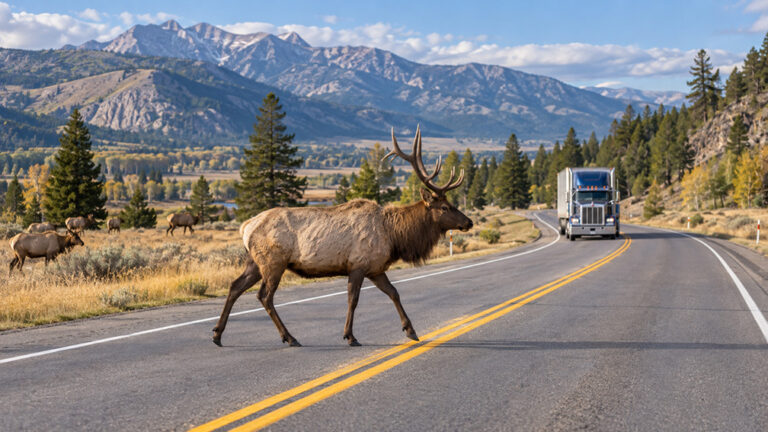
Could wildlife crossings enhance safety along stretch of US 89 near Dome Mountain?
LIVINGSTON, Mont. — A notorious 5.5-mile stretch of U.S. Highway 89 just north of Yellowstone National Park is the target of a newly launched Montana Department of Transportation (MDT) feasibility study. The study is expected to be completed in 2027.
The study, conducted by MDT in coordination with engineering firm Jacobs and Yellowstone Safe Passages, will evaluate whether wildlife crossing improvements between mile markers 16.5 and 22.0 could help reduce wildlife-vehicle collisions, creating a safer travel corridor while protecting local wildlife.
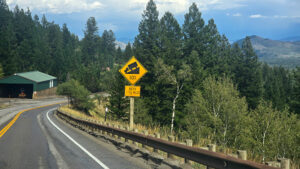
For commercial drivers moving freight through Montana’s Paradise Valley, traversing this stretch of U.S. 89 has long carried a grim nickname: “Running the Gauntlet.”
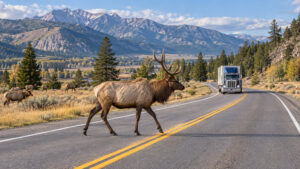
The corridor cuts through an important wildlife movement area between public lands, forage areas and the Yellowstone River. Elk, deer, bighorn sheep and other wildlife regularly cross the highway, with large herds of elk frequently seen near the roadway.
According to data from the Montana Wildlife & Transportation Partnership, roughly 50% of highway crashes along U.S. 89 between Livingston and Gardiner involve wildlife, compared with a statewide average of about 10%. The Dome Mountain priority site itself recorded 74 wildlife crashes and 149 animal carcasses from 2012 through 2021.
For commercial motor vehicles, striking an 800-pound elk or a 1,000-pound moose is a logistical and financial nightmare that can result in:
- Catastrophic equipment damage: Fiberglass hoods, cooling packages, steering components and forward-facing radar/collision-avoidance sensors can all be wiped out by a single impact.
- Evasive maneuvers: Sudden braking or steering to avoid wildlife can increase the risk of a loss-of-control crash, particularly on slick roads.
- Supply chain strain: U.S. 89 is a major north-south supply conduit for regional economies up to Interstate 90. A single major wreck can shutter the route for hours, leaving dispatchers scrambling to reroute trucks.
What’s involved in the study
As part of the study, the project team is evaluating preliminary concepts, including two potential wildlife overpasses near mile markers 17.6-18.5 and 19.3-19.5, wildlife fencing throughout the corridor, and potential modifications near the Point of Rocks Bridge at mile marker 20.4 to provide safer wildlife passage beneath the highway.
The study will also examine the possibility of installing 8-foot-tall wildlife fencing between mile markers 16.5 and 22. The fencing would be designed to funnel wildlife toward designated crossings and discourage animals from entering traffic lanes. Other concepts include escape ramps for animals that get inside the fenced corridor and cattle guards or electric mats at access points.
If the study determines the project is feasible, the findings could help MDT and its partners pursue funding opportunities, including federal programs that support wildlife crossings. Additional design work, environmental review and approvals would also be required before construction could begin.
Until the the project is approved and completed, drivers heading down U.S. 89 to service the communities north of Yellowstone are advised to keep their high beams on, adjust their speed to fit conditions and be on the lookout for wildlife leaping into the roadway.

Linda Garner-Bunch has been with The Trucker since 2020, picking up the reins as managing editor in 2022. Linda has nearly 40 years of experience in the publishing industry, covering topics from the trucking and automotive industry to employment, real estate, home decor, crafts, cooking, weddings, high school sports — you name it, she’s written about it. She is also an experienced photographer, designer and copy editor who has a heartfelt love for the trucking industry, from the driver’s seat to the C-suite.