




DALLAS — For trucking companies, managing risk involves much more than following federal safety regulations. A carrier’s inspection history, hiring practices, maintenance records and even its digital identity can influence its ability to attract customers, secure insurance coverage and remain profitable.
During the Women In Trucking Association’s Accelerate! Conference, held Oct. 25-28 in Dallas, Tina Jensen, senior agency risk management specialist for Joe Morton & Son Inc., outlined ways motor carriers can identify vulnerabilities before they lead to costly problems. Joe Morton & Son is an insurance agency affiliated with Great West Casualty Company.
Jensen’s Oct. 27 presentation, “Risk Mitigation and Best-in-Class Performance,” explored how safety performance, operational procedures and emerging fraud threats affect the trucking industry. During the 50-minute session, she emphasized that a carrier’s risk profile is shaped by decisions made throughout the operation, from the drivers it hires to the procedures it follows when a load is dispatched.
Safety performance carries business consequences
The Federal Motor Carrier Safety Administration (FMCSA) uses its Compliance, Safety, Accountability (CSA) program to monitor motor carrier safety performance.
The agency’s Safety Measurement System evaluates carriers using seven Behavior Analysis and Safety Improvement Categories, commonly called BASICs:
- Unsafe driving;
- Crash indicator;
- Hours-of-service (HOS) compliance;
- Vehicle maintenance;
- Driver fitness;
- Controlled substances and alcohol; and
- Hazardous materials compliance.
Violations are weighted according to severity and how recently they occurred. More recent violations generally have a greater influence on a carrier’s scores — and those scores can affect more than a company’s standing with regulators.
“The BASICS are how law enforcement, insurance companies, brokers, and customers assess carriers,” Jensen said. “Plaintiff attorneys also look closely at carrier and driver violations after a serious accident.”
A history of safety violations can result in additional scrutiny during roadside inspections — and it may influence business relationships or insurance decisions.
Jensen encouraged carriers to review their safety data regularly, identify patterns of violations and provide corrective training when necessary.
Roadside inspections can affect delivery schedules
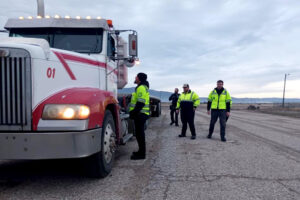
Roadside inspections are another area where safety performance and business operations intersect.
Jensen said a clean inspection may take approximately 15 to 30 minutes, while an inspection involving violations can take substantially longer. If a driver or vehicle is placed out of service, the delay can extend until the violation is corrected or a qualified replacement driver is available. The consequences may include missed delivery appointments, dissatisfied customers and additional operating expenses.
“Are you baking that time into your dispatch?” Jensen asked.
She encouraged carriers to account for the possibility of inspections when planning trips, particularly along routes where drivers regularly encounter weigh stations. Drivers should also be prepared to present current documentation, demonstrate how to transfer electronic logging device (ELD) data and communicate professionally with inspectors.
Clean inspections benefit both carriers and drivers, she said, while out-of-service violations can affect a driver’s future employment opportunities.
Carriers have options for correcting safety records
Jensen also discussed federal programs that allow carriers to request reviews of potentially inaccurate safety information or crashes that could not have been prevented. Carriers can request reviews of certain crash and roadside inspection records through FMCSA’s DataQs system.
Jensen described working with a carrier whose records included an inspection that didn’t even belong to the company. The error resulted from an incorrectly entered USDOT number. Once discovered, the error was reported and later corrected.
She also highlighted FMCSA’s Crash Preventability Determination Program, which allows carriers and drivers to seek reviews of crashes that fall within 21 eligible categories. The program was expanded in December 2024 to include additional crash circumstances.
If FMCSA determines an eligible crash was not preventable, that crash is excluded from the carrier’s Crash Indicator BASIC calculation. The determination is also reflected in the driver’s Pre-Employment Screening Program record.
Jensen stressed the importance of supporting requests with police reports, photographs, video footage and other available evidence: “Document, document, document, to mitigate risk,” she said.
Driver qualification is a first line of defense
Jensen identified driver hiring and qualification procedures as essential components of risk management. She recommended that carriers establish written minimum hiring standards and apply them consistently to prospective employees.
Those standards should address:
- Federal qualification requirements;
- Insurance expectations;
- Driving history; and
- The carrier’s own safety policies.
She also encouraged employers to use FMCSA’s Pre-Employment Screening Program (PSP), which provides access to a driver’s previous five years of reportable crash history and three years of roadside inspection history. Comparing a PSP report with a driver’s employment application may reveal discrepancies that warrant further investigation.
Jensen recommended road tests as another way to assess an applicant’s abilities, even when regulations permit a CDL to serve as an alternative to a road test certificate. A road test can help employers evaluate how drivers inspect equipment, interact with other motorists and respond to changing traffic conditions.
Qualification reviews should not end when a driver is hired, she said. Instead, carriers should continue monitoring driving records, medical certification status and compliance with applicable drug and alcohol testing requirements.
Jensen also suggested considering more frequent motor vehicle record checks than the federally required annual review.
Documentation helps protect carriers
Vehicle maintenance records and HOS practices were other areas Jensen identified as sources of potential exposure. She emphasized the importance of documenting preventive maintenance, repairs and vehicle inspections rather than relying solely on verbal communications.
In one example, Jensen described assisting a carrier during an audit. The company had an established maintenance routine but could not produce records verifying that the work had been performed. The experience, she said, illustrated why carriers need documentation that supports their stated procedures.
“It’s very important that we aren’t just fixing our trucks, with no evidence of defects,” she said.
Jensen encouraged carriers to monitor ELD records, resolve unassigned driving time and ensure that drivers understand the appropriate use of HOS exceptions. In addition, she warned that improper use of personal conveyance or other exceptions can create additional compliance and liability concerns, particularly when fatigue is involved.
Cargo theft and identity fraud present growing threats
Beyond traditional safety issues, Jensen devoted part of her presentation to fraudulent activity targeting trucking companies. Criminals increasingly exploit legitimate carrier identities, compromised email accounts and falsified documents to gain access to shipments or redirect freight.
Jensen described a recent situation in which a broker contacted one of her insured carriers after noticing suspicious information in a transaction. The carrier discovered that its email had been compromised, its phone number had been changed on paperwork, and its USDOT identity had been stolen.
The incident demonstrated how a legitimate carrier can become involved in fraudulent activity without realizing its information has been compromised.
Jensen urged carriers to review their FMCSA registration information regularly, verify business contacts independently, and avoid responding to suspicious emails or websites impersonating government agencies.
She also discussed a scheme that’s sometimes described as a “Trojan horse carrier” operation: Unlike scams involving entirely fictitious trucking companies, this method involves placing a dishonest driver within a legitimate carrier’s operation. The driver may perform satisfactorily until an opportunity arises to divert valuable freight.
Jensen said carriers should verify shipment documents, watch for suspicious changes in delivery information and establish procedures for reporting theft. She also encouraged businesses to use multifactor authentication and verify insurance certificates and other documents before releasing freight.
Risk management requires ongoing attention
Throughout the presentation, Jensen’s focus returned to the importance of consistent procedures, employee training and documentation.
A carrier’s policies must do more than satisfy a regulatory requirement; they should provide a practical framework for identifying problems, correcting deficiencies and responding when something goes wrong. That includes communicating expectations to drivers, maintaining accurate records and examining business relationships for potential vulnerabilities. For owner-operators and small fleets, the same principles apply, even when one person is responsible for several operational roles.
Whether the threat comes from an overlooked maintenance issue, an inaccurate safety record or a criminal using a stolen carrier identity, the consequences can extend far beyond a single violation or lost shipment.
Jensen’s message was clear: The time to identify and address potential risks is before they disrupt operations, damage business relationships or threaten a carrier’s financial stability.

Linda Garner-Bunch has been with The Trucker since 2020, picking up the reins as managing editor in 2022. Linda has nearly 40 years of experience in the publishing industry, covering topics from the trucking and automotive industry to employment, real estate, home decor, crafts, cooking, weddings, high school sports — you name it, she’s written about it. She is also an experienced photographer, designer and copy editor who has a heartfelt love for the trucking industry, from the driver’s seat to the C-suite.