



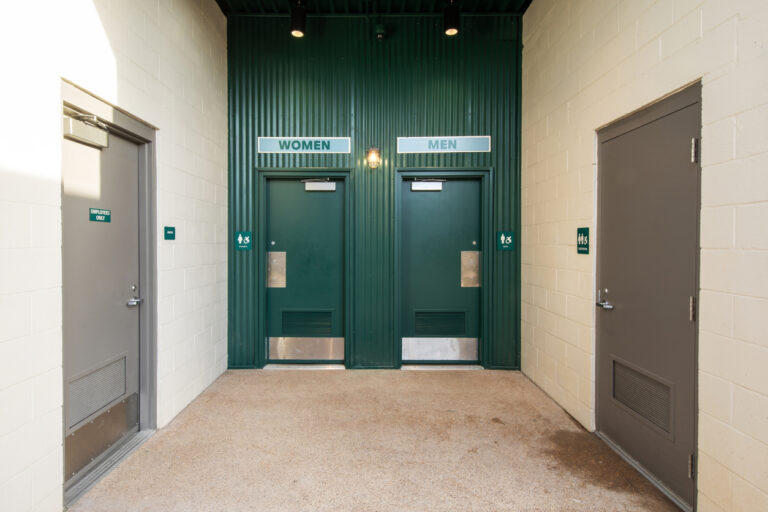
WASHINGTON — U.S. Senators Lisa Blunt Rochester (D-Del.) and Deb Fischer (R-Neb.), members of the Senate Committee on Commerce, Science and Transportation, are introducing the Trucker Bathroom Access Act, a bipartisan bill that would ensure truck drivers have access to bathroom facilities while they deliver or pick up cargo at establishments across the United States.
“America’s truck drivers are vital to keep our country moving forward,” Blunt Rochester said. “Increasingly, more women are filling these critical jobs, and they should feel confident their basic needs will be met. I’m proud to partner with Senator Fischer to break down barriers for men and women in the trucking community and continue efforts to sustain and support our economy.”
The House companion to the Trucker Bathroom Access Act is led by Congressman Nehls and Congresswoman Houlahan.
“This is another way we can help our truckers who put in long hours to keep products moving,” Fischer said. “I thank Senator Blunt Rochester for leading this bill, and I will keep working to take care of truckers across the country.”
The Trucker Bathroom Access Act
The Act:
- Ensures that truck drivers have access to the restroom while they do their jobs, which is especially important with more female drivers on the road.
- Does not require businesses to construct new restroom facilities. It does require that truckers have the same restroom access as a business’s customers or employees.
The bipartisan legislation is supported by the Owner-Operator Independent Drivers Association (OOIDA), the American Trucking Associations, the Women in Trucking Association, She Trucking and Trinity Logistics.
Trinity Logistics
“For truck drivers who spend long hours on the road serving our businesses and communities, access to a restroom shouldn’t be something they have to worry about,” said Sarah Ruffcorn, president, Trinity. “Showing drivers that we value them starts with how we treat them in everyday moments. I’m thankful to see this important issue receiving attention and we are proud to support efforts that make life a little better for the drivers who do so much for all of us.”
American Trucking Associations
“Truckers are the heartbeat of our economy and critical to supply chain continuity,” said Henry Hanscom, chief advocacy & public affairs officer, ATA. “When drivers stop to make pickups or deliveries—which can take hours on end while waiting to be loaded or unloaded—they should be able to use restroom facilities. Access to such basic accommodations is about more than common courtesy; it is about ensuring the dignity of the men and women who do the heavy lifting to provide for everyone in this country. This legislation can also help reduce a major barrier to retaining and recruiting more truck drivers, particularly women. ATA appreciates Senator Blunt Rochester and Senator Fischer’s leadership in addressing this persistent challenge and supporting professional truck drivers.”
Women In Trucking Association
“Access to safe, clean and readily available facilities is a basic need for every professional truck driver, yet the lack of reliable restroom access can be an especially significant barrier for women in trucking, said Lana Nichols, interim president & CEO, WIT. “When drivers cannot access a restroom during their workday, it can affect their safety, health, dignity and overall experience on the job. As the industry works to attract and retain more women, we need infrastructure and facilities that support the workforce. Ensuring drivers have access to these basic necessities is a practical step toward creating a safer, more welcoming and sustainable profession for everyone.”
Owner-Operator Independent Drivers Association
“Over 70% of America’s freight is exclusively carried by trucks, yet every single day men and women truck drivers are forced to ‘hold it’ because they aren’t allowed access to the restroom when picking up or delivering freight,” said Todd Spencer, president, OOIDA. “OOIDA and truckers across America thank Senator Blunt Rochester and Senator Fischer for showing tremendous leadership on this issue and we look forward to working with them and our coalition partners to get this commonsense, bipartisan legislation signed into law.”

Dana Guthrie is an award-winning journalist who has been featured in multiple newspapers, books and magazines across the globe.