



Country music has always been surrounded by comedy, even when that comedy wasn’t a part of the music itself. Few performers were as synonymous with the Grand Ole Opry as comedienne Minnie Pearl — and some of her compadres like Uncle Dave Macon, Lonzo and Oscar, and Jerry Clower shared the stage with her over the years.
Even modern comedians like Jeff Foxworthy share a close connection to country music. And singers themselves have always included a lot of humor in their acts; just look at the likes of Little Jimmie Dickens, Roger Miller and Del Reeves.
But when it comes to comedic country music, few performers have built a career around it as successfully as Ray Stevens. He remains the quintessential country music comedian, and he has the songwriting skills and hit songs to prove his worth.
From piano lessons to punchlines
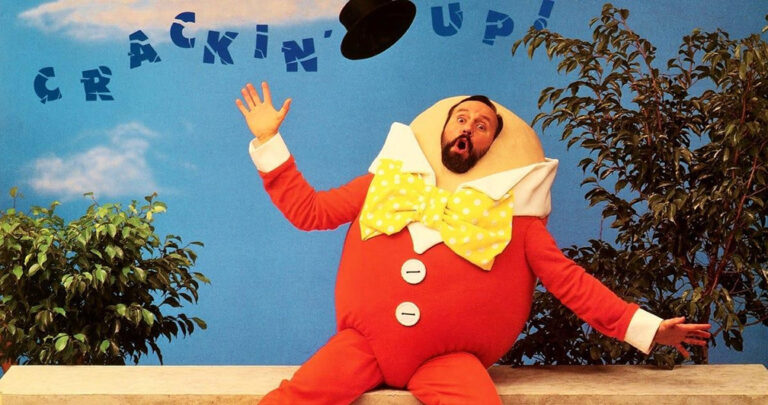
Born Harold Ray Ragsdale in Clarkdale, Georgia, in 1939, Ray Stevens has earned himself the distinction as the “clown prince of country music,” mainly stemming from an unending stream of novelty hits that have been played on the airwaves since the early 1960s.
He began playing the piano at age 6. By the time he was a teenager, the performer worked as a disc jockey and had joined a combo band. Shortly thereafter, an Atlanta producer signed him to a recording contract … and suggested he change his name.
Stevens went on to Georgia State University, where he formally studied music and signed his first substantial contract with Mercury Records. He also began composing his own material, reflecting a humorous view of the world through his music.
Stevens’ first charting single was “Jeremiah Peabody’s Poly Unsaturated Quick Dissolving Fast Acting Pleasant Tasting Green and Purple Pills” (1961). The success of the song presented the budding artist with the possibility of making it big in the novelty music side of country music, something that was only beginning to burgeon at the time.
Just a year later he recorded “Ahab, the Arab,” which charted at No. 5. In 1969, he scored another hit with “Gitarzan,” which reached No. 8 on the pop charts.
A streak of chart-topping success
While novelty comedic songs were Stevens’ forte, he didn’t ignore his other songwriting talents. In 1970, he recorded the million-selling, Grammy Award-winning, No. 1 pop song “Everything Is Beautiful,” showcasing his rich vocals.
But Stevens couldn’t escape comedy. What has arguably become his signature song, “The Streak,” debuted in 1974 and rose all the way to No. 1 on the pop charts and No. 3 in country circles.
The song caught the attention of a nation that was, at the time, being swept by a phenomenon of “streakers” — folks running nude in public, particularly at events that attracted large numbers of people.
Whether streaking was a form of protest or a public prank is open to debate, but Ray Stevens caught the heart of the country with his hilarious song that rose and fell as fast as the streaking craze across America lasted.
In 1975, Stevens scored another mainstream hit with his version of the 1950s song “Misty.” It landed at No. 14 on the pop charts and No. 3 on the country charts, and earned him another Grammy. Ironically, the song became one of Stevens’ most successful recordings and was part of the “Misty” album, which featured mainstream music rather than the novelty songs for which he was best known.
When the laughs kept coming
In the late 1970s, convinced that novelty songs were a thing of the past, Stevens tried his hand at serious musical material, but he had already been typecast. Despite earning Grammy recognition for his musical talents, Ray Stevens was a funny man to the masses.
He returned to comedy with a version of big band leader Glenn Miller’s “In the Mood,” in which he “chicken-clucked” his way through the tune. While charting at only No. 39, the recording paved the way for the remainder of Stevens’ career.
He also scored chart success with “Shriner’s Convention” (1980) and “Mississippi Squirrel Revival” (1984). While these songs may have hit the charts, Stevens recorded a discography of comedy-based music, filling albums with songs such as “The Doo-Right Family,” “Blue Cyclone” and (Stevens was never one to miss a newsworthy item) “Osama, Yo’ Mama.”
Taking the show on the road — and the screen
Always looking for an opportunity to hit it big with something new, Ray Stevens was one of the early performers to make Branson, Missouri, a permanent home, opening his own theater in 1991. There, he spent a large portion of the year performing his unique style of music before sellout crowds on a nightly basis.
In the meantime, he toured the country, playing venues like county fairs and appearing on variety shows year-round. He was a regular on the Nashville Network in the 1980s and 1990s, and he showed up on late-night television on a frequent basis.
Stevens was also one of the country artists who first recognized the rise of the music video as a major player in the music world. He put his marketing genius to the test early on, producing videos to go along with his songs.
Despite whatever success his videos had on niche television stations such as Country Music Television, his real revenue came in the form of direct marketing as he sold VHS tapes filled with his music videos through commercial television spots. The marketing of his videos as commercial products likely downplayed their ability to be shown on television, as Stevens reaped the benefits of his material being seen by those who purchased his VHS tapes.
Still, the occasional video like “Mississippi Squirrel Revival” made it onto the airwaves and became a major, if temporary, video release.
The last laugh? Not yet
Since first arriving on the professional music scene in 1957, Ray Stevens has recorded dozens of studio and compilation albums, along with box sets showcasing his extensive body of work. His career includes more than 100 singles spanning eight decades, dozens of which have hit the charts in genres including country, pop and adult contemporary.
With 12 Grammy nominations and two wins to his credit, Stevens has demonstrated that there’s more to his musical talents than making people laugh.
Despite suffering a heart attack in 2025 and a neck injury in 2026, Stevens has continued making music. His decades-long career has left generations of fans with plenty of reasons to laugh.
Until next time, when you need a good laugh (and don’t we all, most of the time!), pull up a playlist of Ray Stevens’ tunes. He’ll keep you in stitches. Try to keep your eyes on the road!

Since retiring from a career as an outdoor recreation professional from the State of Arkansas, Kris Rutherford has worked as a freelance writer and, with his wife, owns and publishes a small Northeast Texas newspaper, The Roxton Progress. Kris has worked as a ghostwriter and editor and has authored seven books of his own. He became interested in the trucking industry as a child in the 1970s when his family traveled the interstates twice a year between their home in Maine and their native Texas. He has been a classic country music enthusiast since the age of nine when he developed a special interest in trucking songs.