




It’s mid-summer and the weather, in most parts of the North American continent, is predictably sunny and hot.
That is why it is vital that truckers are always weather-ready, no matter the season.
However, trucking takes many drivers far away from familiar surroundings — and the weather in far-off places isn’t always easy to predict. Factors such as latitude, altitude, geography, air and ocean currents and weather systems can wreak havoc on local weather, sometimes surprising unwary drivers.
Crowd Conundrums and Sunny Severity
Summer sunshine draws crowds of people to the beach, but it can create difficulties for drivers. Bright sunshine can cause fatigue as eyes are constantly in adjustment to cope. A pair of quality sunglasses is an important part of a driver’s equipment. Keeping windshields and mirrors clean can help reduce glare. Sun visors, when positioned properly, can help block the direct line of sight to the sun but can also block out areas of bright sky, allowing the eyes to relax. A good ball cap can also block some of the sun’s rays.
Slippery When Wet
Hot summers typically mean cloud formation and sometimes sudden afternoon showers. As the pavement bakes in the sun, oils present in the asphalt or dripped onto pavement by passing vehicles are drawn upward. When rain hits, the oils float on the water, causing very slippery conditions. The rain eventually washes the substances away, but the road surface can be treacherous until it happens. Whenever rain showers appear in hot weather, it’s best to be prepared for slippery conditions, especially in curves.
Deceptive Geography
Most drivers are aware that the climate is generally warmer in southern areas and can be colder to the North. Geography can be deceiving, however. Mountainous areas bring temperature changes due to altitude, but also shade large areas, making them cooler. The shade can be pleasant on a hot summer day, but when temperatures get into the 40’s and lower, it can be cold enough to freeze. This can result in sleet, freezing rain or ice on road surfaces.
Facing the Fog
Another possibility is fog, which tends to “hover” in specific air layers. Many drivers have experienced encountering clear air above and below layers of fog on mountainous roads. In some cases, it may be comparable to flying through a cloud layer in a plane, and that’s for a reason. Fog, after all, is simply air that is saturated with water vapor. It IS a cloud.
Summer Snow
In higher altitude areas where snow accumulates, it can melt much more slowly in shady areas. Worse, water from melted snow in sunny areas can refreeze on shaded road surfaces. Any time you observe snow alongside the road, even in small patches, be prepared to encounter some on road surfaces.
Temperatures tend to decline as altitude increases, rain at lower elevations can turn to freezing rain, sleet or snow at higher elevations. Traveling over a mountain can present a variety of weather conditions. It happens more frequently in spring and fall, but in some areas it happens in summer, too. If you anticipate freezes and remain prepared, you’ll be able to adjust your speed and prepare for areas of reduced traction.
The Trucker’s Tan
When the sun shines, skin protection is a good idea. While the “trucker’s tan” isn’t as prevalent as it was in the days before air conditioning, in some conditions the arm resting on the door can get too much exposure. Skin cancer is increasingly common and often appears years after exposure. Protection is available in the form of sunscreen, and a long-sleeve garment can help, too. Even a small towel placed over the exposed area can be helpful.
Drivers who spend time outside of the truck for loading and unloading or other purposes should take precautions against sun exposure, too. While the feel of the warm sun can be a welcome experience after being cooped up in the cab all day, it’s better to be safe than to risk a problem later.
Prepare for the Worst
Hot weather impacts more than your driving, of course, and when weather changes quickly, vehicles must absorb the strain. A good pre-trip inspection is necessary every day, but especially when weather extremes are a possibility. Making sure fluids are topped off and there’s extra washer fluid in the storage area is best practice.
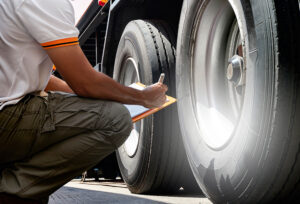
Tires take a beating every day, but hot days can push them to the limit. Many trucks have tire management systems that alert the driver when a tire is low, but keep in mind that the side of the truck that the sun is shining on may experience higher tire pressures. Black tires absorb the sun’s rays, taking on heat. The phenomenon goes away after a few miles of driving, as all the tires generate heat from rolling resistance and tread / sidewall flexing. Always check when a warning light indicates a problem. However, make sure there really is a problem before adding or removing air.
Dehydration Doldrums
Just as fluids are important for your truck, they’re important for the driver, too. Dehydration is a real concern, both from hot weather and from sitting in the cab in the air conditioning. Colder air holds less moisture, which usually drips on the ground under your tractor. But your body temperature stays relatively constant and the air is warmed as you breath it in and as it circulates near your skin. You can get dehydrated while being perfectly comfortable. Water and sports drinks are more effective than the giant mug of soda from the truck stop, but any liquid is probably better than none.
Proper Packing
As dependable as modern trucks are, there is still a chance of a breakdown that strands you somewhere without a running engine to provide heat or air conditioning. Carry clothing suitable for hot weather – and some for cold weather, too. You never know when a breakdown will occur or what kind of severe weather you could be stranded in.
Modern trucks have made it easy to climb in, buckle up and hit the highway. Making sure both you and your truck are prepared for the worst helps ensure you’ll keep rolling through this dispatch and the next, and ultimately to your home.

Cliff Abbott is an experienced commercial vehicle driver and owner-operator who still holds a CDL in his home state of Alabama. In nearly 40 years in trucking, he’s been an instructor and trainer and has managed safety and recruiting operations for several carriers. Having never lost his love of the road, Cliff has written a book and hundreds of songs and has been writing for The Trucker for more than a decade.