



Welcome to Episode 2 of “Cooking on 18 Wheels”!
First of all, let’s get one thing straight: You do NOT need a full kitchen to cook real meals on the road. You don’t need a drawer full of mismatched utensils, a spice rack that could survive the apocalypse or a fancy chef’s torch (but hey, if you’ve got one, color me impressed!).
You just need a few smart tools — and the will to cook something better than truck stop jerky
and sad roller hot dogs.
Whether you’re using a portable stove, a slow cooker, an Instant Pot or even a plug-in skillet, there are a handful of basic tools that make truck cooking smoother, safer … and far less messy.
Here’s what you need for your “bare-bones” truck kitchen kit. It’s practical and compact, and it will make your life so much easier.
• A good knife
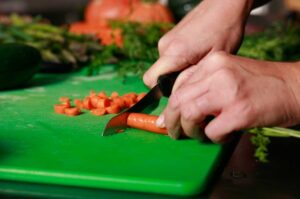
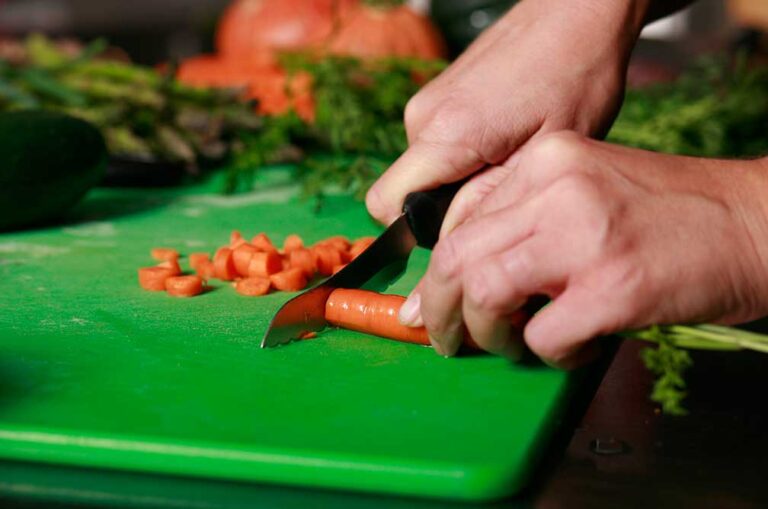
Forget the knife block. You only need one good knife that can chop veggies, slice meat and hold its edge.
A sharp 6- to 8-inch chef’s knife with a protective sheath is the gold standard. With knives, you get what you pay for, so splurge on yourself a bit here. Get something with a comfortable grip and decent balance.
TIP: Be sure to keep it sharp. A dull knife is just a sad, dangerous butter knife pretending to be useful.
• A cutting board that doesn’t slide around
A compact cutting board is essential. Look for one with a juice groove if you’re planning to prepare meat. It’s also a great idea to pick a board with rubberized edges or backing so it doesn’t slide around while you’re slicing.
Pick your favorite material — plastic, bamboo, flexible silicone — but make sure it’s easy to clean. Just don’t use your dashboard! Your truck deserves better (and so do your onions).
• Basic measures
You don’t need a whole nesting set clinking around in a drawer. You can get by with just three things:
- 1-tablespoon measure;
- 1/2-cup scoop; and
- 1-cup scoop.
These three items will cover most ingredients you’ll be using, from seasonings and oils to rice, broth and cheese.
TIP: Look for scoops with flat bottoms. They’ll sit still while you’re filling them, even if your cab’s not perfectly level.
• A digital kitchen scale
I know, I know … it sounds ridiculous and excessive, and you’re thinking, “no one needs one of those!” I thought the same thing. But trust me on this: A kitchen scale is exactly the kind of appliance you assume you’ll never use — until you get one. Suddenly you discover that you’re using it every day!
A small, flat digital scale takes up hardly any room, and it gives you precise measurements without the guesswork. Think, “6 ounces of pork” instead of “uh… two forkfuls, maybe?”
A kitchen scale also helps cut down on waste: no more guessing and tossing half a portion because you overestimated.
• Disposable cutlery and plates
It’s always easier to store your own plastic cutlery, rather than hoping the next truck stop will have a fork available to grab. Just keep a stash of sturdy disposable plates and a handful of disposable forks, knives and spoons. They’re not glamorous, but they get the job done.
• Storage bags or disposable containers
You’ll need something to hold prepped ingredients and leftovers. I personally prefer plastic freezer bags because they’re easier to store in the sad little mini-fridge I share with my co-driver. But you may prefer plastic or glass stackable containers. Just make sure
the lids are tight — it’ll help keep your meals (and your fridge) safe.
If you go the plastic bag route, make sure they’re labeled as FREEZER storage bags. These tend to be far sturdier and have a better seal than regular sandwich or snack bags. There’s nothing worse at the end of an 11-hour shift of dealing with construction and rush hour than opening your fridge … only to discover your chicken marinade leaked all over the place.
• Cleaning wipes
As truck drivers, we don’t always (make that “always never”!) have a proper sink available to use. So, what do you do when you’ve just finished dicing up raw chicken and there’s no sink and running water to clean your knife and cutting board?
This is where cleaning wipes come in handy. You want to pick wipes that are labeled as “food safe,” but they also need to able to kill bacteria. I’ve used Clorox, Lysol, Seventh Generation and generic brands, and they’re all good — just check the labels. Make sure your wipes are bleach free, food safe and capable of disinfecting and decontaminating surfaces that have come into contact with raw meat.
Jen’s golden rule: Keep it simple and keep it solid.
With just these basic tools and accessories, you can prepare a wide range of meals in your truck, whether it’s carnitas, chili, scrambled eggs or that sweet little stir-fry you’re proud of but only make when nobody’s watching.
You’ll eat better, feel better, and have the satisfaction of feeding yourself on your terms.
RECIPE: Pork Carnitas with Rice
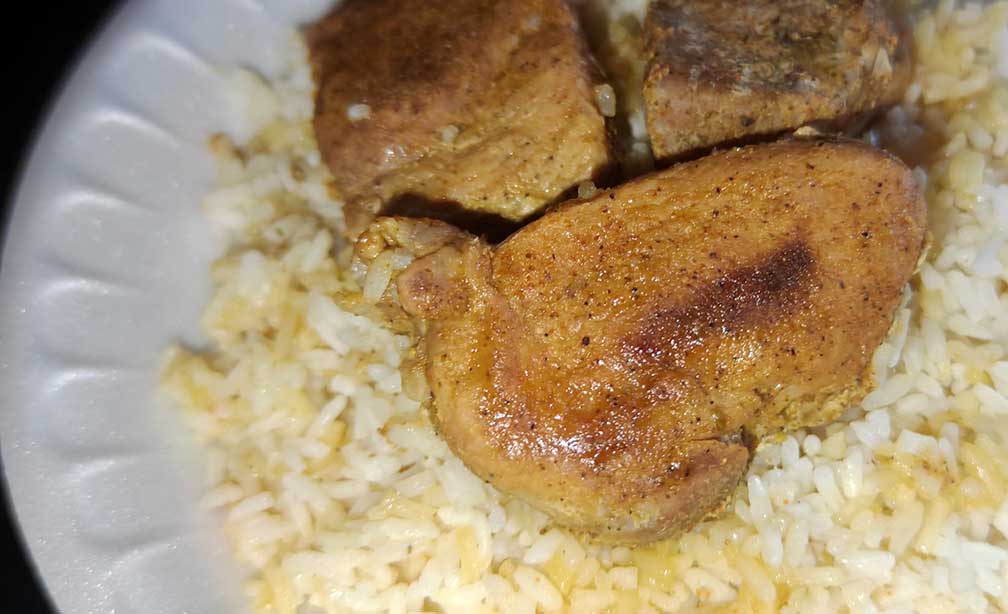
Now, let’s put it all together and create some fantastic Pork Carnitas. They’ll make your whole truck smell like a Mexican kitchen and set your stomach growling halfway through the cook! This recipe uses the Roadpro 12-Volt Portable Stove, but I’m adding adjustments for a slow cooker and pressure cooker, as well.
Ingredients:
1 pound pork shoulder or pork loin, cut into chunks
1 tablespoon carnitas seasoning (I use the premade packets; if you can’t find carnitas seasoning, you can use taco seasoning)
Juice from one lime (I suggest grabbing one of those plastic bottles of lime juice at the grocery store. They’re so much easier than messing with a real lime! Just toss in a generous squirt from the bottle.)
2 tablespoons orange juice (trust me on this!)
2 tablespoons water or broth (your choice)
1 packet of pre-cooked rice (Any kind will work; I used white rice because that’s what the grocery store had available.)
Desired toppings, such as cilantro, avocado, shredded/crumbled cheese or diced jalapenos
Instructions:
Toss the pork, spices, lime juice, orange juice, and water or broth into a foil Roadpro pan or disposable slow cooker liner. Mix well so everything is coated. Cover the pan tightly and place in your Roadpro or slow cooker.
Cook until the pork is fall-apart tender. This will take 2 ½ to 3 hours in the Roadpro; 5 to 6 hours on High in a slow cooker; and 35 minutes on High Pressure in a pressure cooker. (NOTE: If you’re using a pressure cooker, make sure you let it naturally release pressure for 10 to 15 minutes before hitting the quick release. This makes a big difference in keeping the pork juicy instead of it drying out.)
Add the pre-cooked rice to the hot pan; let the rice warm up and absorb those juices for about 10 minutes.
Layer on your toppings and shred with a fork — or just eat it caveman-style, like me. I won’t judge!

Jen Wilson is a long-haul truck driver who’s spent the last five years rolling along America’s highways … and figuring out how to eat better every mile of the way. She believes good food on the road shouldn’t mean cold sandwiches or overpriced truck stop pizza. Her mission is simple: Show drivers how a handful of smart tricks — the right gear, a few basic spices and zero fancy fuss — can turn any truck cab into a tiny working kitchen.
When Jen’s not hauling freight, she’s testing practical, driver-friendly recipes right in her sleeper, proving you don’t need a house-sized kitchen to eat well, stay healthy and actually look forward to dinner.