





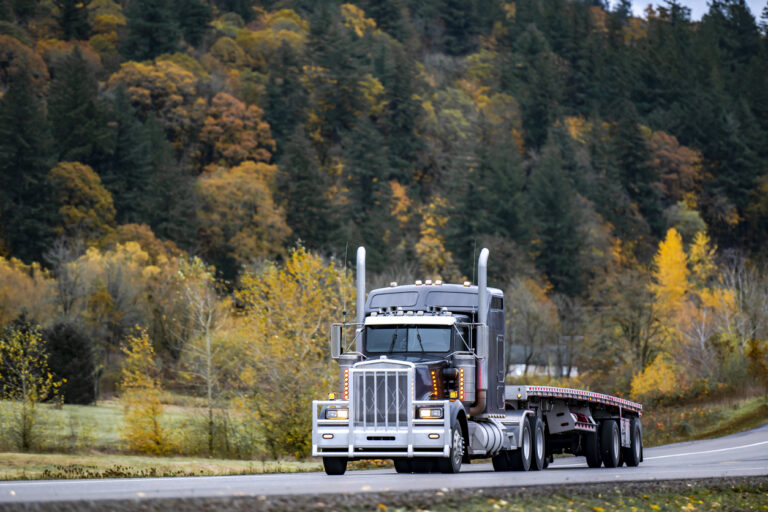
BEAVERTON, Ore. — Load posts on DAT One fell 13% to 2.3 million last week, erasing the previous week’s gains.
“The average linehaul rate for DAT’s top 50 van lanes by load volume decreased 1 cent last week to $2.00 per mile,” said Dean Croke, DAT iQ industry analyst. “In the 13 key Midwest states—which represent 46% of national load volume and often signal future national trends—the average spot rate rose 1 cent to $1.93 per mile, 23 cents higher than the national average.”
Truck posts fell 0.5% to 236,409. National 7-day average spot linehaul rates moved little, with the van and flatbed rates unchanged week over week while the reefer rate rose 2 cents to $2.07 a mile. Conditions were reminiscent of an International Roadcheck week, with tighter capacity moving rates in some markets as opposed to an increase in volumes.
International Roadcheck Effect
“Despite reefer load post volumes plunging by 18% last week, capacity tightened, similar to a ‘Roadcheck Week’ effect,” Croke said. “Immigration and Customs Enforcement (ICE) enforcement continues to impact southern border freight markets, with reports of immigration attorneys advising carrier clients and drivers to avoid the roads, even if they possess valid work permits, due to the fear of arrest during the crackdown on alleged illegal drivers.”
Broker-to-Carrier 7-Day Average Spot Rates
— Dry van: $2.07 per mile, unchanged week over week
▲ Refrigerated: $2.44 per mile, up 2 cents
▲ Flatbed: $2.44 per mile, up 1 cent
Dry Van
▼ Van loads: 1.0 million, down 16% week over week
▼ Van equipment: 163,272, down 1%
— Linehaul rate: $1.70 per mile, unchanged
Reefer
▼ Reefer loads: 468,578, down 18% week over week
▼ Reefer equipment: 43,765, down 1%
▲ Linehaul rate: $2.07 per mile, up 2 cents
“While not a large reefer truckload market, the Nogales commercial zone crossing from Mexico into the Tucson freight market saw a 95% increase in reefer load posts last week, especially for loads to New York and California,” Croke said. “Load posts increased by 9% week over week in neighboring El Paso and by a similar amount in McAllen, where the majority of produce is imported from Mexico each week. Truckload carriers are currently getting around $1,000 more per load for produce from McAllen to Los Angeles than they were a year ago.”
Flatbed
▼ Flatbed loads: 797,726, down 6% week over week
▲ Flatbed equipment: 29,372, up 1%
— Linehaul rate: $2.07 per mile, unchanged. Notably, the Week 41 2025 spot rate continues to track closely with 2017, a year marked by a strong industrial economy for flatbed carriers.
“Brokers reported flatbed capacity constraints in the Southeast, particularly in the Birmingham, Montgomery, and Jackson markets, where loads posted surged by 23% last week,” Croke said. “This region ships a mix of heavy industrial freight, including heavy steel, machinery, building materials, and concrete. Spot rates for regional outbound flatbed loads rose by 6 cents to an average of $2.69 per mile.”

Dana Guthrie is an award-winning journalist who has been featured in multiple newspapers, books and magazines across the globe. She is currently based in the Atlanta, Georgia, area.




Those rates are what lease op drivers made in 2011 to 2016. So rates across the board are now 1/2 of that what I was paid in 2016.