



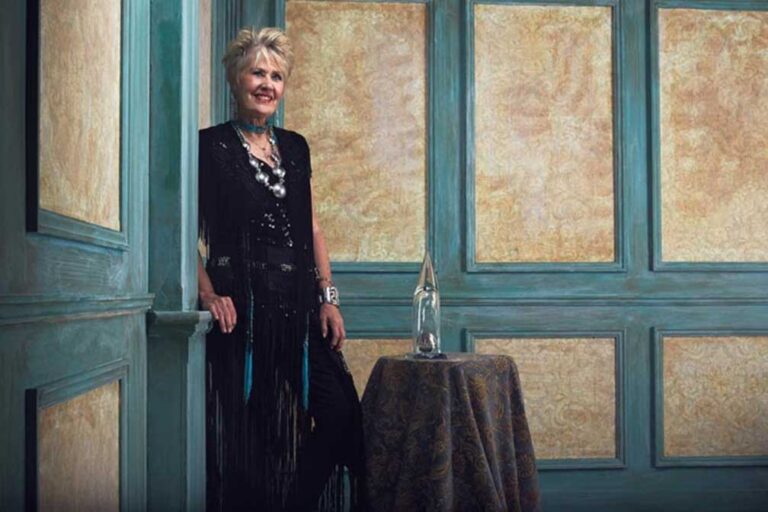
In the 1970s, Janie Fricke basked in the glow of stardom as an anonymous entertainer, making a living as a backup singer.
During the decade, she appeared on so many other artists’ records that scarcely a hit song could be heard on the radio without Fricke’s voice appearing in the background. Her voice was equally recognizable on television and radio commercials.
For a time, Fricke made such good money in anonymity that she shied away from pursuing a solo career. But, lucky for country fans of the late 1970s and early 1980s, she eventually accepted the fruits that fame could offer.
Born on a farm in Indiana, Fricke got her start in music accompanying her mother’s performances on the piano. She and her sister often sang publicly in church, with Janie always adding a flair to traditional hymns, to — as she said, “jazz them up.” Later, she sang at school events, and she eventually put herself through the University of Indiana on the basis of her voice.
After graduation in 1972, Fricke went to Dallas and Los Angeles to try to find work as a session vocalist. But doors didn’t open for her there, and by 1975 she found herself in Nashville. There she gained work singing jingles for the likes of United Airlines, Coors Beer, 7Up and Pizza Hut.
But she didn’t stop there. The world of country music opened its doors to her talents. Over the next few years she became a session vocalist for a sampling of country’s best acts including Tanya Tucker, Ronnie Milsap, Lynn Anderson, Mickey Gilley, Dolly Parton, Crystal Gayle, Barbara Mandrell and Johnny Duncan.
While singing with Duncan, she appeared on three straight No. 1 singles beginning in 1976: “Stranger,” “Thinkin’ of a Rendezvous” and “It Couldn’t Have Been Any Better.” In fact, her voice was so prominent on these three songs that everyone started asking who she was — and she was soon offered a recording contract of her own.
“I had to be coaxed to sign,” Fricke said. “I didn’t want to give up the security of singing jingles and backup for so many artists.”
Eventually, famed producer Billy Sherrill convinced her to give a solo career a shot, and she signed with Columbia Records. Success didn’t take long.
In late 1977, Fricke scored her first solo hit with “What’re You Doin’ Tonight,” reaching the Top 20 on the charts. Three more hits came in 1978 with “Please Help Me (I’m Falling),” “Baby, It’s You” and “Playin’ Hard to Get.” At the same time, she had another hit record with Johnny Duncan, this time receiving credit, with “Come a Little Bit Closer.”
With these hits came various awards and nominations. Billboard and Cash Box named her the Top New Female Vocalist of 1978, and the Country Music Association (CMA) nominated her as Female Vocalist of the Year in both 1978 and 1979.
Even though Fricke was on the road to success, radio programmers were reluctant to give her substantial airplay because her music was so diverse. Eventually, she settled into singing ballads for most of her single releases, and her career began to take off.
In 1981 she finally reached the Top 10 with “Down to My Last Broken Heart.” The song, from the album “I’ll Need Someone to Hold Me When I Cry,” topped out at No. 2, and the album’s title track also reached the Top 5. Later in the year, she released the album “Sleeping with Your Memory.” The single “Don’t Worry ’bout Me Baby” became her first No. 1 hit.
A year later producers encouraged Fricke to switch from ballads to a country-pop sound they called “bouncy” and “clean cut.” She made the change, and success was immediate with the release of her album “It Ain’t Easy.” Along with the title track, the album provided a second number one song in “He’s a Heartache (Lookin’ for a Place to Happen).” This single may be the best of Fricke’s discography, displaying both her vocal range and ability to intermingle styles even within one tune.
In 1983, she built on the success of “It Ain’t Easy” with the release of the album “Love Lies,” which hit the Top 10. The compilation included two more No. 1 songs — “Let’s Stop Talking About It” and “Tell Me a Lie.” Her efforts brought her Female Vocalist of the Year awards in both 1982 and 1983 from the CMA.
In 1984 Fricke returned to her roots, supplying background vocals for Merle Haggard’s album “It’s All in the Game” as her solo career continued to thrive. She also collaborated with George Jones on “Ladies’ Choice” and sang duets with Ray Charles and Larry Gatlin.
On the solo side, she released her eighth album, “The First Word in Memory,” which included the number one single “Your Heart’s Not in It.” Her next album, “Somebody Else’s Fire,” was filled with Top 5 songs, including the title track, “She Single Again,” and “Easy to Please.” Finally, in 1986, Fricke reached the top of the album charts with her release “Black & White.” It produced a No. 1 with “Always Have, Always Will.”
Following the 1980s, Fricke’s career slowed down. She remained active as a singer and a cast member of the Nashville Network’s “Statler Brothers Show,” and she made frequent appearances, often singing backup on country music reunion shows that appeared on cable channels like RFD-TV.
Over the course of her career, Fricke has nabbed 5 top awards from organizations such as the CMA and Academy of Country Music and been nominated for 21 more. She even received a nomination for a Grammy in 1984 with her single “Your Heart’s Not in It.”
She has released a total of 25 studio albums, placed 19 singles in the Top 10, and scored nine No. 1 singles — all in addition to a lucrative career as a backup and jingle singer for a variety of artists and businesses.
In fact, despite her successful career as a solo artist, when country fans look back on Fricke’s career, they may recall her best for her vocal work on some of Johnny Duncan’s greatest hits. If so, it only shows the incredible style and range that the farmgirl from Indiana brought to Nashville when she arrived in 1975.
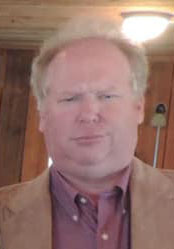
Since retiring from a career as an outdoor recreation professional from the State of Arkansas, Kris Rutherford has worked as a freelance writer and, with his wife, owns and publishes a small Northeast Texas newspaper, The Roxton Progress. Kris has worked as a ghostwriter and editor and has authored seven books of his own. He became interested in the trucking industry as a child in the 1970s when his family traveled the interstates twice a year between their home in Maine and their native Texas. He has been a classic country music enthusiast since the age of nine when he developed a special interest in trucking songs.