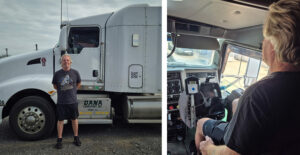




Before smartphones, Wi-Fi and podcasting, before cellphones and satellite radio, before in-cab satellite communication and pagers, and even before FM (frequency modulation) radio stations, the newest thing in communications technology was known as “clear channel.”
Back in those days, when AM (amplitude modulation) radio ruled, it was discovered that radio waves traveled farther once the sun went down. Scientists spoke of skywaves and solar radiation and the ionosphere … but the average listener just knew that stations that couldn’t be heard in the daytime came in clearly at night.
To keep signals of similar frequencies from conflicting, the government imposed rules that required some stations to shut down at night, while others had to reduce their transmitting power. The small number that remained — the “clear channels” — were encouraged to boost their wattage to provide nighttime coverage over large areas.
The Birth of Trucking Radio
Enter Charlie Douglas, a disc jockey at WWL radio in New Orleans. Commuting daily from Picayune, Mississippi, to the studio, Douglas noticed that the truckers of the day didn’t have much to do behind the wheel except “smoke cigarettes and listen to the radio.”
His idea? Use the vast broadcast area of WWL’s clear channel status to reach as many of those drivers as possible.
And so, all-night trucking radio was born.
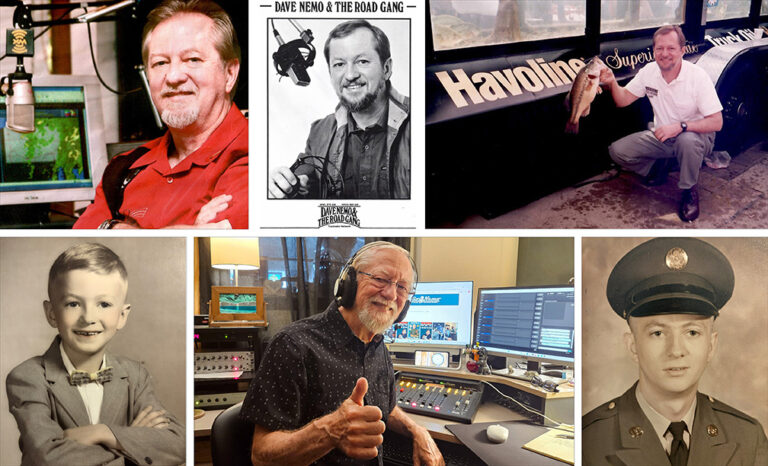
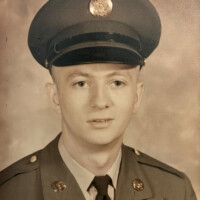
Douglas put together a team he called “The Road Gang.” Among that team was a young personality, fresh from a U.S. Army tour in South Korea, who had done some weekend news and weather for WWL before enlisting.
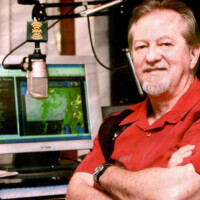
His name? You guessed it: Dave Nemo.
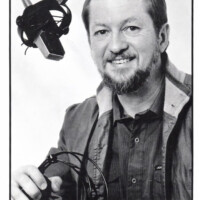
For years, Nemo shared hosting duties and spinning country music records with Douglas for the Road Gang. In addition to his radio work, Nemo was a working musician, playing the clubs along Magazine Street in New Orleans.
“Charlie Douglas brought me into the Road Gang because I was the only other person there who knew Conway from Twitty,” Nemo said in an exclusive interview.
“It was a working band, so we played rock ’n’ roll one night, country music the next night, rhythm and blues the next,” Nemo recalled.
But Douglas had a dream — and it wasn’t all-night trucking radio. His dream was the Grand Ole Opry and country music, and he eventually left New Orleans to find success in Nashville.
The Start of an Era
With the departure of Douglas, Nemo took over the Road Gang, forming the foundation for a 50-plus-year legacy.
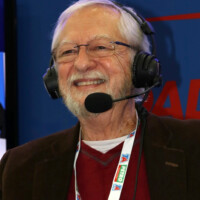
“I’ve wound up doing the same thing ever since, in pretty much every form of communication,” said Nemo, who officially retired earlier this year.
While his role remained consistent, the format and structure of radio evolved.
“These days, there’s hardly any similarity between the old AM radio days, the tubes, turntables, 8-track cartridges and all the machinations,” he said with a laugh.
As technology changed, Nemo’s show moved from the airwaves to satellite radio, changing the very tenor of trucking radio with the “Road Dog” channel.
Other “trucking” radio personalities like Bill Mack and Dale “The Trucking Bozo” Sommers also ended up on the Road Dog channel. And while the exposure of satellite radio enhanced daytime programming and brought it to more listeners, there were drawbacks.
“So, it really changed things,” Nemo noted. “It opened up a world of opportunity — but then it also really changed the dynamic of what trucking radio was a lot.”
One major change was the music. Presenting more information meant more discussion and less entertainment, so music licensing went away — and “The Dave Nemo Show” continued to provide vital information for over-the-road drivers.
Deregulation Impact
At the same time, the trucking industry was changing. After deregulation, the creation of the Federal Motor Carrier Safety Administration, the advent of the CDL and shifts, trucking became more complicated.
“Timing is everything. So, the timing for satellite radio to evolve and then blossom — plus the fact of new regulations, new requirements, equipment, the EPA and all of that going on at the same time,” Nemo said. “All of a sudden, there’s this information overload in trucking that somebody’s got to do something about.
“Well, that was us,” he continued. “We wanted to be the guys explaining what was going on.”
Instead of spinning records, radio personalities began interviewing industry experts to make sure the latest in trucking information got out to listeners.
“We got a bunch of great people to come on the show and be guests to talk about what was going on the road,” Nemo said.
Through the years, the “Dave Nemo Show” brought on guests from media outlets, government agencies, law enforcement, advocacy groups and, of course, truck drivers.
While Nemo says radio programming wasn’t all that changed with the advent of satellite radio, competition for advertising revenue DID change, and in a big way.
Airwave radio stations sell commercial time, competing with other radio stations for advertising dollars. In satellite radio, the commercial time is divided between each show and the satellite company, with both often competing for the same advertisers.
“What folks don’t realize is that when we were all on XM and then Sirius XM, we were competing with THEM,” Nemo said. “We had an unworkable, untenable situation with satellite radio for 25 years.”
Although unpublicized, that competition for advertisers was likely the biggest factor in “The Dave Nemo Show” leaving satellite radio.
The End of an Era
“When we left MATS (the Mid America Trucking Show) in 2025, we thought we had a contract,” Nemo recalled. “Then, on Monday morning I got the ‘Tony Soprano’ call. So, we got chopped.”
Undaunted, the Nemo team planned to ride the wave to the next communications technology — podcasting and the internet — but the timing was short.
“We had six weeks to create everything, from finding a place to broadcast to buying equipment to hiring people … everything had to be done, Nemo said.
“We got on, but we just never could muster the financial support to keep us going,” he continued. “It could have been fun with a little more time.”
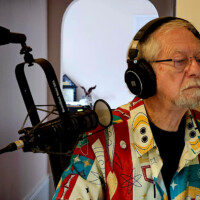
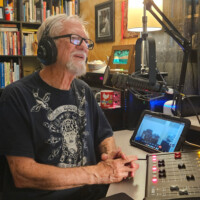
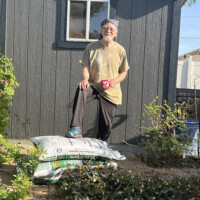
On Monday, February 16, 2026, Dave Nemo signed off for the final time, opting to enjoy retirement and time with his family.
It was the end of an era.
Leaving a Living Legacy
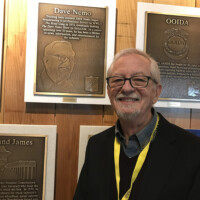
In the more than 55 years since Dave Nemo first signed on with The Road Gang, he’s won numerous awards, and he achieved a following that few radio personalities ever do.
However, his proudest memories still come from his early days.
“It was that connection between a home and a truck, the driver and the family that I’m most proud of,” he said. “That was the essence of what we did. We were a communication link for drivers between home and the road.”
In the days before cellphones and satellite communication, wives would often request songs for their husbands on the road, adding a personal message relayed by the disc jockey.
“Even up until the last several years of MATS, it never failed that somebody would come up to me and say, ‘You know, my dad told me that he heard about me being born from you on the radio. Is that true?’” Nemo shared. I’d laugh and say, ‘Oh yeah, that’s true.’”
While Jimmy Mac, Clare Marie and other members of the Radio Nemo family and Road Gang continue to work on the next iteration of the show, Nemo says his days as the main host are passing the way of the manual transmission and the paper logbook — into the golden history of trucking.
“People have told me through the years that they felt like I was part of their family, and that I was like a companion in the truck,” he said. “That’s exactly what we were trying to do.
“The Road Gang was not trucking radio. It was simply trucking, simply radio for truck drivers,” he concluded.
Dave Nemo may have retired, but ask almost any truck driver on the highway today and they’ll quickly tell you this: The Dave Nemo legacy lives on.
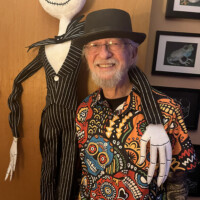
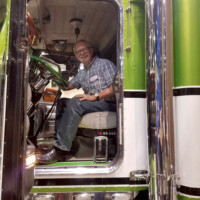
This story first appeared in the May/June 2026 print edition of Truckload Authority, the official publication of the Truckload Carriers Association. All photos are courtesy of Dave Nemo and family.

Cliff Abbott is an experienced commercial vehicle driver and owner-operator who still holds a CDL in his home state of Alabama. In nearly 40 years in trucking, he’s been an instructor and trainer and has managed safety and recruiting operations for several carriers. Having never lost his love of the road, Cliff has written a book and hundreds of songs and has been writing for The Trucker for more than a decade.