



FORT WAYNE, Ind. — The North American Council for Freight Efficiency (NACFE) is releasing its report on the final findings from Run on Less – Messy Middle.
Data Confirms Initial Conclusions: The Messy Middle Final Findings Report, collates the major findings of the five reports from the Run and also puts them in context with the myriad of factors influencing freight’s transition from older, less efficient, costly and higher emission powertrains to the latest production technologies offered in diesel, natural gas, hydrogen and electric powertrains.
Initial Findings
- Powertrain technologies in the trucking industry are constantly evolving yet must compete directly on cost and performance in an environment of shifting regulations and incentives.
- Fleet owners, their customers and the public continue to value sustainability efforts while still looking for good returns on their investments.
- Fleets have more powertrain choices from OEMs, which is creating challenges given the increasing segmentation of the truck market.
- Recent significant powertrain advancements include a 15L natural gas engine, 400+ mile battery electric vehicles, high power fast charging stations, increased availability of renewable natural gas and bio and renewable diesel, and new high-volume OEM entrants.
- All the powertrain technologies are improving and revealing new benefits. However, challenges persist, especially with fueling/charging infrastructure, weight and cost.
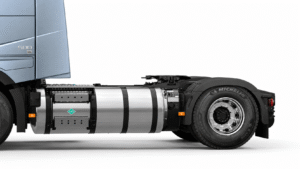
- Natural gas trucks are satisfying the needs of diesel with more power, torque, range and quick fill times.
- Battery electric truck range, weight and costs are becoming more competitive with diesel trucks in similar duty cycles.
- While production of renewable fuels is increasing, it remains well below what is needed for wide-scale adoption by fleets.
- Hydrogen in freight movement is still a nascent technology but is showing promise in certain use cases.
Findings Found Valid
After analyzing the data from the Run, NACFE found that its initial findings were valid.
“We spent a great deal of time analyzing the data from Run on Less – Messy Middle including analyses from key industry stakeholders who presented at our data potluck and discovered that our initial findings were accurate,” said Rick Mihelic, NACFE’s director of emerging technologies.
Below are some examples of how additional analysis of the data served to validate NACFE’s initial findings.
- Fleets universally need powertrain technologies to make sense economically. The math exposed in the Run’s Forecasting The TCO Of Powertrain Alternatives: The Messy Middle Cost Report highlights the multitude of factors fleets must now consider in making their capital investments, and fundamental to that is the fact that freight is a business requiring operations to have positive cash flow.
- The finding that many fleets still care about emissions and sustainability was reinforced in the From Source To Highway: The Messy Middle Emissions Report. Many fleets care about their vehicle’s impact on the health and quality of life of the communities in which they operate.
- Fleets have an unprecedented level of choice in the Messy Middle. OEMs are offering many alternatives in their product lines, reflected by extensive R&D investment over years and recognizing that the Messy Middle is all about providing fleets with choices. The age of one-size-fits-all truck solutions is giving way too much more purpose-built solutions optimized for specific fleet duty cycles and all will need well-trained, properly equipped technicians.
- The initial evaluation of the potential market penetration for the new Cummins 15L natural gas engine seems spot on. Three OEMs — Freightliner, Kenworth and Peterbilt — have already included it as an official option.
- The Run preliminary findings noted Class 8 BEVs such as from Tesla, Volvo, Windrose and others were entering the market with greater range than previously seen. Fleets using BEVs are demonstrating initiative in utilizing short opportunity charging to extend miles per shift and multi-shift operations by adding quick additional electricity to the batteries rather than defaulting to only one charge cycle per day.
- Terrain, Technology and Telematics: The Messy Middle Operations Report confirmed the initial Run assessment that all powertrain technologies are providing improved efficiencies over older fossil diesel vehicles.
- Hydrogen remains a nascent technology. Two Hyundai’s FCEV’s did participate in the Run, but the company is reportedly developing a more North American specification for production in the 2027 to 2028 time frame. Other OEMs, such as PACCAR and Daimler, have delayed production launches of FCEV Class 8 trucks.
Thanking the Industry
“This concludes our analysis of Run on Less – Messy Middle and we want to thank the participating fleets, sponsors, Bootcamp participants and those people who presented thoughtful analyses of the Run dataset during our potluck,” said Mike Roeth, NACFE’s executive director. “The Run cannot happen without the support of the trucking industry, and we are grateful to all parties who assisted in our efforts to bring real-world results of various powertrain solutions to the industry.”
NACFE is in the early planning stages for the next Run on Less, which will take place in 2027.

Dana Guthrie is an award-winning journalist who has been featured in multiple newspapers, books and magazines across the globe. She is currently based in the Atlanta, Georgia, area.