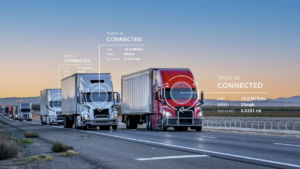
PHOENIX, Ariz. — Trucker Path and Corgi Insurance are launching the industry’s first insurance program to use commercial vehicle navigation and route adherence data in the underwriting process.
Available to Trucker Path app users with fleets of fewer than 10 trucks, the program gives Corgi a new way to measure each fleet’s risk as part of offering rates that more accurately reflect how they operate.
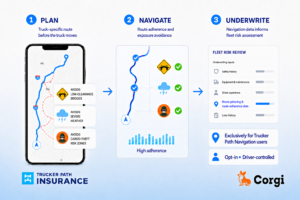
“This is an evolution in insurance actuarial science; for the first time, an insurance carrier is incorporating commercial vehicle navigation data in underwriting decisions,” said Adam Smith, vice president of product & technology at Trucker Path Insurance. “Traditional underwriting largely looks backward at historical losses. Navigation data adds a forward-looking view by showing whether fleets plan efficient, truck-safe routes and whether drivers follow them. That helps insurers better identify and price the behaviors that can prevent claims.
More Precise Measurements
“Truck-specific navigation can reduce exposure to claim-causing events by routing commercial vehicles around weight-restricted roads, unsuitable residential areas and low-clearance bridges, while also helping fleets manage theft exposure by avoiding known high-risk areas,” Smith said. “The program can recognize fleets that consistently take the safest, most efficient routes and identify when actual travel differs from planned routes. That gives underwriters a more precise measure of risk. It also gives fleets another reason to reinforce safer routing behavior.”
The program brings Corgi Insurance’s auto liability, cargo, and physical damage coverage to Trucker Path’s community of app users. As the agency of record, Trucker Path Insurance will connect eligible trucking companies with Corgi’s insurance solutions.”
A New Category of Underwriting
“Trucker Path has earned the trust of millions of truck drivers by solving real problems for the industry every day,” said Drew Bregman, head of strategy at Corgi. “Together, we are introducing a new category of underwriting data that can distinguish the risk of one fleet from another. Better measurement can support rates that are more appropriate for each fleet and encourage the routing decisions that reduce risk for drivers, cargo, equipment, other motorists and the communities they travel through.”

Dana Guthrie is an award-winning journalist who has been featured in multiple newspapers, books and magazines across the globe. She is currently based in the Atlanta, Georgia, area.