



Defense Against the Dark Cyber Arts, Part 1
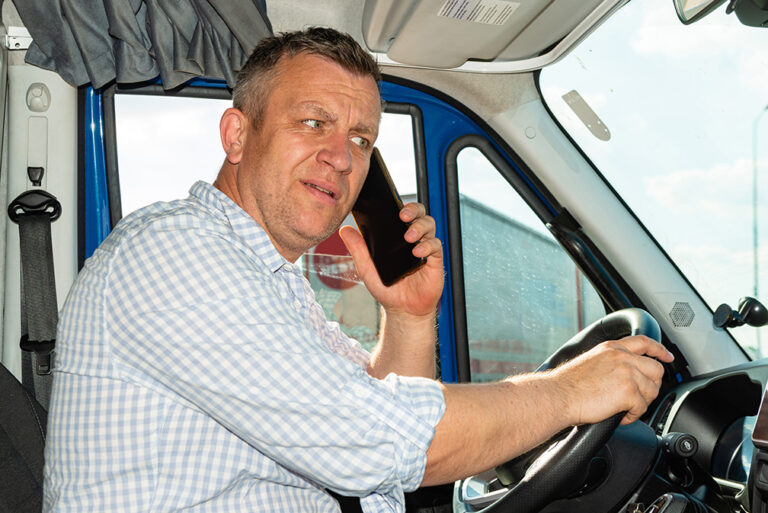
Imagine driving your rig westward across the Great Plains. The weather is moving in, and you’re running barely on schedule after a long detention waiting for the load. A call from a loved one comes up on your phone and you answer. They tell you that they are in trouble and need money — NOW! — or dire consequences await.
You’ve just been introduced to the “distressed relative” scam.
The distressed relative scam attempts to convince people that a loved one is in trouble and that money must be sent to help them immediately.
The scam relies on an emotional response and an overriding sense of urgency. It uses impersonation or threat to your loved one, including enough supposedly “private” details to be convincing.
According to the Federal Trade Commission, Americans lost over $3.5 billion to various imposter scams in 2025, including this one.
AI has become a valuable tool for scammers.
Artificial intelligence (AI) has given scammers host of new tools to enhance schemes to defraud their victims. Social media platforms like Instagram and TikTok enable people to freely share recordings of their voice and likeness. As few as five seconds of recordings shared on social media are all that is needed for convincing voice cloning.
The advent of cash apps, cryptocurrency and digital gift cards enable immediate transfers of money to scammers that are functionally untraceable and unrecoverable. While the loved one was never in actual distress (thankfully!), for a few desperate moments the target of the scam believed it was real.
Don’t trust caller ID.
Caller ID was never built with security in mind. Scammers can spoof any number that they wish, much like the return address on an envelope can be anything that the sender writes. While the Federal Communications Commission is working to combat spoofing, the underlying technical defects mean that proposed solutions may not prevent spoofed caller IDs, but only provide a warning.
Truckers can be especially vulnerable to this scam.
Long hours away from home leads to irregular communication patterns. A professional truck driver’s attention is consumed with the task of safely operating a heavy vehicle at speed. Add to that the anxiety of keeping to the schedule.
An unexpected call from someone at home can feel like welcome relief. This creates a situation where even the savviest driver can be vulnerable to the distressed relative scam.
How does it work?
The distressed relative scam has a methodology that mirrors other social engineering attacks, like the ones described in the NMFTA report: The hard truth about social engineering in 2026. Knowing how the scam is structured will help you determine that you’re being targeted.
Step 1: The Distress Call
This is when you receive a call; perhaps it’s a spoofed Caller ID for your loved one’s phone or an official agency like “Police.” It can also be an unknown number that leaves a voicemail.
That voicemail includes audio cues like crying and panicky speech, and background noises like sirens add to the illusion that what you’re hearing is real.
Step 2: Isolation
“Don’t tell the police!” or “Don’t tell Dad!” or even “Don’t hang up!” are common phrases used to keep you on the phone and limit your ability to verify the information you’re being told.
For truckers on the road, the nature of the job means there may not be anyone else available to ask questions about the call. This step is intended to keep the conversation going, and leads to the next — and most important — part of the scheme.
Step 3: Urgency
This is the step where the scheme attempts to bypass your rational mind and invoke a strong emotional response. Often the urgency is created with a plea for money to pay for bail, a tow or a ransom. It’s something that must be done now or there will be consequences.
Step 4: The Ask
This is the step where the money is made. Scammers will demand that money be sent via avenues that make tracing and recovering the money difficult or even impossible. These can include peer-to-peer cash transfer apps like Venmo, wire transfers, cryptocurrency and gift cards. A trucker may receive a text message on the phone with a link to make the money transfer easy. After all, the scammer already knows your phone number!
So, what can you do to protect yourself from this scam?
• Before ever leaving home, talk to your loved ones about this scam and how to prevent it. Come up with a challenge question and response, or a safe word that doesn’t appear online in any form but is easy to remember.
• If you receive a “distressed relative” call, be mindful of your safety — and that of fellow travelers on the road. Pull off the road, turn on your hazard lights and stop. Remember, this scam relies on your inability to think rationally. This simple act frees up that part of your attention that you’re giving to safely operating your rig.
• If the caller is your child, ask a question that would be impossible to verify from social media. “Do you remember that time when [something that you know is a fictitious incident] happened when you were little? Remember, how you got through that?” A scammer will act like they know what you are talking about. Then the whole act fails.
• Hang up on the call; then call a number for your loved one that you know is correct. They’ll probably be surprised when you tell them why you are calling. If anything, it will be worth a good laugh.
• Never call any numbers provided by the suspected scammers, even if the caller impersonating your loved one claims their phone is low on charge or that connectivity is bad where they are.
• Loop in another person you know, like a dispatcher or a fellow driver. That pause to reach out for help to counter the isolation step in the scam might be enough to diminish the sense of urgency the scammers want you to react to.
• Do not send money by cash app or wire transfer or purchase gift cards and cryptocurrency based solely on a single phone call, no matter how convincing the caller may be. No matter what threat is alleged, delaying any action on your part breaks the sense of urgency.
• Report the attempt to the authorities, such as the local police, the Federal Bureau of Investigations (FBI) and Federal Communications Commission (FCC). They may not be able to do much in your case, but the information you provide them — like phone numbers, date, time and your location when you got the call — may help them discover a pattern of activity and develop a case against the scammers.
The most important thing for you to do is to educate yourself about this scam; then spread the word about what you know. Tell your friends, co-workers and fellow drivers, as you meet them, about what you know. Get the word out about how truckers can protect themselves, no matter how realistic the voice on the other end sounds.
This is Part 1 of a three-part series: Defense Against the Cyber Dark Arts. Check back next month for Part 2.
Additional Resources:

Ken Heskett is a cybersecurity engineer at the National Motor Freight Traffic Association Inc. (NMFTA).
Ken collaborates closely with industry partners, academic institutions and government agencies to strengthen cybersecurity practices and knowledge sharing across the transportation sector.
He holds the Certified Information Security Auditor (CISA), Certified Internal Auditor (CIA), and Certified in Risk Management Assurance (CRMA) designations, and is a regular presenter at cybersecurity conferences and contributor to professional journals.
Ken brings more than 30 years of experience in leadership, risk management, IT operations, IT Audit and project management to his work as a cybersecurity engineer. He combines ethical leadership and hands-on experience with a risk-informed approach to provide practical recommendations to build and preserve business value while implementing cybersecurity best practices.