



America doesn’t need to wait for its biggest problems to be solved. It needs more people willing to solve them.
There is a dangerous assumption buried inside many of America’s biggest challenges: The bigger the problem, the bigger the institution required to solve it.
Because of this assumption, a workforce shortage becomes a government problem. An infrastructure shortage becomes a funding problem. A supply chain constraint becomes a policy problem.
Eventually, responsibility travels so far away from the people who are actually experiencing the problem that waiting becomes part of the solution. Wait for legislation. Wait for an appropriation. Wait for a new program. Wait for the next infrastructure package.
Meanwhile, the people closest to the problem keep living with it.
There is another way.
Some of the most meaningful innovations begin when someone stops asking “Who’s responsible?” and starts asking, “What can be done with the resources already within reach?” That distinction matters, because proximity has value.
The people experiencing a problem often understand things that institutions studying the issue can’t. They see where the friction actually occurs. They know which assumptions no longer make sense. They recognize assets that aren’t being used and relationships that haven’t been explored.
Most importantly, they can move.
Government plays an essential role in solving large public challenges. But government is structurally designed to protect the public interest, establish policy, distribute resources and provide oversight. Asking the government to also discover every new business model, operational innovation and market solution misunderstands what government does best.
Private enterprise has a different advantage.
It can experiment — and when something works, public-private partnerships can turn experimentation into scale. That sequence is important.
Innovation first. Partnership second. Scale third.
FleetForce followed that sequence.
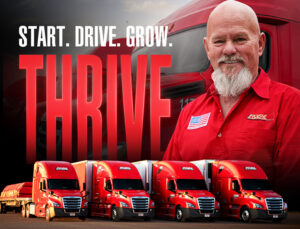
America’s need for commercial drivers is hardly a secret. The industry has discussed it for decades. Billions of dollars moved through workforce development systems … while carriers continued to struggle to find qualified drivers in the places they actually needed them.
The traditional response was to bring students to training.
FleetForce challenged this assumption. Why can’t training go to the demand?
This question ultimately created a model that’s capable of bringing CDL training directly to communities, employers, colleges and workforce partners. Public institutions don’t have to reinvent themselves. Employers don’t have to become schools. Each participant contributes something it already did well.
A private-sector disruption created something public and private partners could scale together.
ParkPro began with a completely different problem and arrived at the same conclusion.
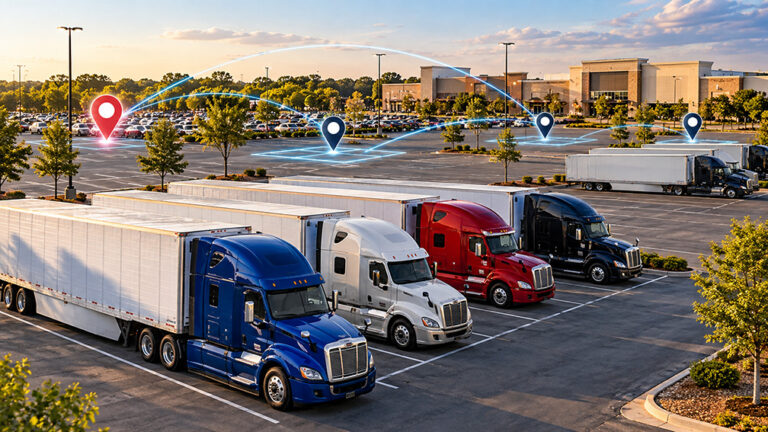
America has a severe truck parking shortage. The conventional response is straightforward: America needs more truck parking, so America needs to build more truck parking.
That will remain part of the solution, but construction isn’t the only source of capacity.
Across the country, major retailers, institutional real estate owners, entertainment venues, municipalities and other organizations control enormous physical assets that already intersect with America’s freight network.
Transportation companies already have relationships with many of them. The ingredients were there. The commercial model connecting them wasn’t.
So, ParkPro began building that model.
Once again, the breakthrough wasn’t waiting for one institution to solve the entire problem. The “aha! moment” came from challenging the assumptions surrounding the problem and then giving organizations that already had a stake in the outcome a way to participate in the solution.
This is where public-private partnerships become far more interesting. They shouldn’t merely be mechanisms for private companies to execute government programs. They can work in the opposite direction.
Entrepreneurs can identify new models, and markets can test them. Private capital can prove those models. Government can remove unnecessary barriers, protect the public interest, contribute resources where appropriate and help successful models reach places the market alone might not.
This creates a very different relationship between innovation and government: Government doesn’t have to come save an industry. Industry doesn’t have to pretend it can solve every public problem alone. Each side can do what it does best.
The country needs more of that.
America’s challenges are becoming too interconnected, too expensive and too urgent for every solution to begin with the creation of another program.
Sometimes the better starting point is a harder question:
What if we stopped waiting and tried something?
Not recklessly. Not without standards. Not without accountability. But with an acceptance that progress carries risk and that preserving an inadequate system simply because everyone understands it carries risk too.
That philosophy has shaped much of my career.
FleetForce and ParkPro operate in different markets, but both business models sprang from a refusal to accept that longstanding industry problems had to be solved in longstanding ways.
There is nothing particularly comfortable about that approach; disruption rarely is.
It requires challenging assumptions held by people and institutions with considerably more resources, history and authority than you have. It means building before everyone agrees. And sometimes it means being willing to look wrong long enough to discover that the conventional wisdom was wrong instead.
But that is how industries move. Public-private partnerships can then turn individual acts of disruption into institutional progress.
That may be one of America’s greatest opportunities.
We already have extraordinary public institutions. We already have extraordinary companies, entrepreneurs, universities, communities, capital, technology and physical assets. We don’t always need another institution.
Sometimes we need someone willing to look at the institutions and assets already around us and imagine a combination nobody has tried before.
Innovation doesn’t ask for permission — because permission implies that someone else already knows the answer. Often, they don’t.
So build the first version. Prove that it works and invite others in. Then give government, industry and communities something worth scaling.
America has spent enough time waiting for its biggest problems to be solved.
The future belongs to the people willing to start solving them.
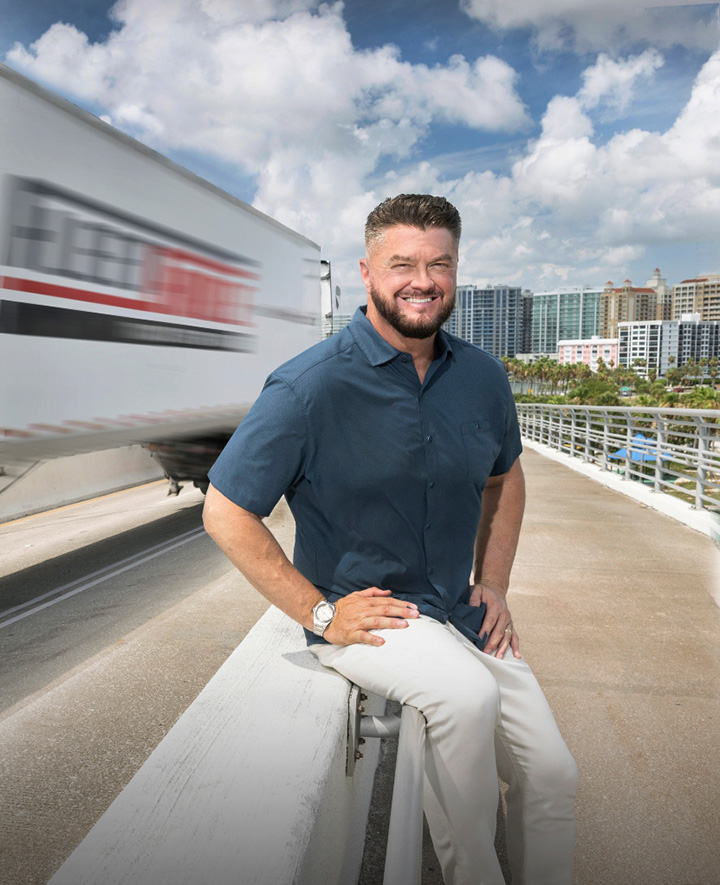
Tra Williams is the founder and CEO of FleetForce Truck Driver Training and ParkPro, two companies focused on solving critical workforce and infrastructure challenges in the trucking industry. He’s also the author of Boss Brain, he’s a nationally recognized speaker and business strategist, and he’s has been featured in publications including Forbes and Bloomberg. A graduate of the University of Georgia, Tra has spent his career building and scaling businesses and developing innovative solutions to complex industry challenges.