




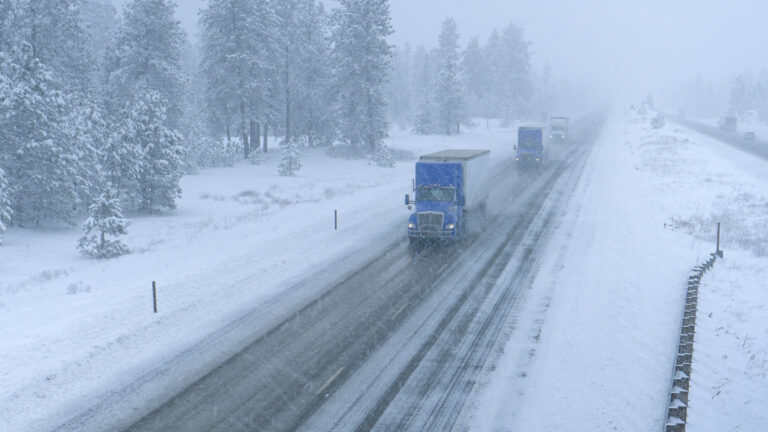
BEAVERTON, Ore. — Despite the uncertainty of Winter Storm Fern in the forecast, load posts on DAT One fell 4% to 2.6 million during the week of Jan. 18-24.
“Reefer load posts increased 4% as dry-freight shippers turned to the spot market to protect freeze-sensitive loads. Expect a jump in reefer spot rates this week,” DAT said. “The number of available trucks declined 4% to 230,746, while national weekly average spot rates fell for all three equipment types for the second straight week. Trends in load and truck posts are likely to change this week due to storm-related restocking and cleanup.”
Broker-to-Carrier 7-Day Average Spot Rates
▼ Dry van: $2.27 per mile, down 5 cents week over week
▼ Refrigerated: $2.70 per mile, down 8 cents
▼ Flatbed: $2.52 per mile, down 2 cents
Dry Van
▼ Van loads: 1.0 million, down 9% week over week
▼ Van equipment: 167,290, down 4% week over week
▼ Linehaul rate: $1.90 per mile, down 6 cents week over week. At $1.90 per mile, the national average dry van linehaul spot rate has fallen 15 cents during the first three weeks of 2026. That’s still 17 cents higher year over year.
Reefer
▲ Reefer loads: 561,436, up 4% week over week
▼ Reefer equipment: 38,591, down 7% week over week
▼ Linehaul rate: $2.34 per mile, down 7 cents week over week
Flatbed
▼ Flatbed loads: 976,556, down 3% week over week
▲ Flatbed equipment: 24,865, up 2% week over week
▼ Linehaul rate: $2.15 per mile, down 2 cents week over week
“Historically, shippers have front-loaded orders in December and early January to avoid traditional factory shutdowns across China,” said Dean Croke, industry analyst, DAT Freight & Analytics. “This year, with the Lunar New Year falling on Feb. 17, importers who could accelerate shipments created an artificial peak in inbound volumes in late 2025 and early 2026. This surge will likely be followed by a ‘volume vacuum’ starting in late February as Asian production centers go dark. West Coast truckload carriers should anticipate a significantly softer spot market in the weeks following the holiday, though carriers with diversified freight bases may be better positioned to weather the downturn.”

Dana Guthrie is an award-winning journalist who has been featured in multiple newspapers, books and magazines across the globe.