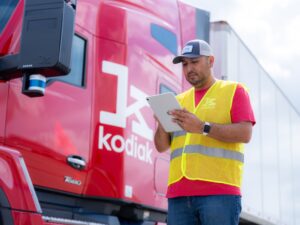




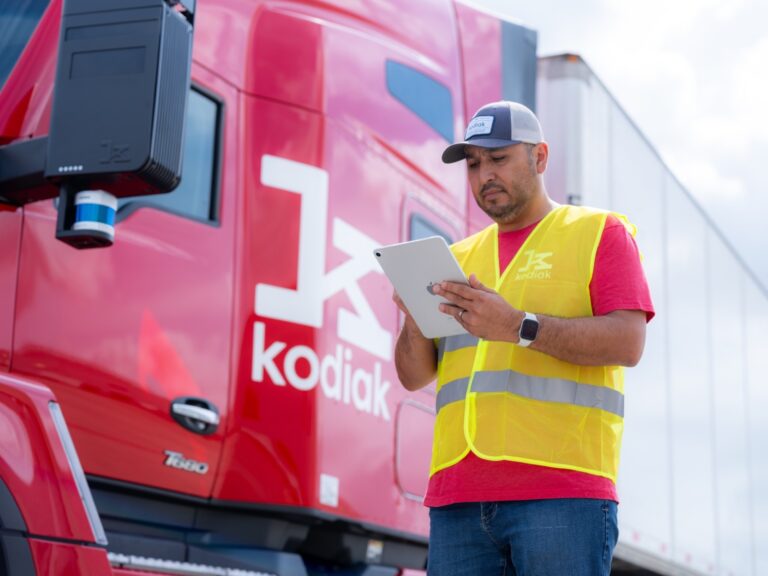
PHOENIX, Ariz. — PrePass and Kodiak AI are announcing a new collaboration to integrate Enhanced Inspections of Kodiak’s autonomous trucks, conducted by Commercial Vehicle Safety Alliance (CVSA) trained inspectors, into established state roadside screening and enforcement systems.
“The next barrier to scaling driverless trucking isn’t inside the truck; it’s the infrastructure around it,” said Chas Wurster, chief technology officer, PrePass. “PrePass has spent years preparing for this future through federal research, collaboration with state agencies and continued investment in roadside screening technology. By working with Kodiak to advance driverless trucking into real-world commercial operations, PrePass is operationalizing the blueprint for what comes next: bringing states, roadside infrastructure and trusted data together to make autonomous operations work at scale.”
Automatic Bypass
Using the PrePass platform, the companies have created an automated bypass process that connects Enhanced Inspection information from Kodiak’s autonomous trucks directly with enforcement personnel who can verify information, authorize bypass and provide additional instructions as needed.
Initial implementation begins Sept. 21 in Texas and Louisiana, and the collaboration paves the way for the safe scaling of driverless commercial vehicle operations nationwide.
According to a joint press release, the initiative combines Kodiak’s autonomous driving technology with PrePass’ nationwide infrastructure and longstanding relationships with state enforcement agencies, addressing a key requirement for driverless trucking across state lines.
Enhanced Commercial Motor Vehicle Inspection Program
“The initiative supports Kodiak’s operational and regulatory readiness as the company prepares to launch driverless commercial vehicle operations on public highways by the end of this year,” the release said.
CVSA developed the Enhanced Commercial Motor Vehicle Inspection Program (Enhanced Inspections) to support commercial vehicles equipped with automated driving systems. Under the program, a CVSA-trained inspector verifies that an autonomous commercial vehicle is free of safety defects before it begins driverless operations.
A successful Enhanced Inspection remains valid for up to 24 hours, subject to applicable program requirements. The PrePass and Kodiak collaboration does not change or replace that process; it makes the resulting inspection information available through established roadside screening systems.
Evolving Tech
“CVSA welcomes this collaboration between PrePass and Kodiak AI to support the implementation of CVSA’s Enhanced Commercial Motor Vehicle Inspection Program for autonomous trucks,” said Collin Mooney, CVSA executive director. “As commercial motor vehicle technologies continue to advance, inspection and enforcement processes must evolve with them while maintaining a strong focus on transportation safety.”
The collaboration also gives state agencies a practical way to incorporate autonomous trucks into existing safety and enforcement operations without creating a separate roadside process.
Real World Solutions
“Launching driverless service is not just about building technology,” said Don Burnette, founder and CEO, Kodiak AI. “It’s about building a solution that works in the real world. Our collaboration with PrePass is an important milestone as we prepare to launch long-haul driverless operations. It enables us to provide critical information to commercial vehicle enforcement agencies, maintain compliance with safety requirements and scale the Kodiak Driver across the United States. PrePass’ nationwide footprint, established relationships with state agencies and ability to integrate emerging vehicle technologies make it an important partner in that effort.”
According to the release, PrePass has decades of experience connecting commercial fleets with state enforcement agencies and roadside infrastructure. Its network spans more than 580 inspection and screening locations nationwide. By building on systems and infrastructure states already use and understand – rather than requiring them to replace proven technology – that footprint provides a foundation for expanding the collaboration beyond Texas and Louisiana and creating a consistent, scalable approach to supporting driverless commercial operations across the country.

Dana Guthrie is an award-winning journalist who has been featured in multiple newspapers, books and magazines across the globe. She is currently based in the Atlanta, Georgia, area.