





Stability and reasonable predictability are the foundation of investment, growth and a resilient supply chain. Without it, businesses are forced to operate in the moment rather than strategically.
That simply doesn’t work and doesn’t allow engineered solutions to be delivered to the market. It’s those solutions that deliver efficiency and the lowest cost and safest outcome.
That message was front and center during a September meeting between Truckload Carriers Association (TCA) staff, Canadian TCA members and representatives of the Canadian Embassy in Washington, D.C.
Our discussion focused on a growing concern across the trucking industry: the need for a more stable and predictable business environment.
From tariffs to cross-border operations, carriers are expected to make long-term investments in an increasingly uncertain landscape. Policies can shift quickly, making it difficult for businesses to plan with confidence. Hope is not a strategy.
Trucking companies need a stable framework that supports investment in people, equipment, technology and safety.
Tariffs on the table
Tariffs were a major topic of discussion. Simply put, they make planning more difficult for carriers and shippers alike.
Rising costs ripple through the supply chain and ultimately reach consumers. At a time when affordability remains a concern for many families, policies that add cost and complexity to trade deserve careful scrutiny.
We also discussed cabotage, specifically the movement of empty trailers, and the importance of efficient cross-border transportation. Canada and the United States share one of the world’s most integrated trading relationships, and trucking is the artery that keeps goods moving between our countries.
Barriers that prevent efficient freight movement undermine competitiveness on both sides of the border.
Shortage of quality drivers
Another challenge is the shortage of qualified professional drivers. It’s not the people; it’s the system. Speed to market is NOT a solution; it’s the center of the problem. Robust testing and training need to be a condition of licensing, not an option.
Despite workforce pressures, responsible carriers continue to invest heavily in safety, training and technology.
Our industry remains committed to improving highway safety and strengthening the transportation network that supports North American commerce.
What we do not need are more layers of unenforced regulation. Trucking is already governed by extensive rules and requirements.
Rather than creating new mandates, policymakers should focus on enforcing existing regulations and ensuring agencies have the resources needed to uphold compliance. Responsible carriers should not bear additional bureaucracy while bad actors evade accountability.
At a time of economic uncertainty, stability is not a luxury. It is a requirement.
Every truck ordered, every driver hired and every investment in safety and technology depends on confidence in the road ahead.
Policymakers have a choice: Continue creating uncertainty or provide the stability that allows businesses to invest and grow. For the trucking industry, and for the millions of businesses and consumers who depend on it, that choice could not be more important.
This article first appeared on TruckNews.com. Reprinted with permission in the November/December 2026 print edition of Truckload Authority, the official publication of the Truckload Carriers Association.
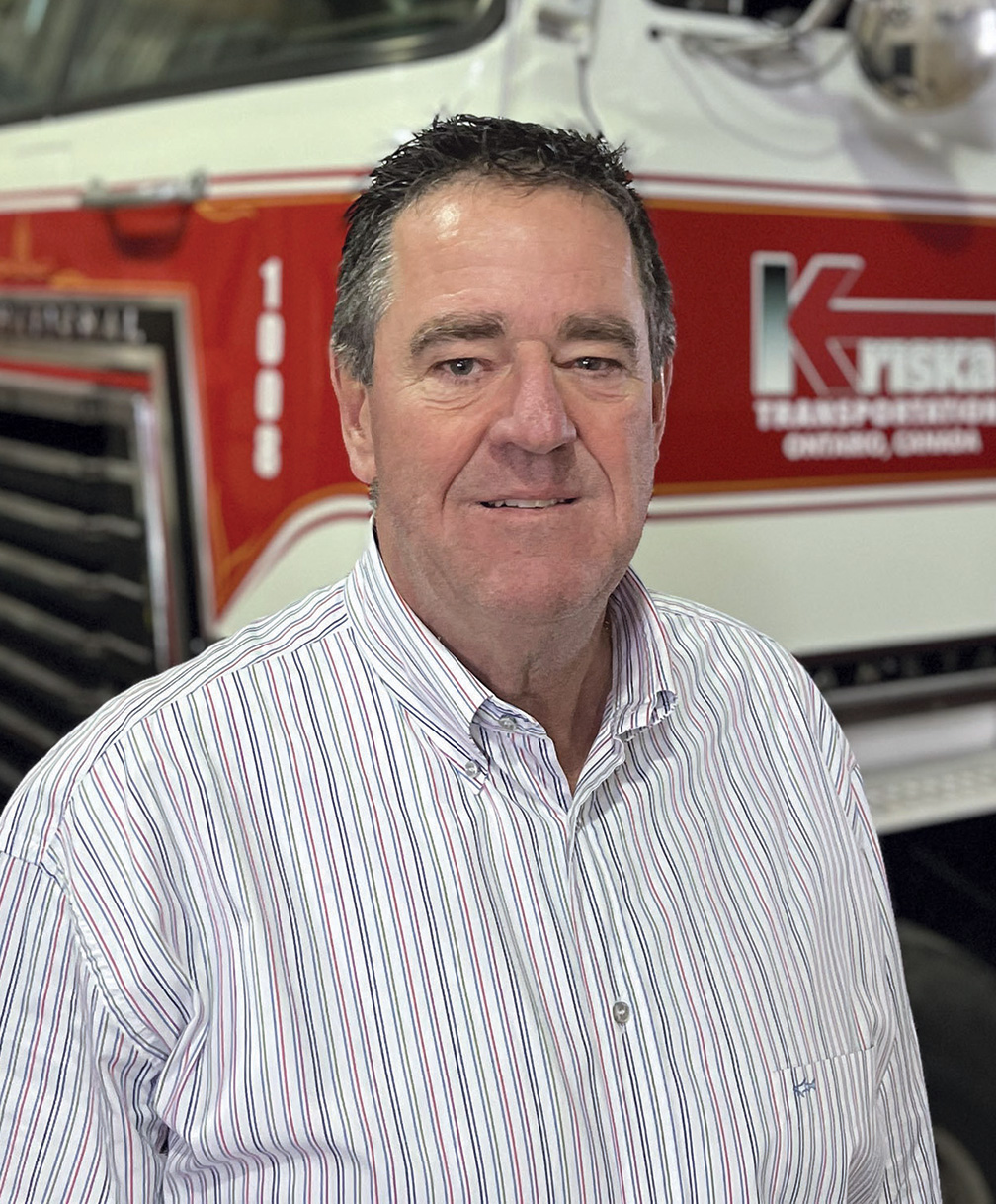
Mark Seymour is the CEO of the Prescott, Ontario, Canada-based Kriska Transportation Group, and the 2026-27 chairman of the board for the Truckload Carriers Association. He has been a dedicated advocate for the trucking industry throughout his career, serving as the Ontario Trucking Association chairman from 2006-2008 and the Canadian Trucking Alliance (CTA) from 2014-2016. He is a founding board member of the Trucks for Change Network, which connects trucking firms with registered charitable organizations requiring transportation services.