





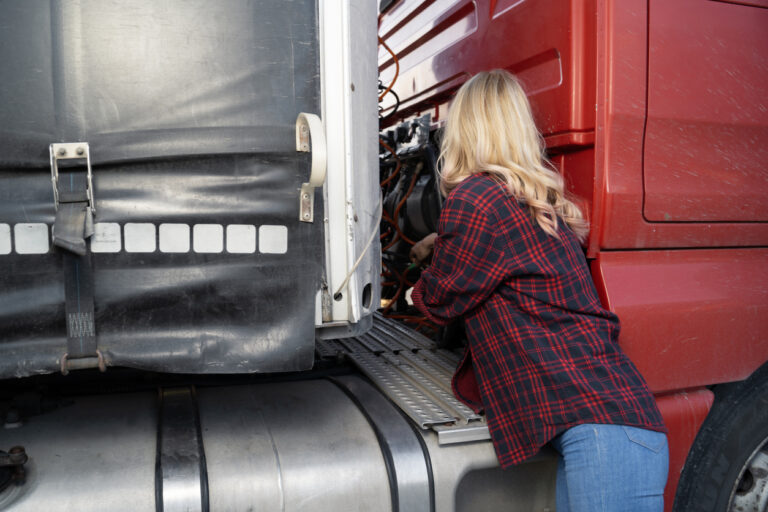
When it comes to safety, the little things matter.
On the highway, a good eye scan helps pick up details that are potentially hazardous, like construction signs or objects in the road. Before the trip even starts, however, the little things matter. A thorough pre-trip inspection helps identify problems before they become catastrophic. And covering all the steps in swapping out trailers can prevent a major issue later.
The problem with coupling and uncoupling is that you’ve done it so many times. It has become routine, and it’s easy for complacency to settle in – and that’s when mistakes happen. A solid, back-to-basics review can help you make sure you aren’t leaving any of the steps out.
Pre-Trip Inspection
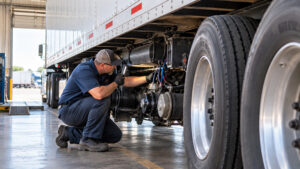
A solid pre-trip inspection is always a good idea, but until the trailer is connected, it’s not possible to check for inoperative lights and air leaks. Still, a quick walkaround and tire thump can help you identify obvious problems like flat tires, doors that don’t close properly and damage to walls and ceiling. If other trailers are available, you’ll want one that’s roadworthy. If you’re stuck with one that needs repair, you can at least arrange for service before you even hook up.
Damage to a dry van trailer can be much more serious than allowing water to get to the load. There’s no “beam” under a van or refrigerated trailer to support the weight of the cargo, like you’d see with a flatbed or tank trailer. That’s because the weight-bearing strength of the trailer is built in to the floor, walls and ceiling. In effect, the trailer itself is a large, hollow beam. Damage to walls or ceiling can weaken the trailer’s weight capacity and, in extreme cases, cause a collapse under load. A little duct tape might seal over a small hole, but it won’t make up for lost weight capacity.
Conscious Coupling
Once you have determined that the trailer is safe, begin the coupling process. Chocking trailer wheels is a good idea, just in case the brakes are out of adjustment or the spring brakes aren’t working. Position the tractor in front of the trailer and begin backing, but not too far. It’s tempting to back under the trailer until the familiar “clunk” is heard and felt before stopping, but it’s best to get out of the truck and make sure the trailer is at the right height for coupling, first. If it’s too low, you could damage tractor or trailer; too high and a dangerous “high hook,” where the fifth wheel jaws close around the tip of the kingpin, can result.
Air suspensions dump valves on tractors have made coupling and uncoupling easier, but not every driver uses them the same way. Some drivers dump suspension air before disconnecting, while others crank the trailer supports down while the tractor still supports the trailer weight. The result is that trailers may be at different heights than the tractor. It may be necessary to adjust trailer height with the landing gear before backing under. When everything is properly aligned, the trailer should be lifted slightly as the fifth wheel slides under.
Giving the Fifth Wheel a Double Check
At this point, many drivers back up until they hear the familiar “clunk” of the fifth wheel closing, but some feel it’s safer to make sure fifth wheel and kingpin are aligned first. Once connected, a tug test can tell you that the trailer is attached, but it won’t reveal if the fifth wheel jaws haven’t fully closed, or if they’ve closed around the tip of the kingpin rather than the shank. A solid observation is necessary and that will require a duck walk under the trailer and a flashlight. Make sure the fifth wheel jaws are fully closed on the shank, and the release handle has fully retracted.
Brake Check
Test the service brakes on the trailer before leaving the lot. A hand valve is the best way to do this, but many modern tractors don’t have them. If one set of wheels skids before the others or the unit pulls to one side, you might have a problem with trailer brakes.
Attach air lines, paying attention to gladhand grommets and securing tabs, and plug in the pigtail. Some drivers are taught to do this before backing under the trailer. Then, crank up the trailer supports as far as they’ll go. Don’t skimp on this step. Driving around with trailer supports not fully raised is a good way to get hung up on a railroad crossing or a steep grade.
Once everything is hooked up, turn on the lights and push in the tractor protection valve to charge trailer air lines. Then walk around the trailer again to check that all lights are working and there are no audible air leaks.
Conscious Uncoupling
The uncoupling process begins with a good look at the space where you want to leave the trailer, before you back it. Make sure there’s enough room and that the surface is relatively level. Deep puddles could cause the trailer to tilt into another trailer. Will the surface hold the weight of the trailer supports? If you aren’t sure, boards under the supports might be necessary.
Once you have cranked down the trailer supports, disconnect air and electric lines and pull forward, stopping while a portion of the tractor frame is still under the trailer. If the trailer supports sink into the ground, the frame will support the trailer while you crank up the supports and add boards. If you pull completely out and the supports don’t hold, the trailer can sink much deeper or even turn over.
Any time your tractor is disconnected from the trailer is a good time to think about greasing the fifth wheel. Grease helps the unit rotate freely in turns and makes for a smoother ride. Too much, however, attracts dust and grit and could eventually clog or damage the fifth wheel moving parts.
It’s never a bad idea to review the basic steps of any part of the driving job. A set process for coupling and uncoupling trailers helps you stay safe before and after the driving.

Cliff Abbott is an experienced commercial vehicle driver and owner-operator who still holds a CDL in his home state of Alabama. In nearly 40 years in trucking, he’s been an instructor and trainer and has managed safety and recruiting operations for several carriers. Having never lost his love of the road, Cliff has written a book and hundreds of songs and has been writing for The Trucker for more than a decade.


As part of the pre-trip when attached to the trailer, shouldn’t the driver take the time to also check that the tractor protection system is functioning properly, in case an air brake system failure occurs on the trailer?