





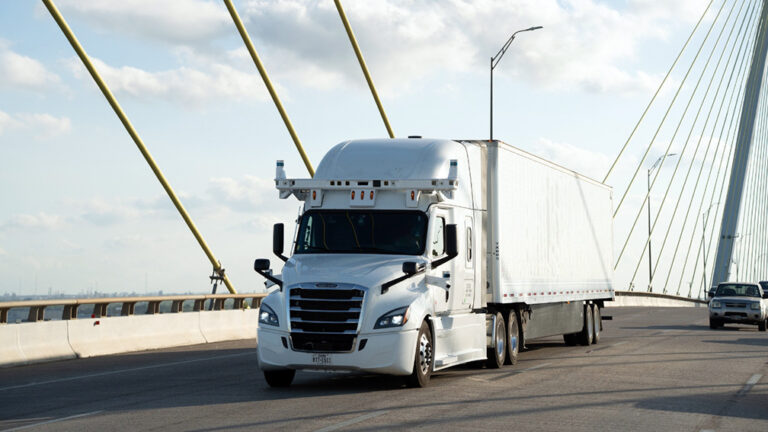
Bot Auto moves real load in Texas with no driver onboard
A big rig rolled out of Houston, Texas, with no one in the cab and still made its delivery near Dallas on time. The 230-mile run covered highways and local roads without a driver, a spotter or anyone stepping in remotely.
According to Bot Auto, this marks the first fully humanless, over-the-road commercial truckload in the U.S.
What stands out here is how the load moved. This was not a test run or a controlled demo. It was booked, priced and delivered through the same freight network carriers and brokers use every day.
Here’s what happened on that run and what it could mean for the industry.
Sign up for Kurt’s FREE CyberGuy Report
- Get Kurt’s best tech tips, urgent security alerts and exclusive deals delivered straight to your inbox.
- For simple, real-world ways to spot scams early and stay protected, visit CyberGuy.com, trusted by millions who watch CyberGuy on TV daily.
- Plus, you’ll get instant access to Kurt’s Ultimate Scam Survival Guide, free when you join.
How the Houston-to-Dallas autonomous big rig run happened
CEO & Founder of Bot Auto, Xiaodi Hou, explained exactly how it played out.
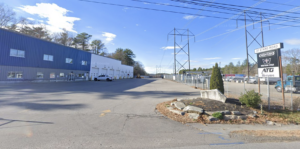
“Our autonomous truck departed Riggy’s Truck Parking in northeast Houston, headed to Hutchins, Texas, just south of Dallas. Departure was late at night as the shipper requested overnight service for this route,” Hou said. “The truck ran 230 miles northbound on I-45, one of the busiest freight corridors in the country, navigated stop lights, side streets and frontage roads. There was no safety driver or observer, nor a remote operator.
“It was booked through our customer Ryan Transportation, true to our operating model, which is compatible with how freight actually moves in America today,” he continued,
That’s the part that stands out: This ran like a normal overnight load, just without a driver.
The load moved through Ryan Transportation, not a special test system. Hou makes that very clear.
“Real freight, real customer, real timeline, delivered safe and on time. We are not disclosing the shipper or commodity, but this was not a load we manufactured to check a box,” he said. “It moved through Ryan Transportation, a Top 20 freight brokerage. Booked, priced, and executed the same way as any truckload moves in America. We made money on it. This is a commercial business, not a research project.”
In other words, nothing about this run was staged behind the scenes.
What “fully humanless” means in autonomous trucking
Many companies still rely on hidden human support. Bot Auto takes a different approach.
“The industry often blurs the line between driverless and human-supervised,” Hou explained. “For Bot Auto, fully humanless means no safety driver, no back-seat monitor, and no low-latency remote human fallback.
“More specifically, our safety design does not require any human to notice, decide or react within one minute to keep the truck safe,” he continued. “We may have operational visibility, just like an airport tower can monitor the plane, but it does not fly the plane. That is our standard: humans can support the mission, but the truck must own the driving safety case.”
That’s a big difference from systems that still lean on human backup.
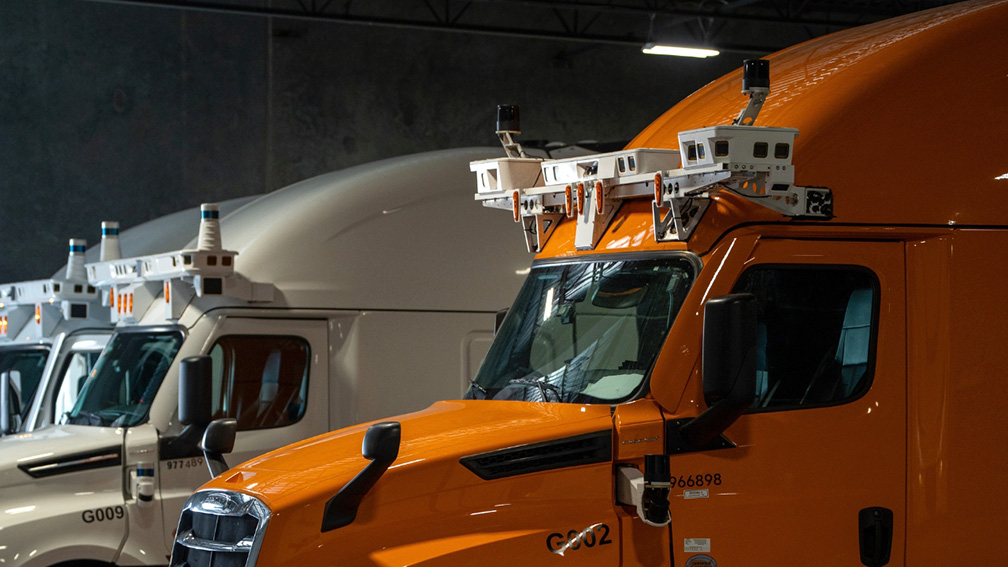
What happens if the truck encounters a problem?
One of the biggest concerns — and understandably so — is how the autonomous driving system reacts under pressure. Hou says the truck is designed to handle that on its own.
“The truck would not wait for a human to save it. If it reached a condition outside its approved operating boundary, it would enter a mitigated risk condition: Slow down, create space, and bring itself to a controlled safe state” Hou said.
“The principle is simple: when the truck encounters extreme or unexpected situations, it does not gamble. It acts conservatively. Sometimes that means stopping; sometimes it means continuing briefly to reach a safer place to stop,” he continued. “Human support can help after the vehicle is already safe, but the vehicle has to own the first minute.”
So the system is designed to play it safe first, then deal with the situation after it is under control.
The safety testing behind removing the driver
Bot Auto says removing the driver came after extensive validation and careful testing.
“We operated on our own internal validation framework, rigorous and data-driven. Millions of miles of simulation, extensive real-world testing with safety drivers, scenario-specific disengagement analysis, and a documented operational design domain defining precisely the conditions under which the system is authorized to run,” Hou said.
“We did not remove the driver until the system demonstrated, across a comprehensive set of tests, that it performs at or above the level of a professional human driver on this route,” he continued. “Safety isn’t one number; it is a system-level property.”
That is the level of testing the company says it absolutely needed before taking the driver out completely.
Why the cost per mile could change the trucking industry
Technology alone does not transform an industry. Economics do. Hou says the numbers already work.
“With that complete accounting, the economics still work decisively in our favor. This run came in below $2 per mile,” he said.
That puts the cost of this trip below what a human-driven truck would typically run.
Hou also pushed back on simplified comparisons.
“I want to be precise here, because the industry has a habit of cherry-picking the easy savings and hiding the real costs … autonomous trucking’s cost impact isn’t a simple trade-off between driver wages and vehicle cost, it runs deep into operations,” he said.
The point here is that the savings go beyond just removing the driver.
And those economics could improve as the network grows.
“It improves at scale. The fixed costs of building and validating the system are largely sunk,” he said. “As we add trucks and lanes, the per-mile cost of the technology keeps declining.”
That means the more trucks and routes they add, the lower the cost per mile can go.
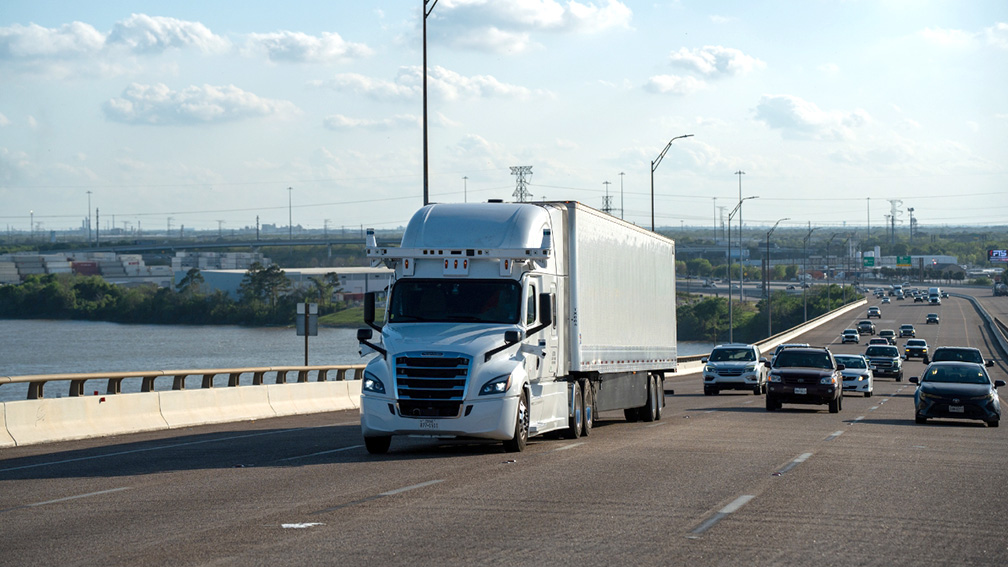
What regulations allowed this run in Texas?
Texas has been one of the most active states in enabling autonomous vehicle deployment.
“Texas passed Senate Bill 2807 in 2025, creating a formal authorization program for commercial autonomous vehicle operations, administered by the Texas Department of Motor Vehicles,” Hou said. “Bot Auto applied and was approved under that program … We met every requirement.”
That includes safety compliance, system reliability and the ability to safely stop if something fails.
Is this a one-time milestone, or is it something repeatable?
The bigger question now is whether this type of run can happen consistently across real freight lanes.
“The Houston-to-Dallas lane is repeatable now, and it isn’t a one-time event,” Hou said. “We selected it deliberately: high freight volume, strong hub infrastructure at both ends, a supportive regulatory environment. Expansion is already underway.”
The company is focusing first on high-volume freight lanes in the Texas triangle, which includes Houston, Dallas and San Antonio.
What skeptics are saying and how Bot Auto responds
Skepticism has followed autonomous trucking for years. Hou addressed that directly.
“A truck left Houston with no one in it, ran 230 miles on public roads, and delivered freight to a customer on time. That happened,” he said. The skeptics had a reasonable argument for a decade because this industry has been long on promises and short on execution.
“I understand and respect that,” he continued. “The question is no longer whether it can be done. It is who can do it at scale, safely, and economically. That is the competition we intend to win.”
What this means to you
This shift could change more than the trucking industry. If autonomous freight scales, deliveries could become more predictable. Overnight shipping windows may tighten. Costs could come down over time.
There are also workforce implications. Long-haul trucking is a major employer, and any transition will raise real concerns about jobs. However, supporters point to reduced fatigue and fewer human errors.
Critics want to see long-term real-world data before drawing conclusions. For consumers, the biggest impact may be subtle at first. Some analysts point out that it could even reduce inflationary pressures, since rising transportation costs are often directly passed on to consumers.
Take my quiz: How safe is your online security?
Think your devices and data are truly protected? Take this quick quiz to see where your digital habits stand. From passwords to Wi-Fi settings, you’ll get a personalized breakdown of what you’re doing right — and what needs improvement. Take my Quiz below:
Kurt’s key takeaways
This Texas run does not mean that empty big rigs are about to take over the highways. It does show the technology is moving out of testing and into real freight.
What matters now is what happens next.
Can this handle different routes, weather, traffic and long stretches on the road while staying safe and consistent? The empty cab is what gets all the attention. The bigger question is how this fits into day-to-day freight and what it means for the people like you who keep it moving today.
As humanless semi trucks become common on our major highways, are you worried about your livelihood? Let us know your thoughts by writing us at Cyberguy.com/Contact.
Copyright 2026 CyberGuy.com. All rights reserved.
Kurt the CyberGuy is an award-winning tech journalist who helps people make smart tech decisions from his contributions to Fox News & FOX Business, beginning mornings on “FOX & Friends.” Stay safe & in the know—at no cost. Subscribe to Kurt’s The CyberGuy Report for free security alerts & tech tips.
New! Join Kurt on his new podcast, Beyond Connected, as he explores the most fascinating breakthroughs in tech and the people behind them. New episodes every Wednesday at getbeyondconnected.com.
Ask Kurt a question or let us know what stories you’d like us to cover.
Follow Kurt on his social channels
Facebook • YouTube • Instagram • TikTok

Kurt Knutsson — best known as “Kurt the CyberGuy” — has a deep love of technology that makes life better. Because of this, along with a passion for helping others, he created the largest syndicated tech lifestyle franchise on television. As a trusted source, Kurt’s unique insider access to major tech launches and industry visionaries has helped earn him two Emmy Awards and a Golden Mic.
Kurt lives between his home in California and New York City, where he is also the chief tech contributor on Fox News & Fox Business networks beginning his mornings on Fox & Friends.
Kurt’s a curious guy. Like many entrepreneurs in life, he wears several hats like running a private investment fund, giving inspirational talks, mentoring start-ups and traveling the world chasing down the next breakthrough.


There is unsafe anyway. Conditions on road will change and everyone can see the difference.Today technology,it’s, not for today road conditions. Good to be human less,but not yet. Must be human-expeditor,otherwise insurance will be unprofitable.