



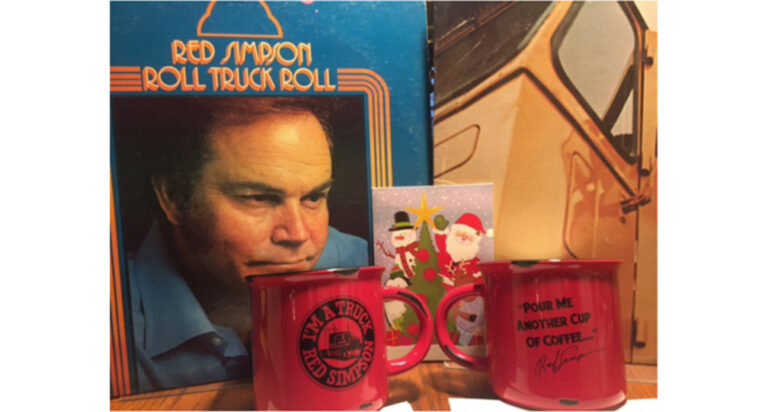
The “Bakersfield Sound” is a brand of country music largely credited to Buck Owens and Merle Haggard, two of the most predominant artists of the 1960s and ’70s who refined their music in the dance halls in and around Bakersfield, California.
Using predominantly electric instruments, the Bakersfield Sound began in the 1950s and defined itself with a rockabilly influence, driving beats and the unique sound of Fender Telecaster guitars.
While the Bakersfield Sound never supplanted the string-heavy style of country music coming out of Nashville, it did gain a strong following during the period and remains a staple of the genre, with performers like Dwight Yoakham having preserved the style.
In its heyday, Owens and Haggard defined the Bakersfield Sound.
But they weren’t alone.
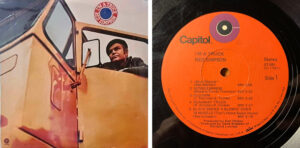
In fact, one of trucker country’s most prolific artists, Red Simpson, has been referred to as the lesser-known musician who made the Bakersfield Sound so popular.
Who was Red Simpson?
Joseph Cecil Simpson was born to a farming family on March 4, 1934, in Higley, Arizona. His ancestors immigrated from Scotland to South Carolina in the late 18th century. (Interesting note: Simpson’s great-grandfather lost an arm while fighting for the Confederacy during the Civil War.)
By the time Simpson was 3, his parents had relocated to Bakersfield, California — the focus of much of the Depression-era migrant farm labor. “Red,” as Joseph was because of his coppery hair, worked the fields along with his family. Later, he pointed out that he picked a lot of potatoes as a youngster but had never picked cotton, which seems to have been a rite of passage for farm boys during the first half of the 20th century.
Music was a family affair.
In their little time away from the fields, the family searched for forms of entertainment — and like many musical artists, Simpson’s family found that diversion in music. Most of his family members were musicians, to a point, and Red learned to play guitar at an early age.
Despite his father’s encouragement to listen to classical music, Red wrote his first country song at the age of 14.
Simpson continued to explore his musical talents.
At the outbreak of the Korean War, he enlisted in the U.S. Navy and was assigned to the hospital ship Repose. Aboard ship, he worked as an engineer charged with operating the condenser that converted salt water into fresh water.
But his time aboard the Repose wasn’t all work.
He helped formed a country band, the “Repose Ramblers,” to entertain the ship’s crew and patients. He soon realized that music was his true calling.
When his enlistment was up, Simpson immediately returned to Bakersfield and jumped into the budding Bakersfield sound of the mid-1950s. He caught on at the Wagon Wheel nightclub in Lamont, California, before being recruited away to play piano at the Hover Club. Soon, he moved on to the well-known Blackbeard Club.
At the Blackbeard Club, he filled in for the lead singer — who was none other than Buck Owens — Buck Owens, on weekends. Along with Owens, Merle Haggard and Bill Woods, Simpson helped make the club a leading one for fans of the new style of country music on the West Coast.
Red Simpson struck up a strong friendship with Buck Owens, and the two became songwriting partners. “Sam’s Place,” a No. 1 hit for Owens in 1967, was a Simpson product. He also wrote hit songs like “Gonna Have Love,” “Dear John” and “Gone,” along with “Heart of Glass,” “No One But You” and “Dear Harlan Howard.”
Then, along came trucker country.
In the mid-1960s, Woods asked Simpson to write some songs about truck driving for him to record. Simpson responded with four original songs, but Woods never recorded them before he unexpectedly passed away. The titles of those songs have been lost to history.
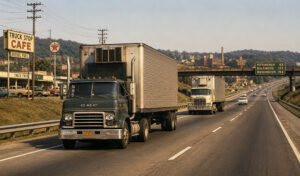
By the 1960s, commercial transportation in the U.S. had shifted to the expanding interstate system, and the citizen’s band (CB) radio had given truck drivers a public persona.
Ken Nelson, a producer for Merle Haggard, tried to convince Haggard to record trucking songs and become the voice of the truck driver in country music. But Haggard was having great success with the Bakersfield Sound and didn’t follow Nelson’s lead.
So, Nelson turned to Red Simpson. Primarily a songwriter without hits of his own, Simpson eagerly accepted Nelson’s offer and began to write and record songs featuring trucks and their drivers.
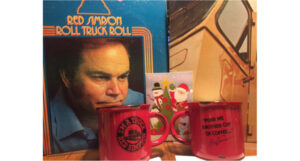
“Roll Truck Roll,” a song Simpson wrote with Buck Owens in 1966, became a modest hit. In fact, later that year, Simpson opened for Owens at Carnegie Hall, the vaunted venue so many classical artists had played. (No doubt, Red’s father was proud.)
Simpson and Owens wrote “Roll Truck Roll” with eyes on capturing the trucker’s life and putting it to music. Focusing on the lonesome lifestyle dominated by dangerous roads and a yearning for home, the song touched on the geography of trucking and made features like Feather River Canyon and Donner Summit famous on the highways.
A large portion of the song is Simpson’s spoken word set to music. Giving voice to the trucker, he laments his life on the road and all the things he’s missing with his family. The “new” of being a truck driver and seeing the country has worn off, and the driver has become obsessed with driving through bad weather what seems to be all the way home. So, he passes the time singing to himself — and that’s where the song’s chorus comes in.
Until next time, pull up some Red Simpson on YouTube and refamiliarize yourself with his music. We’ll continue our look at his career next month.
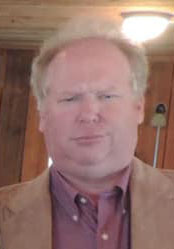
Since retiring from a career as an outdoor recreation professional from the State of Arkansas, Kris Rutherford has worked as a freelance writer and, with his wife, owns and publishes a small Northeast Texas newspaper, The Roxton Progress. Kris has worked as a ghostwriter and editor and has authored seven books of his own. He became interested in the trucking industry as a child in the 1970s when his family traveled the interstates twice a year between their home in Maine and their native Texas. He has been a classic country music enthusiast since the age of nine when he developed a special interest in trucking songs.