





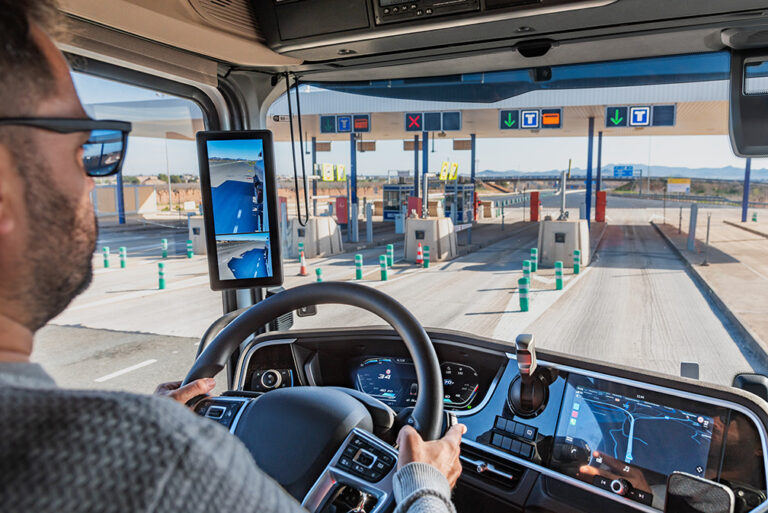
Driver-facing cameras, sometimes called inward-facing or in-cab cameras, have become a standard part of many fleets’ safety programs. For most drivers, the real question isn’t the camera itself. It’s what happens to the footage.
What the cameras see
Nobody at the carrier’s safety department is sitting in a dark room watching a live feed of you driving down the interstate. (This fear sounds ridiculous, but yet, I’ve heard it.) Modern camera systems are event-triggered and rely heavily on AI. They capture short clips based on specific events, and most carriers can choose which behaviors trigger a recorded event.
The systems typically look for things such as hard braking, sudden swerving, harsh acceleration or an impact. Some cameras can detect behaviors such as looking down at a phone, texting, yawning, head nodding or driving unbuckled.
When a trigger happens, the system flags a short clip, usually a few seconds before and after the event, and sends it to the carrier for review. Many systems also alert you in the cab the moment something is flagged, giving you a chance to self-correct in real time.
AI is increasingly impressive, but it isn’t perfect, which is why flagged clips are typically sent for human review before anyone acts on them. Safety teams generally care about context and pattern, not a single event. Fleets that use this technology for coaching are watching for repeated behavior, the kind that could predict a violation or an accident before it happens.
Knowledge is power
If a crash happens, plaintiff attorneys often look for ways to place blame on the commercial driver. This is where a driver-facing camera can become one of your best defenses. If a passenger car cuts you off and slams on the brakes, the front dash cam shows the reckless car while the driver-facing lens shows exactly what you were doing at the same moment.
In a courtroom, video carries a lot of weight. It can show your hands were on the wheel, your eyes were on the road and that you reacted the way you were trained to.
That same evidence cuts both ways.
Even if the video shows poor driver behavior, this knowledge allows the carrier to make the decision on how to best handle the matter. In many cases, the answer may be to quickly try to settle the matter rather than risk taking the matter to trial.
A few things to remember
You don’t have to love the technology, but understanding how it works and why fleets use it can ease some of the common concerns.
1) Driver-facing cameras usually aren’t recording continuously.
It’s completely understandable to worry about privacy, especially when you’re relaxing in the sleeper berth after a long shift, but most modern camera systems are built with privacy limits in mind.
2) Never tamper with the hardware.
Putting a hat over the lens or cutting a wire will usually get you fired, and if you’re ever in a crash, a plaintiff’s lawyer will argue you disabled the camera because you planned to drive recklessly.
3) The camera captures good driving too.
If a passenger vehicle cuts you off or does something reckless nearby, the same clip that could catch risky behavior also shows exactly what you were doing at that moment.
The contents of this article are intended to convey general information only and not to provide legal advice or opinions. The contents of this article should not be construed as and should not be relied upon for legal advice in any particular circumstance or fact situation. The information presented may not reflect the most current legal developments. No action should be taken in reliance on the information contained in this article, and we disclaim all liability in respect to actions taken or not taken based on any or all of the content to the fullest extent permitted by law. An attorney should be contacted for advice on specific legal issues. To contact Drivers Legal Plan, visit www.driverslegalplan.com.

Brad Klepper is a regular contributor to The Trucker, providing valuable insights for drivers and motor carriers. He serves as president of Drivers Legal Plan, a national law firm offering discounted CDL ticket defense to members, and Interstate Trucker, a law firm providing CDL defense with no monthly fees.



With more than three million accident free miles behind me. I don’t need a handler. I am not a marionette for someone in an office or an ai computer that’s algorithm thinks it knows what is the best choice. And there have been quite a few reports of someone in an office watching in a cab after hours. These are just another example of rules regulations and practices that have become reality from statistics from crashes caused by the poorly trained CDL mill graduates and non English speaking we long time drivers have been talking about for years none of the decision makers cared to hear about. Drivers give a lot to keep the economy on track and deserve respect and privacy. Every person deserve being treated that way.
this article is a lie the person that wrote it is a lie they can turn that camera on anytime I know
Solid post. I like that you show the trade-offs and not just the happy path.
Why are there no similarly placed cameras in front of the desks at the Safety Department that the drivers are able to watch and review at random intervals ?