



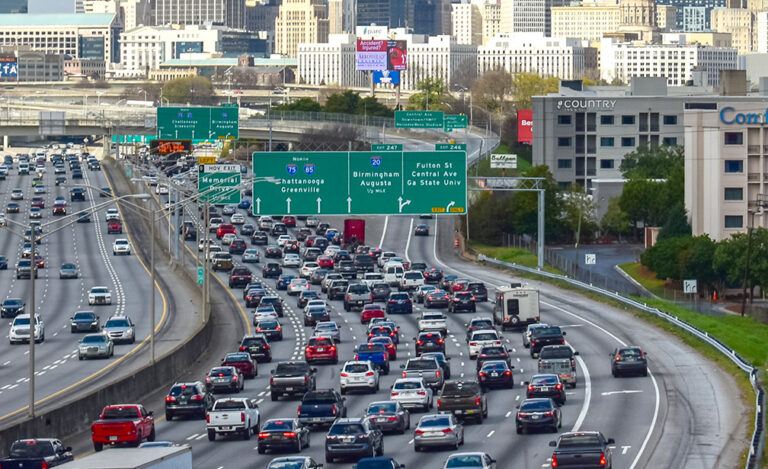
WASHINGTON — The Freedom to Drive initiative, launched April 20, 2026, by the Federal Highway Administration (FHWA) provides an opportunity for states to collaborate with USDOT on tackling increasing congestion corridors across America, according to a statement released by FHWA.
FHWA describes the program as a national effort that will maximize roadway capacities, fast-track projects to relieve congestion chokepoints, and leverage American technology and private-sector partnerships.
In an April 20 letter to governors across the U.S., Transportation Secretary Sean Duffy outlined the initiative asking that each governor identify two to five of their states’ worst congestion bottlenecks — and outline actionable steps to address them.
“Under President Trump, we are working to deliver less congested roads and highways to give you a little bit more time at home with your family around the dinner table,” Duffy said. “Part of ushering in a Golden Age of Travel means making it a little easier to get where you need to go. The Trump Administration is tackling congestion head on to eliminate endless traffic jams and ensure you spend less sitting wasting away in gridlock.”
The FHWA’s new Freedom to Drive website is a resource for technical tools and congestion-relief strategies.
New infrastructure designed to reduce and streamline traffic is needed for numerous reasons, the FHWA says.
In addition to delaying commercial traffic and freight movement, congestion and bottlenecks impact the general public: In 2024, the average urban auto commuter spent 63 hours stuck in traffic. That equals $269 billion in lost productivity.
This problem is not contained to major metropolitan cities, but rural areas also face disruptions due to crashes, severe weather and recreational travel.
“Gridlock and congestion have no place in the Golden Age of Transportation,” said FHWA Administrator Sean McMaster. “The Trump administration is calling on every governor to join us in clearing the bottlenecks and cutting waste to save Americans both time and money. We want local solutions that serve all road users, instead of federal bureaucrats favoring one mode of travel over another.”
What’s the price tag, and who’ll pay?
Rebuilding America’s aging highway infrastructure is estimated to cost nearly a trillion dollars, according to the FHWA statement.
“Leveraging private sector partnerships allows taxpayer dollars to go further while delivering new transportation infrastructure safely and efficiently,” the statement read.
As an example, FHWA pointed to a public-private partnership between the Georgia Department of Transportation, the State Road and Tollway Authority and SR 400 Peach Partners LLC. In August 2025, the U.S. Department of Transportation announced a loan of up to $3.89 billion from the Build America Bureau to help fund the addition new lanes in both directions along a 16-mile section from the Metropolitan Atlanta Rapid Transit Authority (MARTA) North Springs Station to one mile north of McFarland Parkway.
According to FHWA, Georgia project is expected to reduce delays by over 19,000 hours each day — that averages out to about 15 minutes per traveler — due to less idling and traffic congestion. The construction of new bridges, the replacement or widening of some existing bridges, and other safety improvements is expected to reduce traffic incidents by 8%, according to FHWA.
It will also enhance public safety through the construction of new bridges and other safety improvements, the replacement or widening of several existing bridges, and will reduce traffic incidents by an estimated eight percent. This project will offer travelers new choices. The new express lanes will be tolled using dynamic congestion pricing to manage demand and maintain reliable trip times, while current lanes will remain free.

Linda Garner-Bunch has been with The Trucker since 2020, picking up the reins as managing editor in 2022. Linda has nearly 40 years of experience in the publishing industry, covering topics from the trucking and automotive industry to employment, real estate, home decor, crafts, cooking, weddings, high school sports — you name it, she’s written about it. She is also an experienced photographer, designer and copy editor who has a heartfelt love for the trucking industry, from the driver’s seat to the C-suite.