






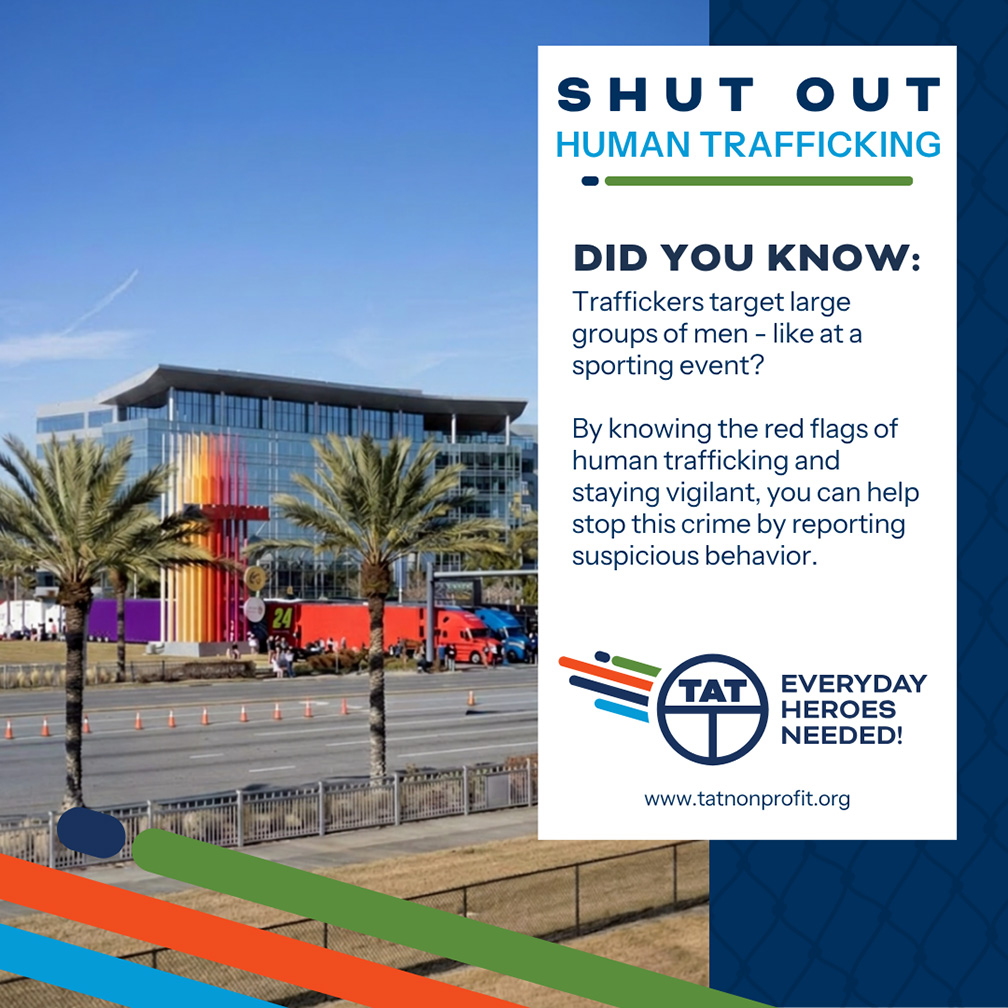
While the fight to end human trafficking is an everyday and everywhere challenge, major events — such as sporting events, concerts, etc. — can lead to an increase in human trafficking activity. This increase is largely a result of location-specific spikes in demand for commercial sex and cheap labor.
By knowing the signs, you can make a difference.
What is the relationship between major events and human trafficking?
Studies have found the influx of people at major events increases both the supply and the demand for commercial sex. Likewise, vulnerable workers in industries like construction, janitorial services, security and garment production have been documented over the past decade to suffer from labor trafficking and exploitation during the buildup to major events.
Leveraging connections with the transportation industry
Just as there are potential upticks in human trafficking activity connected to major events, the need for the services provided by transportation professionals increases significantly as cities, states and provinces prepare for and manage an influx of people in their region.
Trucking
In advance of events, stadium or infrastructure upgrades increase trucking activity, as drivers are needed to transport materials to and from projects. During events, drivers transport various items for teams, vendors, fans, etc. The increase in professional drivers around these events creates additional opportunities to recognize any human trafficking activity that may also be occurring.
Truck Stops
Truck stops located near event venues — or between venues for multi-city events — see an increase in customers during major events, both from the general public and professional drivers. As increases in people and movement correlate to increases in human trafficking, extra vigilance by truck stop employees is essential.
Transit
Major events often follow months, or even years, of preparations from public transit systems as they get ready for a surge in ridership. During events, transit agencies often operate on extended hours and may increase frequency on some routes. Transit agencies also coordinate closely with law enforcement to manage security and other risks associated with spikes in visitors. As transit systems navigate the logistics of major events, human trafficking preparedness is critical.
Motorcoach
Motorcoach operators experience dramatic increases in demand for passenger transportation during major events. For particularly large events, the passenger transportation needs may be higher than the local supply can meet, leading cities and teams to bring in charter bus companies from other regions. Given the important role the bus industry plays in combating human trafficking, preparing for increased activity during major events is important.
Labor trafficking and major events
From construction to food service, housekeeping to manufacturing, labor trafficking intersects with major events at all stages. To read more about the connection between this crime and events, click here.
What can truckers do to help?
Get trained: Watch the TAT video You’ve Seen Us Before (open the TAT Trucking tab and select the “You’ve Seen Us Before” corporate training video).
Be prepared. Download the TAT app.
Spread awareness. Display TAT posters in your workplace and distribute postcards.
Pass it on. Share TAT’s social media graphics and captions.
Every truck driver can be a crucial ally in the fight against human trafficking.

Lyn Leeburg is the communications director for TAT (formerly Truckers Against Trafficking).
Established in 2009, TAT started with a simple yet powerful belief: Every truck driver can be a crucial ally in the fight against human trafficking.
Since then, TAT has grown to encompass a greater portion of the transportation industry, forming deep alliances to maximize collective effort through programs that include innovative training, partnerships with law enforcement, and advocacy efforts. Using targeted systems change as a model, TAT has raised awareness about trafficking, who it targets and its signs, and equipped individuals to take action whenever their lives intersect with it and its victims.
TAT is driven by the belief that together, we can make a difference.




I’ve been trucking for over 14 years. Not one time I encounter anywhere in lower 48 state human trafficking, maybe at the southern Mexican border. Yes, but on the roads of America, I’ve never encountered. I think you just race baiting and yeah, keeping the truck drivers focused on race issurs instead of focusing on real issues. Like high fuel prices n broker, transparency, which you won’t do that, because you are being,paid more likely you’re a puppet of this mega carriers.
Hi Kashif, human trafficking is the exploitation of human beings through force, fraud or coercion either for the purposes of the sex industry or in forced labor. Anyone can be a trafficker and anyone can be a victim…all races, all nationalities, all socioeconomic classes, all genders, and all ages. TAT asks professional drivers to look for indicators of trafficking which could include people being prostituted at truck stops, rest areas, hotels and motels where they may be staying etc. Indicators could include a minor being sold for sex, evidence of pimp control no matter the age of the victim, a car pulling in and dropping someone off at a truck, leaving and then coming back 15 minutes or so later…that would be the trafficker dropping off the victim to a buyer and then coming back to get them…it could be someone who is clearly beaten or malnourished selling sex….in the case of labor trafficking, there is evidence that some professional drivers themselves are trapped in exploitative contracts and being forced to work for no money and debt continues to accrue. TAT wants to see victims recovered and traffickers arrested.
Kylla I totally agree.
Perhaps Kashif is just not their target market & cannot relate to what trauma a 12-13 yr old girl being a slave of any type, might feel like.
Nay sayers, that call out people mentioning a particular race or other demographic, may just have their blinders on, and do not wish to admit it happens under our noses, liked or not.
Even if only 1 victim is found and rescued – it makes it all worth it – in my opinion.