




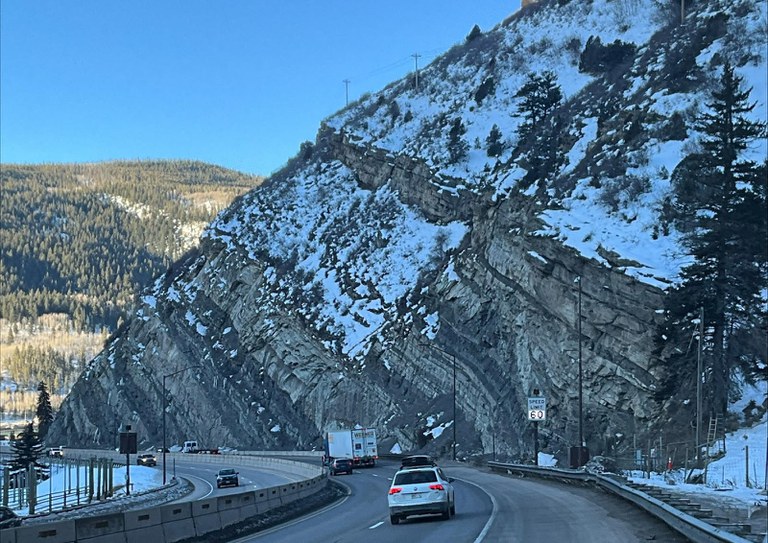
EAGLE COUNTY, Colo. — The Colorado Department of Transportation (CDOT) is using 18 new Variable Speed Limit (VSL) signs along Interstate 70 west of Vail, in Dowd Canyon, between Mile Points 169 and 173.
“The VSL signs were brought online in mid-January, replacing the area’s older static speed limit signs,” CDOT said. “This follows a thorough testing period that was used to confirm the system’s reliability and to confirm its operation within the canyon.”
The newly installed signs are LED electronic versions of traditional speed limit signs. This new technology automatically adjusts the speed limit displayed on the sign based on congestion, traffic conditions and adverse weather such as a snow storm and icy roads. The weather stations also measure visibility, so low visibility will also result in a lower posted speed.
Enhancing Driver Safety
“This milestone represents CDOT’s investment into technologies to enhance driver safety and improve traffic flow along one of Colorado’s most heavily traveled mountain corridors,” said Shoshana Lew, CDOT executive director. “Statewide, weather- and congestion-based VSL algorithms are among the cutting-edge tools CDOT uses to enhance motorist safety.”
The Federal Highway Administration reports VSLs can reduce total crashes by 34%, injury/fatal crashes by 51%, and rear-end crashes by 65%. In Colorado, along the I-70 Mountain Corridor, preliminary data indicates a 20% drop in crashes in the eastbound Mountain Express Lanes since VSL implementation, particularly during busy periods.
Reducing Crashes at a Critical Section
CDOT recognizes that Dowd Canyon is one of our heavier traveled mountain roadways without the resiliency of a frontage road. The investment of VSLs in this location was chosen as one more way to reduce crashes on this critical section of I-70.
VSL signs, some adorned with flashing beacons to draw driver attention, are deployed at other locations across the state, including the I-70 Mountain Express Lanes and in Glenwood Canyon.
Motorists can expect flashing beacons when the speed limit is lowered due to adverse road conditions due to traffic or weather. These visual alerts capture drivers’ attention, reinforcing the need for caution and ensuring safer navigation through this critical stretch of roadway.
Posting the appropriate speed limit in real-time helps prevent crashes and improves traffic flow through the corridor. The beacons flash only when the speed limit is lowered due to adverse road conditions. The beacons remain dark and do not flash when the speed limit is normal.
The speed limit posted on the VSL signs is the enforceable speed limit, not a suggested speed. Drivers exceeding the posted limit may be ticketed for speeding. Variable speed limit signs around the state are continuously monitored by the 24/7 operators in the three operations centers located in Hanging Lake and Eisenhower-Johnson Memorial Tunnels and Traffic Operations Center in Golden.

Dana Guthrie is an award-winning journalist who has been featured in multiple newspapers, books and magazines across the globe. She is currently based in the Atlanta, Georgia, area.