





Did you know vitamin C plays an essential role in supporting your immune system? It also contributes to healthy blood vessels, heart health, wound healing and the maintenance of your body’s connective tissues. Because your body cannot produce or store vitamin C, getting enough each day is important for overall health.
The recommended daily intake of vitamin C for most adults ranges from 65 to 90 mg, although individual needs vary based on age, life stage and lifestyle. For example, people who smoke need at least 35 mg more vitamin C each day because smoking increases the body’s use of this important nutrient.
The ABCs of Vitamin C
Because vitamin C is so important, it’s worth understanding how to get the most benefit from it.
One factor to consider is sugar intake.
Vitamin C and glucose (a form of sugar) share some of the same transport mechanisms in the body. Diets that are high in added sugars may compete with vitamin C uptake in certain situations, making it even more important to focus on a balanced diet rich in whole foods while limiting excess sugar whenever possible.
Vitamin C supplements are a good option for some people.
Taking a vitamin C supplement can be a good way to help meet your daily needs, especially if your diet falls short. Supplements are widely available at health food stores and pharmacies, and quality does matter. Choosing a reputable brand can help ensure you’re getting a product that meets high standards.
Because vitamin C is water-soluble, your body uses what it needs and eliminates the excess through urine rather than storing it for later. For this reason, taking smaller amounts throughout the day may be more beneficial than taking one large dose all at once.
A simple approach is to take 250 mg of vitamin C with breakfast, lunch, and dinner. While it doesn’t have to be taken with food, many people find it is gentler on the stomach when they do. If remembering multiple doses is difficult, taking one daily supplement is still a positive step. However, there’s an even better option.
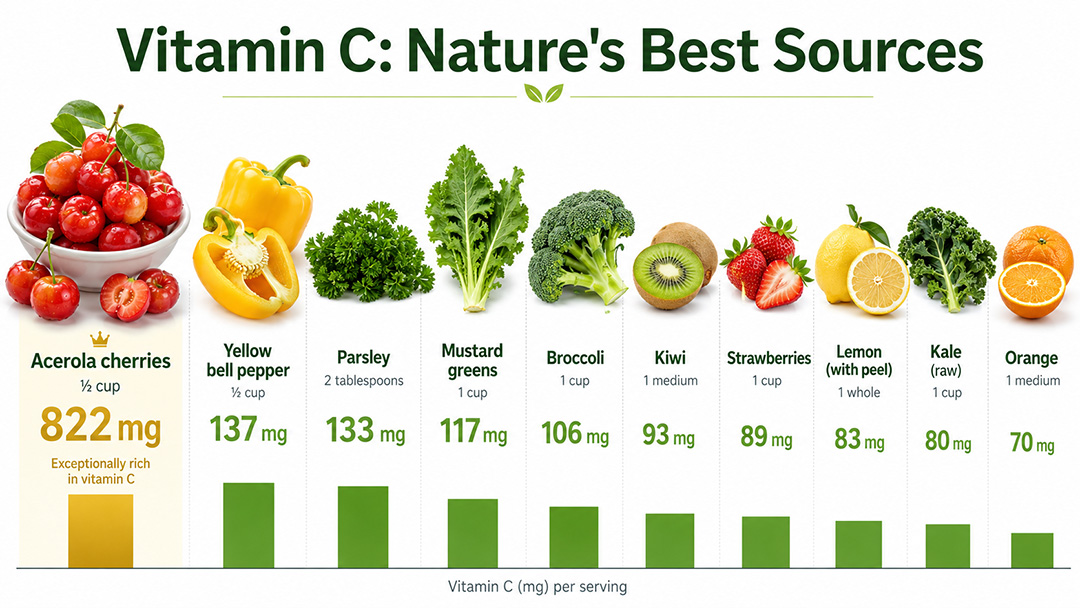
The best way to get vitamin C is through the foods we eat.
Whole fruits and vegetables not only provide vitamin C but also supply fiber, antioxidants, and other nutrients that work together to support overall health. Whenever possible, enjoy these foods raw or lightly cooked, as prolonged cooking can reduce their vitamin C content.
Here are a few excellent sources of vitamin C:
- Acerola cherries: 1/2 cup = 822 mg
- Yellow bell pepper: 1/2 cup = 137 mg
- Parsley (fresh): 2 tablespoons = 133 mg
- Mustard greens: 1 cup = 117 mg
- Broccoli: 1 cup = 106 mg
- Kiwi: 1 medium fruit = 93 mg
- Strawberries: 1 cup = 89 mg
- Lemon (including peel): 1 fruit = 83 mg
- Kale (raw): 1 cup = 80 mg
- Orange: 1 medium fruit = 70 mg
While this isn’t a complete list, it offers several easy and delicious ways to increase your vitamin C intake each day. Making fruits and vegetables a regular part of your meals is a simple step that can help support your immune system and your overall health.
You only have one body.
Caring for your body today can make a difference for years to come. Small, healthy choices made consistently can have a lasting impact. As the saying goes, an ounce of prevention is worth a pound of cure.
The St. Christopher Truckers Relief Fund (SCF) offers numerous programs to help truck drivers balance their diet and maintain good health. To learn more about nutrition and the many health and wellness programs offered by SCF, contact Julie Dillon, health and wellness manager, at [email protected] or 865-544-8145. SCF is ready to help drivers take the next step toward a healthier future.

Julie Dillon serves as the health and wellness Manager at St. Christopher Truckers Relief Fund.
Julie enjoys helping people take practical steps toward better health and supporting them along the way. She is a National Board-Certified Health & Wellness Coach, a Therapeutic Nutritional Counselor, and a Certified Tobacco Treatment Specialist. When she’s not working with the St. Christopher Fund, you’ll likely find her in the garden or helping care for cattle on her family’s Century Farm in Tennessee.