



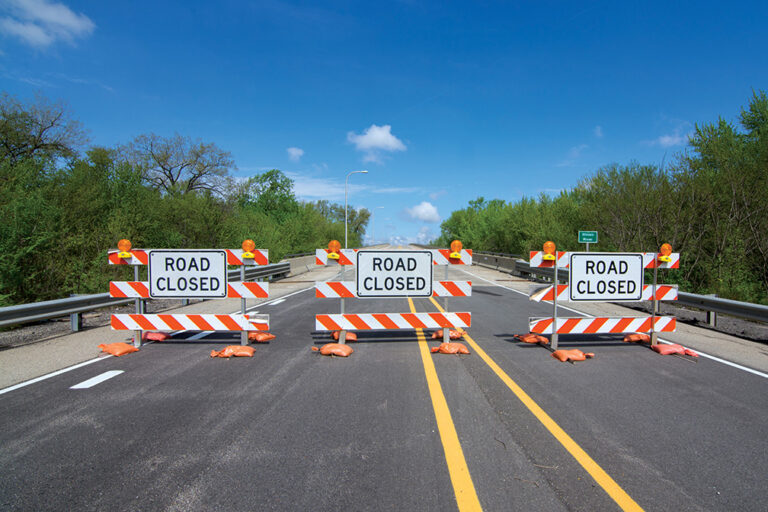
Politics, like trucking, sometimes involves necessary detours and delays. And sometimes an alternate route turns out to be the best way to reach your destination.
This seems to be true for the Truck Parking Safety Improvement Act, introduced in U.S. House of Representatives (H.R. 6104). The bill calls for $755 million in spending over five years directed specifically at providing more commercial vehicle parking. At the time of this writing, the bill is stalled in committee.
Still celebrating the $200 million of funding for truck parking included in the 2026 spending bill approved by Congress and signed into law by President Trump, the trucking industry looked to keep the cash flowing for parking in subsequent years.
“Parking continues to be one of the top concerns of the professional driver that’s operating on a road today, and we have to listen to what their concerns are,” said David Heller, senior vice president of safety and government affairs at the Truckload Carriers Association.
Having the bills stuck in committee, however, isn’t the setback that it might seem to be.
“Remember Schoolhouse Rock? ‘I’m just a bill; I’m only a bill?’ Well, they lied to us when we were kids. That just doesn’t happen anymore” Heller said, explaining that the legislative process has changed
“You’re seeing a lot of bills get introduced these days, not in hopes that they’re getting passed by themselves — which they won’t — but because they can get attached to much larger pieces of legislation,” he said.
Case in point
It just so happens that one very large piece of legislation — the next Highway Reauthorization bill — is currently under discussion in Washington. It also happens that reauthorization bills tend to cover five-year periods. That’s the same period called for in the stalled truck parking bill.
Including the requested funding for truck parking in the next reauthorization bill might increase the chances of getting the funding approved, providing an alternate route to successfully reaching the desired destination, according to Heller.
The current Highway Authorization bill (aka the Infrastructure Investment and Jobs Act) expires September 30, the end of the government’s fiscal 2026. Congress is working to replace it, but it isn’t uncommon for funding to continue bills currently in place to be extended under a continuing resolution (CR) while the process of passing a new bill is delayed, sometimes for months. This year, however, there could be serious implications to a CR.
One is that the term of House Committee on Transportation and Infrastructure Chairman Sam Graves (R-MO) is set to expire. Party rules set limits on how long a member can hold a position of committee chair or the minority party ranking member. In 2024, the House GOP steering committee granted a waiver to allow Graves two additional years as chair.
“After that waiver expires, he’s not going to get another one,” Heller noted. However, the point is now moot — in a March 27 post on X, Graves announced he won’t seek reelection, opting to retire at the end of the year.
Shifting party control
Another pressing reason to get a reauthorization bill passed quickly is the likelihood of a change in party leadership in one or both houses of Congress after the upcoming November elections.
“It’s going to be pretty hotly contested, judging by the results of recent special elections across the country,” Heller said. “The House is in play; the Senate is in play. You’re looking at a potential power change between the Democrats and Republicans.”
A Democratic takeover of the House would give the party majority control of key committees, including Transportation and Infrastructure.
The differences in approach to highway appropriations between the two parties is stark.
In a Washington Times op-ed published in June 2025, Graves was highly critical of the current highway funding bill, claiming the Biden administration had stuffed it in with funding for projects that have little to do with infrastructure.
“Efforts to address infrastructure needs were diluted in favor of progressive political wants and initiatives,” he wrote. “Money designated for infrastructure improvements was coupled with a hefty list of unrelated liberal mandates.”
Vowing that the next infrastructure bill would represent a “return to basics,” Graves wrote, “There are no Democratic roads or Republican bridges, and our surface transportation system needs to be safe, efficient, and absent of burdensome requirements.”
In the same op-ed, Graves called attention to the Highway Trust Fund, pointing out that the current fuel tax system is no longer a sufficient source of funding.
Anticipating this issue, in 2025 TCA recommended instituting a gallons-based user fee that accounts for inflation and requires registration fees for electric vehicles. It’s an approach for which Graves has indicated support.
“We’re not going to be spending money on murals and train stations or bike paths or walking paths,” Graves wrote. “We’re going to spend money on traditional infrastructure.”
Changing priorities
With a change in leadership, possibly to a member of the opposing party, priorities in the next highway authorization bill could quickly change.
For example, funding for bike paths and walking trails could end up replacing dollars for commercial vehicle parking. That’s an incentive for the minority party to delay passage until after the November elections — as well as motivation for Graves and the current Republican majority to get the bill passed.
TCA supports quick passage of a new infrastructure bill, including the truck parking provision.
“Remember, our highways and interstates weren’t designed for freight movement, they were designed in the ’50s and ’60s for national defense,” Heller said. “A lot of things have happened since then that have rendered some of these things obsolete.”
The need for safe parking that allows professional drivers an opportunity to get quality rest isn’t obsolete; in fact, it’s more important than ever.
“We have to make that investment to keep (the interstate system) up to date, because — lo and behold — one of the great benefits of having an interstate system like we have is that it effectively moves freight,” Heller said.
Of course, funding for truck parking should be a vital part of any infrastructure bill, he says.
“Inclusion into a highway bill gives funding for truck parking the greatest opportunity to pass,” Heller concluded.
In other words, the route to get to a safe parking spot for truckers has changed — but it’s not blocked.
This story first appeared in the May/June 2026 print edition of Truckload Authority, the official publication of the Truckload Carriers Association.

Cliff Abbott is an experienced commercial vehicle driver and owner-operator who still holds a CDL in his home state of Alabama. In nearly 40 years in trucking, he’s been an instructor and trainer and has managed safety and recruiting operations for several carriers. Having never lost his love of the road, Cliff has written a book and hundreds of songs and has been writing for The Trucker for more than a decade.