






The trucking world was wildly enthusiastic about President Donald Trump’s April 28, 2025, Executive Order mandating that truck drivers be proficient in speaking and writing the English language.
In reality, the rule was already in place.
Section 391.11(b)(2) of the Federal Motor Carrier Safety Regulations (FMCSRs) states that a person is qualified to drive a commercial motor vehicle if they “can read and speak the English language sufficiently to converse with the general public, to understand highway traffic signs and signals in the English language, to respond to official inquiries, and to make entries on reports and records.”
Trucking and driver groups were quick to support Trump’s 2025 order.
In a statement released by the American Trucking Associations (ATA), Dan Horvath, the group’s senior vice president of regulatory and safety policy said: “We look forward to working with FMCSA and the law enforcement community on an objective, consistent, and effective enforcement standard.”
Todd Spencer, president of the Owner Operator Independent Drivers Association (OOIDA) also spoke out in support.
“Truckers must be able to read road signs, communicate with law enforcement and respond in emergencies,” Spencer said. “When that doesn’t happen, people get hurt — or worse.”
U.S. Transportation Secretary Sean Duffy announced new guidelines at an Austin, Texas trucking event on May 20.
“Americans are a lot safer on roads alongside truckers who can understand and interpret our traffic signs,” he said. “This commonsense change ensures the penalty for failure to comply is more than a slap on the wrist.”
So, why hasn’t the rule been enforced?
Since the English Language Proficiency requirement was already in the regulations, some might wonder why it wasn’t being enforced.
One reason is President Barak Obama’s Executive Order 13166, Improving Access to Services for Persons With Limited English Proficiency, issued in August 2000. The Justice Department was directed to oversee enforcement, requiring other agencies to submit plans of how they would comply with DOJ guidance. The DOJ’s Civil Rights Division began a website. lep.gov, to provide guidance to agencies and organizations trying to comply with the order.
The Commercial Vehicle Safety Alliance (CVSA), which puts together the guidelines used by enforcement officers and inspectors, even removed English language proficiency from its list of out-of-service (OOS) violations.
On May 1, 2025, CVSA reversed this action, noting that drivers must be able to communicate in English or be placed OOS.
Now … what does it mean to be ‘proficient’?
While the need for commercial drivers to speak and read English isn’t disputed, the question of how to determine whether a driver is “proficient” remains.
Just how is English proficiency measured? In the event of a DOT inspection, how does the inspector evaluate the driver’s ability to communicate in English?
On May 20, 2025, Philip Thomas, FMCSA’s deputy associate administrator for safety, issued a memo to FMCSA staff advising all personnel to conduct all roadside inspections in English. Previously, inspectors were allowed to question drivers in their native language or use an interpreter. If the inspector and driver are not able to communicate effectively in English, a two-step assessment will be applied.
Step 1: Driver Interview
Step 1 of the assessment is a driver interview. The inspector will evaluate “the driver’s ability to respond sufficiently to official inquiries and directions in English.” Exactly what the conversation should include is heavily redacted with thick, black lines in the memo released to the public.
No interpreters, cue cards, phone apps or other interpretive aids are allowed to be used. If the driver passes Step 1, the inspector proceeds to the next step. If the driver fails Step 1, he or she is placed OOS, and no further steps are necessary.
Step 2: Traffic Sign Assessment
In Step 2, the inspector conducts an assessment of the driver’s ability to understand highway traffic signs. Again, details in the FMCSA memo have been redacted, likely to prevent drivers from memorizing answers in lieu of fully understanding how to read the signs.
When consistently applied, the two-step assessment should be sufficient for determining English proficiency — but will application be consistent? Will characteristics such as accents, dress, or cultural differences impact the inspector’s assessment?
That begs the question: Will drivers also be fair in their assessment of others?
Speaking as a former truck driver, I hope law enforcement officials will demonstrate more professionalism on the issue of English proficiency than many drivers do. Articles on the topic published by trucking news outlets, including TheTrucker.com, or on social media are often followed by a long list of readers’ comments, most of them critical of foreign-born drivers.
Even though many “foreign” drivers are just as qualified to drive as US-born drivers, they’re often derided as being unintelligent, untrustworthy, poorly trained and unsafe. In addition, many comments disparage clothing that may be customary in other cultures, such as headwear or sandals. And, all too often, comments are racist in nature.
These comments don’t reflect well on the trucking industry as a whole or on its professional drivers.
Far too many American drivers ignore the fact that some of these immigrant drivers drove professionally and safely in their home countries before moving to the U.S. Others may be new to trucking but are able learn quickly and become assets to the industry. Still others are fleeing from oppression in their home countries, while others are simply seeking an opportunity to make a living to support their families.
It’s true that “bad apples” exist, but painting all drivers born outside the U.S. with the same brush is wrong.
Learn in your native tongue, but “drive” in English.
The number of foreign-born drivers operating CMVs on U.S. highways has increased. Helping those who wish to immigrate to the U.S. is big business. Some of the largest U.S. carriers sponsor immigrants for U.S. Employment-Based Green Cards, which are good for up to 10 years, or for other work authorization. Other businesses walk applicants through the entire process — for a fee — helping connect them with sponsoring carriers and apply for visas.
Additionally, an internet search for “English as a second language CDL schools” turns up a school in Fife, Washington, that has instructors who are fluent in Spanish, Russian and Ukrainian. Another school, this one in Frederick, Maryland, touts eight options for languages — three of them from the Middle East. And there are many more.
While students might feel more comfortable and learn more quickly when taught in their native language, proficiency in English remains mandatory for CMV operation.
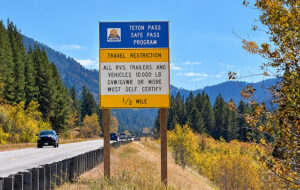
As for road signs, many follow international standards. A red, octagonal-shaped sign means stop, even if it says “ARRET” (French), “ALTO” (Spanish) or “DUR” (Turkish) on it. An inverted red triangle means Yield. A red circle with a slash? Don’t do whatever is in the picture. Some signs, however, contain English text without familiar symbols.
Enforcing regulations requiring English proficiency should help improve highway safety. Thus far, there are no regulations to improve kindness and understanding on the highway.

Cliff Abbott is an experienced commercial vehicle driver and owner-operator who still holds a CDL in his home state of Alabama. In nearly 40 years in trucking, he’s been an instructor and trainer and has managed safety and recruiting operations for several carriers. Having never lost his love of the road, Cliff has written a book and hundreds of songs and has been writing for The Trucker for more than a decade.




>>>a person is qualified to drive a commercial motor vehicle if they “can read and speak the English language sufficiently to converse with the general public, to understand highway traffic signs and signals in the English language, to respond to official inquiries, and to make entries on reports and records.”<<<
Although I have an unlimited CDL A from Germany since 41 years, I am now mandated to go through the entire licensing process as if I never drove a rig before. Studying the Florida handbook to obtain a CDL, it is apparent that this executive order is utterly redundant. Nobody incapable of speaking fluently english and more so understanding its often awkward formulations will ever be able to obtain a CDL. And the major burden is on bureaucracy and not on safe driving. I can hop on any tractor trailer rig and safely drive into the sunrise. But the process to even qualify for a CLP – in order to get my CDL – is reminiscent of the underlying agenda to replace human beings behind the steering wheel with androids/AI. Sure, my personal history is like a roller coaster, but my driving skills are certainly not. Never had an accident, although I was delivering 40 metric tons of sandstone blocks to government construction sites through narrow streets in Berlin. In quintessence, this EO is nothing to help existing CDL truckers, or trucking companies in their jobs and businesses. It is superfluous. What needs to be addressed and fought against is the corruption that exists in federal agencies and black sheep trucking companies that hire people who do indeed not speak English and could never pass a CDL license test.
Kindness and understanding is a beautiful thing in dealing with any individual who legally comes into our nation. As a former Correctional Officer for the State of Texas I was taught that when dealing with inmates, I was to apply the law with firmness but with fairness.
The same goes with dealing with legal immigrants. You draw the line to reach an objective and maintain steadiness without floundering away from what needs to be accomplished. This is being fair to those wishing to perform a job in the U. S.. The way Obama had it set up only left it up to confusion and how political and social whims were dealt with by individual officers and supervisors. The line was pointing to acceptance without merrit. Officers had to adopt the ideas that they had no reasonable way to enforce what the law stated. The letter of the law was too harsh and the new spirit of the law was like whisps of smoke that indicated a law and yet the law was ignored.
Try that kindness and fairness on the survivors and families of those harmed by such wreckless disregard of commonsense.
I have no problem with legal immigration or even foreign visitors. But commonsense and experience has shown me that if I don’t have a fundamental understanding of their native language, I’m a danger to myself and to their citizens. I should be thankful and respectful of their laws and law enforcement.
I am 100% behind enforcing the English language requirement, which, by the way, was put into effect in 1937.
This law is nothing new.
But in all fairness, that isn’t the only problem with these mega carriers sponsoring people to come to this country to drive their trucks.
These mega carriers are paying them substandard wages to pad their own pockets.
Why wouldn’t someone from a poor country, who is used to making $500 a year, not want to come here and make $500 a week?
It’s a win-win for the company and the immigrant. But that doesn’t make it right.
It affects the wage standard of the American drivers, it affects the rates, and it affects the safety of the general motoring public.
As in most cases in this country, we don’t need new laws on the books, we just need to enforce existing law.
The problem with enforcing this regulation, and the reason it was suspended, is that judging what is proficient communication can be subjective. A driver my company employs has been in this country for 30 years, and does speak enough English to communicate effectively. He’s been a truck driver for almost 20 years and has been subject to roadside inspections several times each year. His English had never been a problem until 3 years ago when he was inspected in a sparsely populated state from the northwest. He was not placed out of service, but was issued a citation instead. He felt the inspecting officer had a discriminating attitude. I had no reason to doubt him.
Another reason this regulation was not enforced is that not speaking proficient English does not create an imminent hazard or danger of a crash. I have yet to see any accident data that shows lack of English as a cause of an accident.
The current political climate in our country has allowed many injustices to be committed against immigrants. This new enforcement push will open the doors for more harm to them.
There are currently many legal immigrants who work in the transportation industry. They have a right to be employed just like any other person legally in this country. As I previously stated, the enforcement of this regulation is subjective. To make matters worse, the current FMCSA administration is not transparent in how they plan to enforce this regulation. How is an employer supposed to know how proficient a driver needs to be to pass an inspection? The muddying of this supposedly important standard will only cause confusion and doubt when hiring someone who speaks English as a second language.
CONNOR’S LAW IS 100% Necessary! I pray to got that your families NEVER have to experience the trauma, pain, and devastation that my family was forced to! English proficiency is necessary! HTF ELSE IS ONE GOING TO READ THE 500+ instructional, informational, and emergency signs ON OUR HIGHWAYS. There seems to be a sign of some sort every 50-100 feet along each highway! If you can’t read & understand the words written on them you can’t make a quick enough decision how to react (change lanes, exit, move over, so not enter, slow down, height restrictions, road closures, detours) while driving an 80k lb death machine.
As any long term OTR trucker, we’ve observed an overall change in the “quality” or skill levels of professional drivers.
The American public, as well as some other commercial drivers (local or retired) who may not be as well traveled or familiar with everyday life on the road believe that this is an American problem of failing to meeting training standards and CDL licensure requirements. The most asked question then becomes, “How are so many drivers becoming CDL holders out on U.S. road systems if they can’t speak or read English?”
The answer is simple.
They’re not.
American insurance companies dictate that a hirable new driver would have to obtain a U.S. issued CDL through a commercial driving school which requires taking both extensive written tests and verbal communication with instructors in English. If you can’t demonstrate reading or spoken comprehension, as well as answering questions clearly in a classroom environment, you’ll be asked to leave the course.
But a foreign driver from any other country immigrating into Canada doesn’t. They can attend “training” and have their Class 5 Heavy Truck licensure requirements signed off on by any private business that speaks their native language. Some drivers demonstrate that they never even drove a truck before leasing their own and crossing the border, never to return to Canada.
Mexican LFC drivers on a 1B visa can deliver short distances over the border into the U.S. but are required to return to Mexico immediately afterwards. With the offer of cheaper freight, many American companies illegally send these drivers on loads further into the country.
Any other schools teaching in various foreign languages should have been called into question as English proficiency for commercial drivers has been required in the U.S. since 1934.
That’s precisely why non-resident, non-domiciled commercial drivers are mentioned as targeted for English proficiency per FMCSA policies and DOT regulations. They simply make up 6 out of 10 pro drivers nationwide.
Racist? Hardly. I highly doubt most American CDL holders discriminate against foreign drivers for the country they’re from, what language they speak or how they dress.
Experienced truckers DO discriminate against how they drive, as their behavior is obviously recognized as being unsafe, unaware of certain conditions or situations and lacking in skill levels within the job or within the history, culture and traditions built by U.S. truck drivers themselves. Rookie or poorly skilled American drivers may well receive the same negative attention. Anything else outside those reasons may simply reflect as an identifier for who to look out for within our daily lives as truckers. That’s not racism. That’s classism.
In short?
Foreign non-resident, non-domiciled commercial drivers who hold a license from a foreign country DON’T belong in the U.S. either by legal or morally ethical standards. They’ve weakened the entire American freight carrier industry and left a permanent scar on the face of American CDL a holders of this country to the American public.
Don’t defend them. Get them out.