
A good night’s sleep on the road is more than just shutting your eyes. For truck drivers, quality rest is often the difference between a safe, alert day behind the wheel and a groggy, uncomfortable one.
But if you wake up stiff, sore, or still tired, chances are your body isn’t getting the reset it needs. The truth is, what you do in the 30 minutes before bedtime can make all the difference.
These three simple habits will help you fall asleep faster and ease muscle tension — and help you wake up feeling less stiff. You’ll be ready to take on the miles ahead! If you’d like a bit more shut-eye, keep reading and try these three stretches before bedtime.
1. Pre-sleep reset: Loosen up before you lie down.
Long hours of sitting mean your hips, back and shoulders often take the brunt of the stiffness you feel in the morning. Doing a short, gentle mobility stretch routine before bed signals your body to relax and releases built-up tension.
Here are three easy moves you can do right next to your bunk:
Reclined Figure 4 Stretch
Lie in your bunk or a chair. Cross your right ankle over your left knee, draw in your left leg and grab hold, either with your hands or a strap, and breathe. Hold for 30-60 seconds each side.

Seated Forward Fold
Sit on your bunk with slightly bent knees, relax your torso forward and reach for your feet (or a strap/towel). This stretches the spine and hamstrings. Hold for 30-60 seconds.

Cobra (on bunk or floor)
Lie on your belly with your hands under your shoulders. Exhale as you roll your torso upward, stacking one vertebra at a time. Pull your shoulders down and open your chest forward. Inhale at the top, exhale and then roll back down. Repeat 5-6 times.
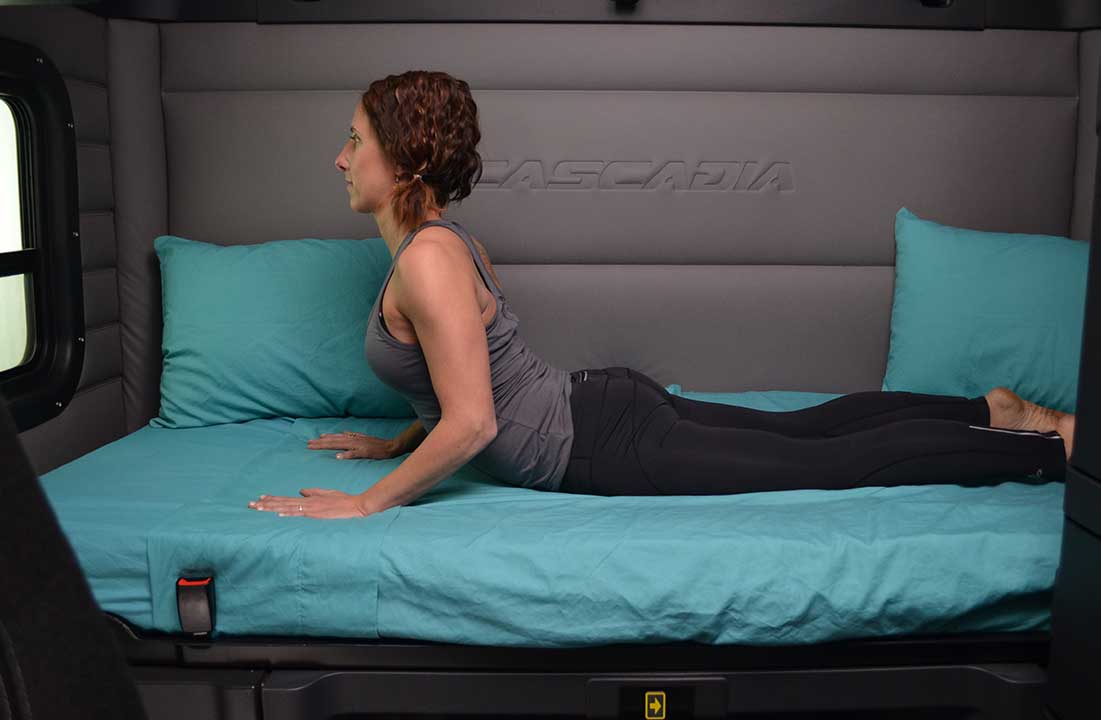
This five-minute “pre-sleep reset” helps reduce morning stiffness and promotes deeper rest.
2. Breathe deep: Switch from stress to rest.
Most drivers spend their day in “go mode” — they’re alert, focused and running on adrenaline (and maybe coffee). But your body can’t fall asleep properly if it’s still wired for action. That’s where deep breathing comes in.
Try this simple exercise:
- Lie down or sit comfortably.
- Place one hand on your belly.
- Inhale deeply through your nose, letting your belly rise.
- Exhale slowly through your mouth, letting your belly fall.
- Repeat for 10 breaths.
This signals your nervous system to shift from “fight or flight” mode into “rest and repair,” making it easier to fall asleep and stay asleep.
3. Cut the screen: Set the scene for sleep.
Scrolling before bed might feel relaxing, but the blue light from your phone, tablet or TV blocks melatonin, which is the hormone your body makes to help you fall asleep. Less melatonin means restless nights and harder mornings.
Instead, try this:
- Shut off screens 30 minutes before bed.
- Dim your lights or use a soft reading light to cue your body that it’s nighttime.
- Sip warm water or caffeine-free tea to help your body wind down.
Think of this as setting the stage for sleep. Just like you check your mirrors before hitting the road, prepping your body for rest makes for a smoother ride tomorrow.
Final mile
You don’t have to overhaul your entire bedtime routine. Just a few small tweaks can change the way you feel when you wake up. By adding mobility stretches, deep breathing and a screen-free wind down, you’re giving your body what it needs to recharge properly.
Truck drivers already work hard enough. Your sleep should work FOR you, not against you. Tonight, give these three steps a try. You might just find yourself waking up ready to roll with less stiffness and more energy!

Hope Zvara is a regular contributor to The Trucker, providing tips for healthy living on the road as well as tips to control stress. She is also the CEO of Mother Trucker Yoga and Road Relief Wellness. She has been featured in Forbes and Yahoo News, and is a regular guest on SiriusXM Radio. Her practical strategies show drivers how they can go from unhealthy and out of options to feeling good again.