




WASHINGTON — Following President Trump signing an executive order that reclassifies marijuana as a Schedule III substance, the American Trucking Associations (ATA) is speaking out.
“While we do not hold a formal position on marijuana legalization or deregulation, we are concerned about the safety risks of rescheduling marijuana without explicit safeguards to preserve the testing authority and technical requirements that apply to DOT-regulated, safety-sensitive workers,” said Brenna Lyles, vice president of safety policy. “A safe driver is a qualified driver. And a qualified driver is drug- and alcohol-free. Motor carriers must retain reliable, enforceable tools to ensure they are not putting unqualified drivers behind the wheel.”
Trump’s Reclassification of Marijuana
On Dec. 18, President Trump signed an Executive Order reclassifying marijuana as a Schedule III substance. It does not make marijuana legal under federal law, nor does it represent a final decision. Any proposed changes would still need approval from federal regulators.
However, the move could boost profitability in the marijuana industry, open the door to expanded research on medical applications, and bring federal policy closer to the more permissive stance already adopted by many states.
Clear Testing Measures Needed
“Without clear measures to ensure DOT’s drug- and alcohol-testing program retains—and is equipped to execute—marijuana testing authority, such a federal policy shift could have serious consequences for highway safety and the integrity of the national transportation network,” Lyles said. “This risk is exacerbated by the fact that there is currently no proven, widely accepted standard to determine marijuana impairment at roadside or before a driver begins operating a vehicle, making it far more difficult to prevent impaired driving.”
According to Lyles, the stakes are not theoretical. Marijuana accounts for nearly 60 percent of all positive drug tests among commercial drivers subject to DOT testing requirements.
Commitment to Highway Safety
“We appreciate the Department of Transportation’s ongoing commitment to highway safety and its work to strengthen driver qualification and enforcement standards,” Lyles said. We urge DOT to proactively coordinate with HHS, DOJ, and Congress to ensure that any federal policy shift preserves a holistic approach to safety, one that maintains the authority, tools, and technical capacity necessary to keep impaired and unqualified drivers off our roads.”
USDOT Weighs In
“We have had inquiries about what impact this Executive Order will have on the Department of Transportation’s longstanding regulation about the use of marijuana by safety‐sensitive transportation employees – pilots, school bus drivers, truck drivers, train engineers, subway operators, aircraft maintenance personnel, transit fire‐armed security personnel, ship captains, and pipeline emergency response personnel, among others,” USDOT said.
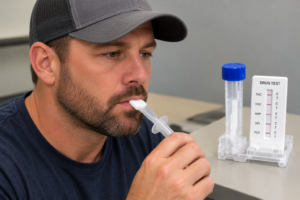
- Marijuana is still a Schedule I drug under the CSA until any rescheduling is complete. It remains unacceptable for any safety‐sensitive employee subject to drug testing under the Department of Transportation’s drug testing regulations to use marijuana.
- Until the rescheduling process is complete, the Department of Transportation’s drug testing process and regulations will not change. Transportation employees in safety-sensitive positions will still be subject to testing for marijuana. Furthermore, the Department’s guidance on medical and recreational marijuana and CBD are still in effect.
Truckers Must Comply with Current Rules
“Laboratories, Medical Review Officers and Substance Abuse Professionals must continue to follow 49 CFR Part 40,” USDOT said. “There are no changes to your roles and responsibilities as they relate to marijuana. We will continue to monitor the rescheduling process and update the transportation industry as appropriate. We want to assure the traveling public that our transportation system is the safest it can possibly be.”

Dana Guthrie is an award-winning journalist who has been featured in multiple newspapers, books and magazines across the globe. She is currently based in the Atlanta, Georgia, area.