



On Thursday, the Trump Administration revoked the long-standing Endangerment Finding, which has been the standard for the government’s ability to regulate greenhouse gas emissions and fight climate change.
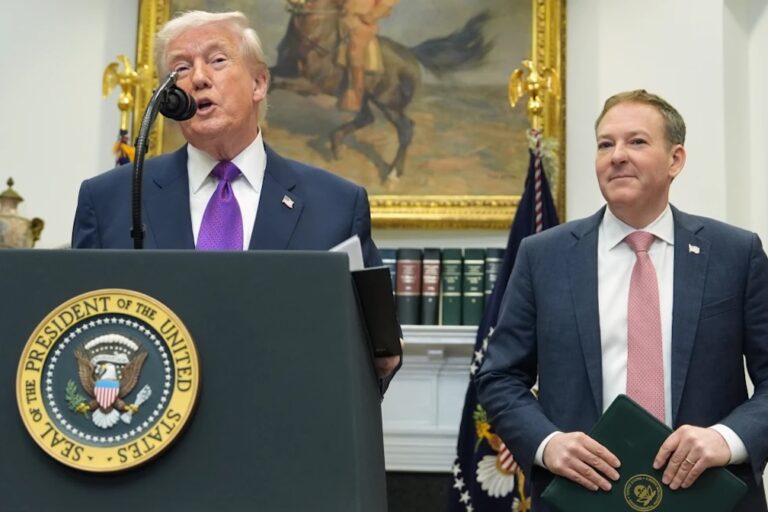
President Donald Trump called the action, as reported by the Associated Press, “the single largest deregulatory action in American history,” while EPA Administrator Lee Zeldin called the endangerment finding “the Holy Grail of federal regulatory overreach.”
It rescinds a 2009 government declaration that determined that carbon dioxide and other greenhouse gases endanger public health and welfare.
The reactions have been mixed in the early hours after the announcement by Trump and Zeldin.
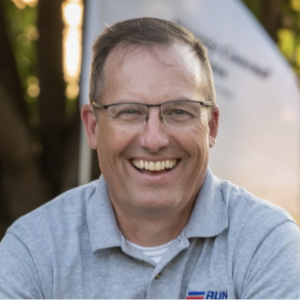
Todd Spencer, President of the Owner-Operator Independent Drivers Association, applauded the action.
“Small-business truckers make up 96% of the trucking industry, and prior EPA greenhouse gas rules threatened to regulate many of them out of existence,” Spencer said. “Electric commercial trucks remain prohibitively expensive and impractical for small carriers due to the upfront cost, reliability concerns, and lack of charging infrastructure. Equipment affordability and uptime are essential to keeping small trucking businesses operational. We commend EPA Administrator Zeldin on his more feasible approach to emissions regulations. We will continue working with EPA to address other nonsensical rules requiring faulty DEF systems that have sidelined small-business truckers for too long.”
OOIDA stated in its release that it submitted detailed regulatory comments to EPA during the public comment period in September of 2025.
“This action from EPA marks a major shift in federal emissions policy affecting equipment investment, operating costs, and regulatory uncertainty for small-business trucking companies,” OOIDA stated in its press release.
“Truckers welcome the decision as a step toward more practical emissions regulations and believe the Agency’s broader regulatory posture could have significant implications for truck equipment affordability and reliability.”
CALSTART’s CEO, Michael Berube, said the “announcement ignores the significant progress U.S. industry has made toward a lower-emissions economy and represents a major step back for clean transportation and American competitiveness.”
CALSTART describes itself as an organization focused on transportation decarbonization and clean air
“The U.S. transportation sector accounts for more GHG emissions than any other sector of the economy. At a time when countries across the world are reducing emissions from vehicles while improving affordability and building a new clean transportation industry, the U.S. is taking a step backwards on its blueprint for transportation decarbonization.
Weakening vehicle standards and undermining the endangerment finding injects uncertainty into the market at a moment when global competition for clean vehicle leadership is accelerating, Berube said.
“Rolling back tailpipe standards has real economic consequences, from higher fuel costs for consumers to significant job loss across the transportation and manufacturing sectors, according to independent modeling,” he added. “Allowing our laws and regulations to ignore the array of threats presented by climate change will only serve to exacerbate these challenges.”
Berube pointed out that private-sector innovators and manufacturers have invested hundreds of billions of dollars into developing cutting-edge, cleaner, more-efficient vehicle technologies — strengthening domestic supply chains, creating high-quality jobs, and positioning U.S. companies to compete in a rapidly growing global market.
“Smart, durable standards have helped the U.S. lead before, and they remain essential to maintaining that leadership,” he said. “By dismantling the standards, we risk ceding our leadership just as global demand for low- and zero-emission technologies continues to surge.
“The scientific and economic case for strong vehicle standards remains clear, and CALSTART will continue working with states, industry, and our partners to defend progress and advance policies that support innovation and competitiveness.”
CALSTART also stated that the action “undermines clean transportation and American competitiveness.
“Since the 1990s, vehicle emissions standards have driven innovation across the transportation sector, accelerating advancements in engine efficiency, hybrid systems, electric drivetrains, and lightweight materials that have reduced emissions while improving vehicle performance. Even more foundational, EPA’s 2009 Endangerment Finding established that GHG emissions threaten public health, providing the legal framework for regulating climate pollution from vehicles and other sources,” its release stated.
Concurrently, E2, which calls itself a national, nonpartisan group of business leaders, investors, and professionals from every sector of the economy who advocate for smart policies that are good for the economy and good for the environment stated via media release that repealing the Endangerment Finding “raises costs for businesses and consumers.
In its release, the organization called the move a blow to both our economy and our environment.”
Sandra Purohit, federal advocacy director for E2, stated that, “This decision will drive up costs for businesses and consumers and weaken our economy. It upends nearly two decades of commonsense policy. It injects huge uncertainty into the marketplace. It discourages capital investment and innovation in the auto industry. And it ignores the economic costs of extreme weather that’s only made worse by rising GHG pollution – including disaster clean-up, higher insurance premiums, lost productivity, and supply chain disruption.”
E2 also stated that repealing limits to GHG emissions from automobiles alone is expected cost Americans an additional $1.6 trillion in fuel costs.
The EPA’s own impact analysis estimates that repealing the Endangerment Finding will cost consumers $350 billion per year, mostly from increased fuel costs, the release added.

Bruce Guthrie is an award-winning journalist who has lived in three states including Arkansas, Missouri and Georgia. During his nearly 20-year career, Bruce has served as managing editor and sports editor for numerous publications. He and his wife, Dana, who is also a journalist, are based in Carrollton, Georgia.