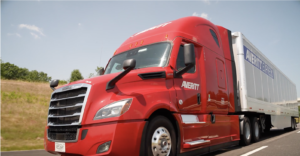





BLOOMINGTON, Ind. — FTR is reporting U.S. trailer net orders were essentially flat month-over-month (m/m) in January at 24,206 units.
“The result sustained the stronger momentum seen in December relative to prior months, though orders were down 4% year-over-year (y/y) and were below the 10-year January average of 26,340 units,” FTR said. “Despite recent demand stabilization and modest improvement, the 2026 order season (September 2025-January 2026) is down 16% y/y.”
Steady Order Pace
The steady order pace likely reflects several factors:
- The ongoing release of deferred orders from September through November.
- Improved carrier fundamentals as reflected in FTR’s Trucking Conditions Index reaching its strongest level since February 2022 in December.
- Firmer freight rates and tighter capacity utilization.
- Outsized spot rate increases in December and then, sparked by weather, again in January.
- Fleets advancing purchases ahead of further tariff-related cost pass-throughs.
- Improved capital planning visibility amid greater Class 8 regulatory clarity.
Production in Line with Expectations, but Muted
“Positive indicators from the truck freight market and improved regulatory clarity are much-needed boosts to the U.S. trailer market, but manufacturers and fleet purchasers still must deal with cost inflation and trade uncertainty that continue to shape pricing and demand,” said Dan Moyer, senior analyst, commercial vehicles. “The Trump administration reportedly is considering a narrower approach to certain Section 232 steel and aluminum tariffs. That move could ease cost pass-through pressures at the margin, though no formal policy change has been announced.”
U.S. trailer production increased in line with seasonal expectations but is still muted at close to the lowest levels since the fourth quarter of 2010. Net orders exceeded build by a wide margin, increasing backlogs, but backlogs were still down substantially versus January 2025.
“Trade risk in the van segment has also become more tangible due to the advancement of an antidumping and countervailing duty proceeding,” Moyer said. “Even though potential changes resulting from that investigation would be months away, it is likely already influencing sourcing strategies and pricing decisions. Overall, existing metals tariffs and the advancing van investigation likely will keep costs elevated and demand selective.”

Dana Guthrie is an award-winning journalist who has been featured in multiple newspapers, books and magazines across the globe. She is currently based in the Atlanta, Georgia, area.