



Driving a truck is a different kind of job. “Going to work” often means leaving loved ones behind for a week or more, while “getting home from work” can mean unpacking the truck, getting some sleep and preparing for the next trip out.
Then there’s the question of parking.
It’s not the usual problem of finding a safe, quiet place to take a 10-hour break before heading out again. Getting home often means finding a place where you can leave the tractor and trailer — a place where neither will be stolen or damaged and the cargo, if any, will be unbothered for a day or two, sometimes longer.
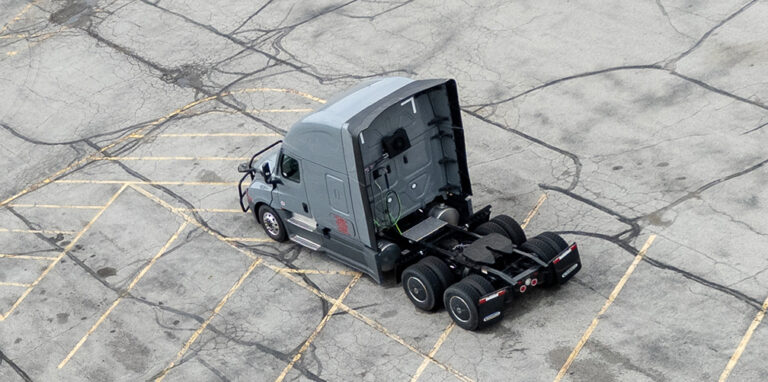
For some drivers, the answer is easy: Drop the truck and trailer at the company terminal, yard or drop lot closest to home. But what if this isn’t an option?
For other drivers, the answer is right at home. Those who are fortunate enough to live on property with ample room to park a tractor-trailer find this particular parking problem easy to solve.
For drivers in urban areas, however — especially where parking a tractor-trailer at home or on the street is prohibited — finding a place to leave the rig can be a challenge.
When convenient parking becomes costly
All too often, the parking problem is “solved” by the proximity of a closed-down strip mall or other business. You may have noticed other drivers dropping off their trailers or leaving their trucks and being picked up by a family member. Or perhaps a nearby truck stop has room for weekend parking. A “parking lot” might even be a wide spot in the road, previously used by construction crews on a road project.
Unfortunately, some drivers discover too late that their chosen parking spot wasn’t so “secure” after all. They return to find their truck or trailer damaged — or missing altogether.
Owners of these lots often have agreements with local towing companies, some of whom may be predatory in nature. In addition, thieves are smart enough to look for secluded places where trucks are left, and they’ve got plenty of time to snoop and see if anything of value is within reach and unsecured.
The problem is that there isn’t a problem … until there IS one. Then you’ll be dealing with the carrier that hired you, as well as with local authorities.
It is always best to get permission, in writing, to park your truck at any location. Some truck stops or other businesses may charge a fee for this, but a reasonable fee is a lot cheaper than an expensive towing bill plus “storage” charges. If there are local ordinances against truck parking, there could be civil fines, too.
Building relationships with local businesses
If your best parking choice is a local truck stop, ask the owner or a manager in charge for permission to park. If permission is granted, find out if there’s an area of the lot preferred for long-term (longer than 24-hour) parking.
But don’t stop there. Be a good partner with the business.
Will your carrier authorize fuel purchases there? Does the business offer maintenance services your carrier could use while you’re off duty? Even if your carrier doesn’t authorize fuel or repairs, you can fuel up your personal vehicle there, or buy things from the C-store.
The hidden risks of unauthorized parking
Strip malls are a popular choice for parking, especially in areas where stores have closed and they appear abandoned. However, someone still owns that property, and they may be trying to attract new tenants or perhaps a buyer for the property.
Let’s face it: A bunch of parked trucks doesn’t help attract new business. If open businesses remain, customers may be hesitant to park around big trucks in the lot.
Worse, strip-mall lots are designed for automobiles carrying shoppers, not 80,000-pound 18-wheelers. Heavy trucks can damage pavement, particularly when steer tires grind against asphalt during tight turns or trailer landing gear bears down on surfaces not designed for the weight.
Even when the pavement holds, entrances and exits weren’t designed for tractor-trailer combinations coming in and out. Damage to curbs, signage and landscaping doesn’t help. Some drivers don’t help their own reputations, either, parking vehicles with oil and other fluids leaking or tossing out trash, including the ubiquitous urine bottles.
The property can change hands, too, as buyers come and go or hire different real estate companies to manage the space. Just because no one objected to truck parking last month does not mean no one will object today. Assuming everything’s OK because you’ve seen other trucks parked there could be an expensive mistake.
Those “side of the road” lots are another possibility, and they are often used by local logging trucks and others. However, these lots may be privately owned or belong to the state or local jurisdiction. Any of these owners can decide they no longer want to allow truck parking at any time.
Other businesses that may welcome truck parking include maintenance facilities, truck dealers, and even restaurants or motels that have truck parking for their guests. Some even have fenced, secure lots, sometimes well lit, that provide more security than open areas. Again, being a good business partner helps the relationship. What business can you throw their way in exchange for parking privileges?
Parking without permission can create another potential problem — liability. If someone strikes a truck parked in an unauthorized location, questions could arise about whether the vehicle should have been there in the first place.
Depending on the circumstances, the driver or carrier could face legal claims. People, especially children, could get hurt climbing on the equipment. Any part of the cargo that’s leaking could be claimed to have caused harm to someone. If your equipment is unsecured and is parked where it can be accessed by others, anything can happen.
Finding a secure place to leave your truck while you’re spending time with family can be frustrating, and the best option might be farther away than you’d like. But a few extra miles and a few dollars could save you a much bigger headache down the road.
The peace of mind of knowing your truck and trailer are secure helps you enjoy your time off, helps build relationships with local businesses, and helps your carrier build confidence in your decision-making skills.

Cliff Abbott is an experienced commercial vehicle driver and owner-operator who still holds a CDL in his home state of Alabama. In nearly 40 years in trucking, he’s been an instructor and trainer and has managed safety and recruiting operations for several carriers. Having never lost his love of the road, Cliff has written a book and hundreds of songs and has been writing for The Trucker for more than a decade.