



Trucking songs, truck driving songs, road songs, songs to travel by — these terms apply to the music the stereotypical truck driver tends to listen to while on the road. For several decades in the late 20th century, these types of songs formed a substantial genre of their own — albeit without an official name.
Despite the similarities to the terminology, though, the types of music have distinct meanings, and I’ve written about many of them in some 85-plus columns for The Trucker over the past six years.
But what do the terms have in common? More importantly, what are the differences? Let’s take a look — and let’s assume that “classic” is a word that can be applied to all.
Standing the test of time
When I refer to “classic,” I’m writing about songs and music that have stood the test of time and are among the best examples a genre of music offers.
In reference to country music, “classic,” is typically reserved for decades-old songs representative of the ideals defined by country music. Whether we’re talking about songs that tell stories — of patriotism, of specific geographical areas or of home — classic country music has various niches, and they’re typically backed by equally classic country instruments like fiddles, the upright bass and steel guitars.
What are trucking songs?
Classic trucking songs, at least those of the country variety, instill the basic elements of country music into stories that are most often about the road, although other themes may enter the equation.
In general, trucking songs can be thought of as having lyrics about trucking, and they may come from any genre. Although it remains the clear leader, country music has never had a stranglehold on trucking songs.
For instance, the Grateful Dead’s “Truckin’” includes many aspects of a classic trucking tune. It has ample geographic references and uses “trucking” to describe traveling around the country — all the while thinking of home. But there’s one distinct difference between “Truckin’” and the industry’s image of trucking music: The Grateful Dead has never been confused with a country act.
Lobo’s “Me and You and a Dog Named Boo” is another non-country song based on themes truckers live by. And “30,000 Pounds of Bananas,” by Harry Chapin, has all the makings of a good trucking song … but once again, it’s not performed by a country artist. The lack of applicability to the country music genre doesn’t necessarily discount their quality or status as trucking songs. But in penning this column, I just think truck driving songs are better when they are produced by country musicians.
Road songs
There are a lot of “road songs” out there in every genre, and they don’t always have trucking themes. From the country music perspective, Roger Miller’s “King of the Road” and Charley Pride’s “Is Anybody Going to San Antone?” are classic road songs that overlap into truck driving music. And Willie Nelson’s “On the Road Again” — possibly the quintessential road song — certainly crosses into truck driving music as a classic road song.
Then, of course, there are songs that don’t necessarily fall into any specific prototype of trucking music. These are typically considered songs to travel by or traveling songs.
“I’ve Been Everywhere,” performed by either Hank Snow or Johnny Cash depending on your preference, is a classic traveling song. However, it creeps over into the realm truck driving music if you consider the introductory verse that is not always played with the “meat” of the song.
Gary P. Nunn’s “London Homesick Blues,” the theme of the PBS program “Austin City Limits,” is also a traveling song, conjuring thoughts of being weary of the road, feeling out of place and yearning for home. Nunn makes no reference to trucking in the song. Even so, the tune has crossed that thin line separating truck driving and travel music.
Others, like “I Hear Little Rock Calling,” “Long Black Veil,” and “Knoxville Girl” also have traits of truck driving songs even though they in no way deal with trucking itself.
Enter “Trucker Country”
In the end, what it all boils down to is this: Another genre of music, or at least a sub-genre of country music, must be developed if a road or travel song is to be equated with what we typically think of as truck driver songs.
Some have adopted the name “Trucker Country” for this type of music, and I think it is a good one.
Trucker Country doesn’t imply that a song has to be about truck driving, or even about the road, to qualify for the genre. Rather, it simply needs to have the elements of a song that include the values that truck drivers hold as a whole — patriotism, home, geography or a sense of place, and a general knack for storytelling. When defined in this way, the definition of Trucker Country becomes clear, and the artists that sing it come to the surface.
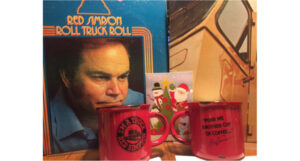
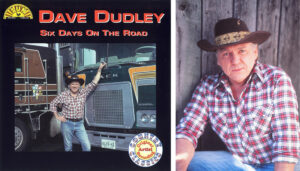
Trucker Country artists include many country singers who have recorded truck driving music, including Dave Dudley, Red Sovine, Red Simpson, C.W. McCall, The Willis Brothers, Del Reeves and Dick Curless. These artists all made a living off trucker country tunes in the 1960s and 1970s. They became especially popular during the early part of the 1970s, when the “outlaw trucker” became an American cultural icon.
The songs these artists performed, ranging from “Six Days on the Road” to “Phantom 309” to “Convoy” are what the public envisions when thinking of the trucking music of the classic era.
Other singers, like Johnny Cash, Jerry Reed, Buck Owens and Merle Haggard also took advantage of the popularity of Trucker Country with songs like “All I Do is Drive,” “East Bound and Down,” “Truck Drivin’ Man” and “White Line Fever.” And in the novelty category of trucker country, who can forget the likes of Cledus Maggard and the Citizens Band (“White Night”), Red Simpson (“I’m a Truck”), Moe Bandy and Joe Stampley (“Where’s the Dress?”) and — dare I consider it a novelty song? — Red Sovine’s “Teddy Bear.”
If one wants to define “Trucker Country,” perhaps starting with a good story, a sense of place, patriotism and a look at the issues defining America is as good a place as any.
Until next time, remember: Trucker Country comes in a variety of flavors. Whether you get your kicks from John Denver’s “Country Roads” or Red Sovine’s “Getty-Up-Go,” there’s plenty of Trucker Country to choose from. Check out YouTube and make yourself a play list. It’ll make the miles pass a little faster as you head home.

Since retiring from a career as an outdoor recreation professional from the State of Arkansas, Kris Rutherford has worked as a freelance writer and, with his wife, owns and publishes a small Northeast Texas newspaper, The Roxton Progress. Kris has worked as a ghostwriter and editor and has authored seven books of his own. He became interested in the trucking industry as a child in the 1970s when his family traveled the interstates twice a year between their home in Maine and their native Texas. He has been a classic country music enthusiast since the age of nine when he developed a special interest in trucking songs.