




When Jeff Arnold joined the North American Transportation Management Institute (NATMI) in 1994, trucking was still largely an analog business. Training presentations were created using slide carousels. Files were paper-based, fax machines were commonplace and email was still relatively new.
Now, more than three decades later, Arnold has watched trucking embrace ELDs, sophisticated data analysis, automation and artificial intelligence. But despite all the technological changes, he says, the fundamentals of good safety management have remained remarkably consistent.
“The principles and concepts behind it are pretty timeless,” he said. “But how you go about putting those principles into practice — that’s what’s changed the most.”
As NATMI’s executive director, Arnold leads an organization that trains and certifies safety directors, maintenance directors, driver trainers and other transportation professionals. NATMI is an affiliated organization of the Truckload Carriers Association and is separately incorporated as a 501(c)(3) organization.
Arnold didn’t set out to build a career in trucking.
He arrived at NATMI with a background in association management rather than transportation. A colleague who had taken a position with the American Trucking Associations’ (ATA) Safety Management Council told Arnold about an opening at NATMI, which at the time was under ATA.
“I was not in the trucking industry before I started working for NATMI,” Arnold said. “My background has been in association management.”
He quickly discovered a love for the industry.
After joining NATMI, Arnold found himself learning the industry on the job, working with volunteers, developing training programs and listening to the issues facing transportation professionals.
“I’m still getting immersed,” he said. “There’s always so much to learn.”
That learning process has continued throughout his career. NATMI became affiliated with TCA in 2001, and Arnold has spent most of his professional life with the organization.
His undergraduate degree from the University of Colorado was in journalism, and he originally intended to become a newspaper writer. He also once envisioned becoming a novelist. Writing, however, remains an important part of his professional career, including articles and educational material for the transportation industry.
That background has given Arnold another lens through which to view trucking’s evolution.
Technology has been the biggest change.
“The biggest shift has been technologically,” he said, describing an industry that has moved from “very analog, very paper-based, boxes of files” to electronic systems, software and AI.
The transformation has changed NATMI’s training as well. When Arnold began, courses addressed paper logs and log auditing. Today, safety professionals must understand ELDs, software, automation, artificial intelligence and increasingly sophisticated data analysis.
Technology, Arnold believes, creates opportunities as well as challenges.
“Carriers have a great opportunity now to get really deeper into the root cause of issues and identifying trends,” he said.
Those objectives are hardly new. Safety directors have always looked for accident and injury trends, tried to determine root causes and worked toward systemic solutions. What has changed is the ability to process and analyze information at a much deeper level.
The rapid pace of technological change, however, means NATMI is constantly adapting its curriculum.
“A lot of the principles never really change,” Arnold said. “You know, the principles and concepts around good safety management are somewhat timeless, but the tools are what really changed the most.”
That philosophy extends to the way NATMI delivers its programs.
Face-to-face training remains the organization’s most popular format, but virtual training, online learning components, learning management systems and online certification testing have become integral parts of the mix. Certification applications and exams now can be handled electronically.
The certifications themselves can serve as more than professional development. Arnold says some organizations list NATMI certification as a requirement or preferred qualification for safety director positions, while others use it as part of a career ladder. NATMI credentials can also help ensure an objective professional qualification when a safety director is called upon to testify in court.
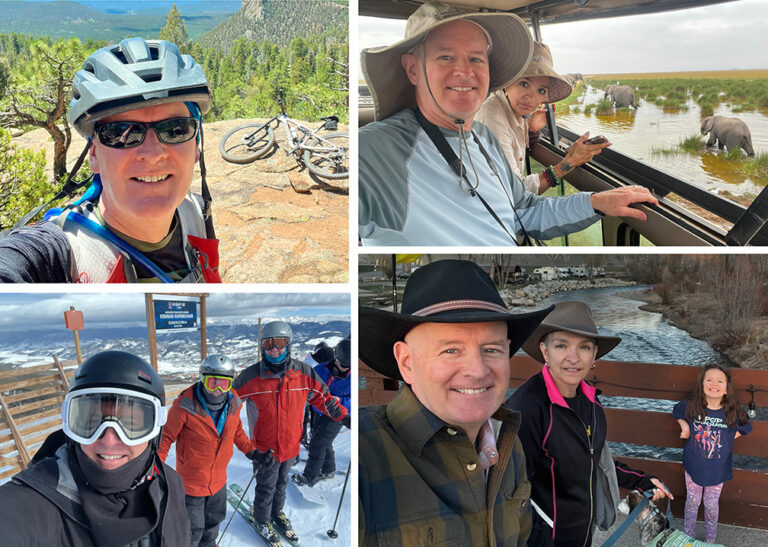
When he’s not at work, Arnold loves the great outdoors.
A native and resident of Colorado, he enjoys mountain biking, skiing, hiking, camping and fly fishing for trout. He and his wife, Lorena, have two grown stepsons, a daughter-in-law and a 7-year-old granddaughter, Lucy. Their dog, Daisy, a mixed breed who is nearly 17 years old, has accompanied them on many of their outdoor adventures.
Back at work, he says, it all comes down to people.
While Arnold has seen countless changes in the industry since 1994, he says his favorite part of trucking hasn’t changed at all.
“It’s the people,” he said. “They’re very down to earth. They tell you what they think. You don’t have to guess what somebody has on their mind.”
Arnold says he appreciates that directness, particularly among the safety professionals and industry leaders he encounters through NATMI and TCA. He also values their commitment to safety and operational excellence — goals that align closely with NATMI’s mission.
After more than three decades of technological transformation, Arnold knows trucking will continue to change.
The tools will evolve. The methods will evolve. But the underlying goal — helping transportation professionals identify problems, understand their causes and improve safety — remains much the same.
And for Arnold, that enduring mission is what makes the work worthwhile.
This article first appeared in the September/October 2026 print edition of Truckload Authority, the official publication of the Truckload Carriers Association.

Linda Garner-Bunch has been with The Trucker since 2020, picking up the reins as managing editor in 2022. Linda has nearly 40 years of experience in the publishing industry, covering topics from the trucking and automotive industry to employment, real estate, home decor, crafts, cooking, weddings, high school sports — you name it, she’s written about it. She is also an experienced photographer, designer and copy editor who has a heartfelt love for the trucking industry, from the driver’s seat to the C-suite.