



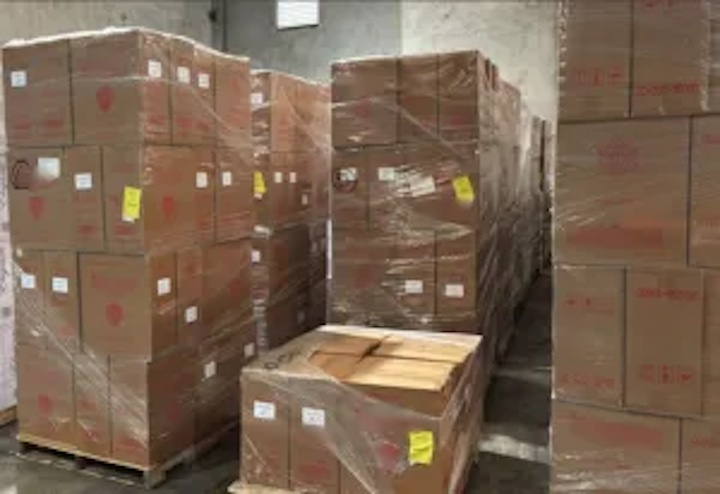
LAREDO, Texas – An attempt to transport a shipment of counterfeit cigarettes valued at more than $729,000 went up in smoke as U.S. Customs and Border Protection officers at Laredo Port of Entry intercepted and seized the shipment this weekend.
After a shipment of cigarettes from Vietnam arrived at the U.S. at Miami Seaport, CBP officers placed a hold on the shipment and detained it once it arrived in Laredo, Texas in early March.
CBP says that after conducting a thorough examination and review of the shipment, its officers and import specialists assigned to the Agriculture Center for Excellence and Expertise determined that 17,500 cartons of cigarettes bore counterfeit marks. Upon further legal review, the shipment was seized on April 25. Had the cigarettes been genuine, the total Manufacturer Suggested Retail Price value of the shipment would have been $729,400.
“Our CBP officers and import specialists continue to maintain their vigilance and exercise due diligence to ensure that fake goods do not enter U.S. commerce,” said Port Director Albert Flores, Laredo Port of Entry. “They utilize their training, experience and information from the registered trademark owners to authenticate imported merchandise and when they encounter counterfeits to promptly detain and seize such items, thereby protecting the U.S. economy and the consumer.”
The commercial importation of cigarettes falls under the import/entry team assigned to the Agriculture CEE. The Laredo Port of Entry has representation covering all 10 CEEs located onsite at the port.
CBP has the authority to detain, seize, forfeit, and ultimately destroy imported merchandise if it bears an infringing trademark or copyright that has been registered with the United States Patent and Trademark Office or the United States Copyright Office and has subsequently been recorded with CBP through the e-Recordation program https://iprr.cbp.gov/s/. Other violations can include misclassification of merchandise, false country-of-origin markings, health and safety issues, and valuation issues.
Trade in counterfeit and pirated goods threatens America’s innovation economy, the competitiveness of our businesses, the livelihoods of U.S. workers, and, in some cases, national security and the health and safety of consumers. It is also against the law to import counterfeit or pirated merchandise and individual consumers may be liable for a fine even if they did not intend to import counterfeit or pirated merchandise.

Bruce Guthrie is an award-winning journalist who has lived in three states including Arkansas, Missouri and Georgia. During his nearly 20-year career, Bruce has served as managing editor and sports editor for numerous publications. He and his wife, Dana, who is also a journalist, are based in Carrollton, Georgia.