



The development of the American Petroleum Institute’s Proposed Category 12 (PC-12) heavy-duty engine oil specification has entered its final stages, representing a significant milestone for the commercial vehicle industry as it prepares for the next generation of diesel engines.
Why is PC-12 needed?
PC-12 is being developed to support evolving engine technologies and regulatory requirements that will take effect beginning with the 2027 model year, ensuring that engine oils continue to play a critical role in performance, durability and emissions compliance.
PC-12 was initiated following a formal request from engine manufacturers in anticipation of the U.S. Environmental Protection Agency’s Clean Trucks regulations.
These standards introduce substantially tighter nitrogen oxides (NOx) limits, expand the range of operating conditions under which engines must comply, and extend useful life and emissions warranty periods. Collectively, these changes represent the most significant update to heavy-duty emissions requirements in more than two decades — and they necessitate corresponding advancements in engine oil performance.
API will add new service categories.
To address these needs, PC-12 will introduce two new API service categories.
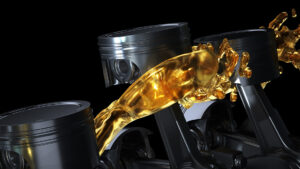
- API CL-4, the new “C” category, is intended to maintain backward compatibility with API CK-4 while delivering enhanced performance in key areas, including oxidation control, wear protection, aftertreatment durability, and elastomer compatibility.
- API FB-4, the new “F” category, will replace API FA-4 and enable lower-viscosity oils, including SAE xW-20, to support fuel economy improvements in engines specifically designed for those oils.
The API Lubricants Standards Group recently approved the PC-12 technical requirements, user language, and a licensing date of Jan. 1, 2027, for both CL-4 and FB-4. These elements are now proceeding through final balloting for incorporation into API 1509, marking an important step toward formal adoption of the specification following several years of coordinated work across ASTM, industry advisory panels, and the PC-12 New Category Development Team.
For fleets, PC-12 carries important operational considerations.
While licensed PC-12 oils will not enter the marketplace until closer to 2027, preparation should begin well in advance. The introduction of two distinct categories, with differing compatibility and application profiles, will require fleets to understand how future OEM recommendations align with CL-4 and FB-4 and to plan accordingly.
API CL-4 is expected to serve as the primary successor to CK-4 for broad application across existing and future engines. FB-4, similar to FA-4 today, will remain application-specific and intended for use only where explicitly recommended by the engine manufacturer. As with prior category transitions, experience has shown that the most significant risks are operational in nature, including product identification, bulk storage management, labeling, and training, rather than formulation performance.
To support a smooth transition, API’s licensing system will open several months before the first license date, allowing oil marketers to enter products early and coordinate implementation with OEMs, fleets and distributors. This early access is intended to facilitate industry readiness and minimize disruption as PC-12 enters the marketplace.
As PC-12 approaches completion, it underscores the continued collaboration required across the industry to ensure that engine oils change in step with regulatory, technological and operational demands.
For fleets facing increasingly stringent emissions requirements and longer equipment life expectations, PC-12 will be an essential element in supporting reliable, compliant and efficient operations well beyond 2027.

Bill O’Ryan is director of the Engine Oil Licensing and Certification System (EOLCS) and Diesel Exhaust Fluid (DEF) Certification Programs at the American Petroleum Institute (API). He has worked in the transportation lubricants industry for over 30 years and joined the American Petroleum Institute (API) in 2022. His background includes additive package development, engine and driveline testing. Bill has oversight responsibility for the Aftermarket Audit Program (AMAP), an annual program in which thousands of engine oil and DEF samples are purchased in the marketplace around the globe and tested to ensure conformance with required specifications.