





AI deepfakes, fake celebrity endorsements and bogus offers can lead to phishing, malware and stolen accounts wherever you scroll.
Scam ads on Facebook can show up wherever you happen to be scrolling, whether you’re at home, at work or taking a break on the road. And they’re getting harder to spot. Scammers can use AI-generated content, fake celebrity endorsements and polished ads that look remarkably similar to legitimate offers.
The consequences can go well beyond buying a product that never arrives. A single click could send you to a phishing site, expose your passwords or lead to a malicious download.
According to the Federal Trade Commission, people reported losing $2.1 billion to scams that started on social media in 2025, with Facebook accounting for more reported losses than any other social platform.
Here is how these Facebook scam ads work, the warning signs to watch for and the steps you can take before clicking.
Missed CyberGuy LIVE? Watch the “Protect Your Money” replay
Our free CyberGuy LIVE class, “Protect Your Money From Today s Biggest Threats,” has ended, but you can still watch the full replay and download our financial protection checklist. Kurt “CyberGuy” Knutsson walks you through five simple ways to help defend yourself against AI scams, fraud, identity theft and financial hacks. You’ll learn how to set up bank alerts, strengthen your account logins, protect your phone number, freeze your credit and help secure your retirement savings against unauthorized transfers. No technical experience is needed.
Get the free replay and checklist now at CyberGuyLive.com.

How Facebook scam ads have evolved with AI and deepfakes
Scammers used to rely on low-effort clickbait, but that era is over. Now, sophisticated schemes are leveraging AI-generated content. Technology is being used to create convincing videos of celebrities endorsing fake products or services. These ads exploit the trust users place in public figures and the perceived legitimacy of Facebook s advertising platform.
These tools can mimic a person s appearance and voice with alarming accuracy, making it challenging for users to discern real from fake. And these tools are no longer out of reach. Scammers use a mix of freely available AI generators and private networks to mass-produce scam campaigns that look more real than ever.
Real examples of Facebook scam ads using celebrity deepfakes
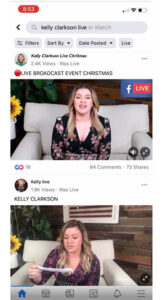
On Reddit, users have posted screenshots of bizarre scam ads that made it through Facebook’s filters:
One involved more than 20 Facebook accounts using variations of the name “Kelly Clarkson Live” and simultaneously broadcasting the same video. The accounts told viewers to comment “Christmas” to receive free money; then directed them to a WhatsApp number to claim the supposed prize. The Reddit post documents the impersonation scam but does not establish that the video itself was AI-generated.
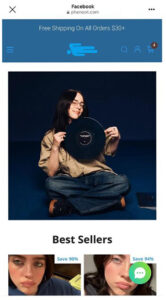
Another showed a Facebook ad offering deeply discounted Billie Eilish merchandise through Phenoot.com. The person who posted it questioned whether the prices were too good to be true, while several commenters reported concerns about the site and some said orders never arrived.
How scammers make Facebook ads look convincing
Scammers can combine AI and familiar online marketing tactics to make a fraudulent campaign look legitimate. Meta says it has taken action against advertisers accused of using altered celebrity images and voices, including deepfakes, to promote fraudulent products and investment schemes.
- Deepfakes and altered media can make it appear that a celebrity or public figure is endorsing a product or investment.
- AI-generated or manipulated voices can make fake endorsements sound more convincing.
- Fake shopping and investment sites can imitate legitimate brands or businesses.
- Fabricated testimonials, comments or social proof can make an offer appear popular and trustworthy.
The goal is to lower your guard before you click, enter information, make a payment or download something.
How Facebook scam ads can target almost anyone
Scammers do not have to send the same ad to everyone. The FTC says criminals who buy social media ads can use the same advertising tools legitimate businesses use to target people based on factors such as age, interests and shopping habits.
That makes this a much broader problem than scams aimed at one supposedly vulnerable group. FTC data shows that social media scams affected people across age groups in 2025. In fact, social media generated the highest aggregate reported scam losses of any contact method for every age group under 80 and ranked second behind phone calls for people 80 and older.
What catches your attention may be different from what catches someone else s. One person might see an investment opportunity, another a discounted product and someone else an offer connected to a hobby or interest.
Why Facebook scam ads can still get past Meta s defenses
Meta says it uses both automated and manual reviews to enforce its advertising policies. Its automated system checks ads for policy violations before they run, but Meta acknowledges that its review process may not catch every violation. Ads can also be reported by users and remain subject to additional review after they begin running.
The company has been expanding its anti-scam efforts. Meta says it removed more than 159 million scam ads for policy violations in 2025. It also says its facial-recognition-based system for detecting celebrity impersonation scams now protects the images of more than 500,000 celebrities and public figures around the world.
Meta is also expanding advertiser verification. The company says its goal is for verified advertisers to account for 90% of its advertising revenue by the end of 2026, up from 70% when it announced the expansion in March.
Those efforts can reduce scam activity, but no review system catches everything. That means the appearance of an ad on Facebook should never be treated as proof that the advertiser or offer is legitimate.
Common signs of Facebook scam ads: What to watch for
Scam ads can be surprisingly well-made, but common themes show up again and again. Watch for:
- Free game betas, early access offers or giveaways, especially ones that require downloads.
- Celebrity endorsements promoting crypto, unproven health products or supplements.
- Mimicked news articles or fake media logos.
- Urgent claims, huge discounts or miracle results, which are classic scam tactics.
If an unexpected ad asks you to download a file, especially a compressed .zip or .rar archive, treat it as a major red flag. Security researchers have documented malicious sponsored Facebook ads that impersonated popular software or games and delivered malware.
How to protect yourself from AI-powered Facebook scam ads
Here is how to stay safe and help others do the same:
1) Check the source: If it is an ad, approach it with extra skepticism. Search for the company, product or offer independently instead of relying on the link in the ad.
2) Do not download unexpected files from ads: Be especially cautious of compressed files, installers or supposed beta versions of popular software and games.
3) Verify endorsements: If a celebrity is promoting something, check their official social media or public statements.
4) Report suspicious ads: Even if you are not sure, reporting helps Meta identify fraudulent activity.
5) Talk to friends and family: Share suspicious ads with people you know, since a convincing celebrity endorsement, investment offer or online bargain can fool people of any age.
6) Be wary of unsolicited messages or friend requests and install strong antivirus software: Scammers often use fake profiles to send scam ads or phishing links via Facebook Messenger or friend requests. Avoid clicking links from unknown contacts. Also, install strong antivirus software, which adds a layer of defense that can block malware from scam links. This protection can also alert you to phishing emails and ransomware scams, keeping your personal information and digital assets safe. Get Kurt’s picks for the best 2026 antivirus protection winners for your Windows, Mac, Android & iOS devices.
7) Consider using a password manager: If your credentials are compromised, this minimizes the risk of attackers accessing other accounts. A password manager can securely store and generate complex passwords. It will help you create unique and difficult-to-crack passwords that a hacker could never guess. Second, it also keeps track of all your passwords in one place and fills passwords in for you when you’re logging into an account, so that you never have to remember them yourself. The fewer passwords you remember, the less likely you are to reuse them for your accounts. Get more details about Kurt’s best expert-reviewed Password Managers of 2026 here.
8) Turn on two-factor authentication (2FA): 2FA adds another barrier to your account if someone manages to steal or guess your password.
9) Regularly update your software and apps: Keeping your operating system, browsers, and Facebook app updated ensures you have the latest security patches that can block known vulnerabilities exploited by scammers.
Get a free scan to find out if your personal information is already out on the web.
Kurt s key takeaways
A polished Facebook ad is no guarantee that what you are seeing is legitimate. Scammers can buy ads, impersonate brands and public figures and use AI to make fake offers look increasingly convincing. Before you buy, download anything or hand over personal information, search for the company independently and verify celebrity endorsements through official sources.
Meta is adding new scam protections, but fraudulent ads still get through. A few seconds of checking before you click could save you from losing money, passwords or control of an account.
Given how widespread and sophisticated scam ads have become on Facebook, do you think Meta should be held more accountable for protecting users, and if so, what actions should they take to better prevent these scams? Let us know your thoughts by writing us at Cyberguy.com/Contact.
Sign up for the FREE CyberGuy Report
-
- Get Kurt s best tech tips, urgent security alerts and exclusive deals delivered straight to your inbox.
- For simple, real-world ways to spot scams early and stay protected, subscribe to my free CyberGuy Report Newsletter by heading to Cyberguy.com/Newsletter, trusted by millions who watch CyberGuy on TV daily.
- Plus, you’ll get instant access to the Ultimate Scam Survival Guide free when you join.
Copyright 2026 CyberGuy.com. All rights reserved.
Kurt the CyberGuy is an award-winning tech journalist who helps people make smart tech decisions from his contributions to Fox News & FOX Business, beginning mornings on “FOX & Friends.” Stay safe & in the know — at no cost. Subscribe to Kurt s The CyberGuy Report for free security alerts & tech tips.
Join Kurt on his podcast, The CyberGuy Report, as he explores the most fascinating breakthroughs in tech and the people behind them. Look for new episodes every Wednesday at CyberguyPodcast.com.
Ask Kurt a question or let us know what stories you’d like us to cover.
Follow Kurt on his social channels:
Facebook • YouTube • Instagram • TikTok


Kurt Knutsson — best known as “Kurt the CyberGuy” — has a deep love of technology that makes life better. Because of this, along with a passion for helping others, he created the largest syndicated tech lifestyle franchise on television. As a trusted source, Kurt’s unique insider access to major tech launches and industry visionaries has helped earn him two Emmy Awards and a Golden Mic.
Kurt lives between his home in California and New York City, where he is also the chief tech contributor on Fox News & Fox Business networks beginning his mornings on Fox & Friends.
Kurt’s a curious guy. Like many entrepreneurs in life, he wears several hats like running a private investment fund, giving inspirational talks, mentoring start-ups and traveling the world chasing down the next breakthrough.