





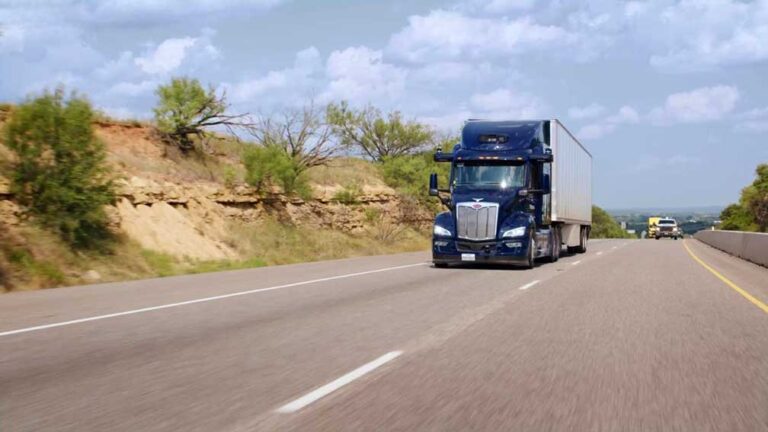
As driverless trucks begin hauling freight, experts and drivers question whether technology can truly replace humans
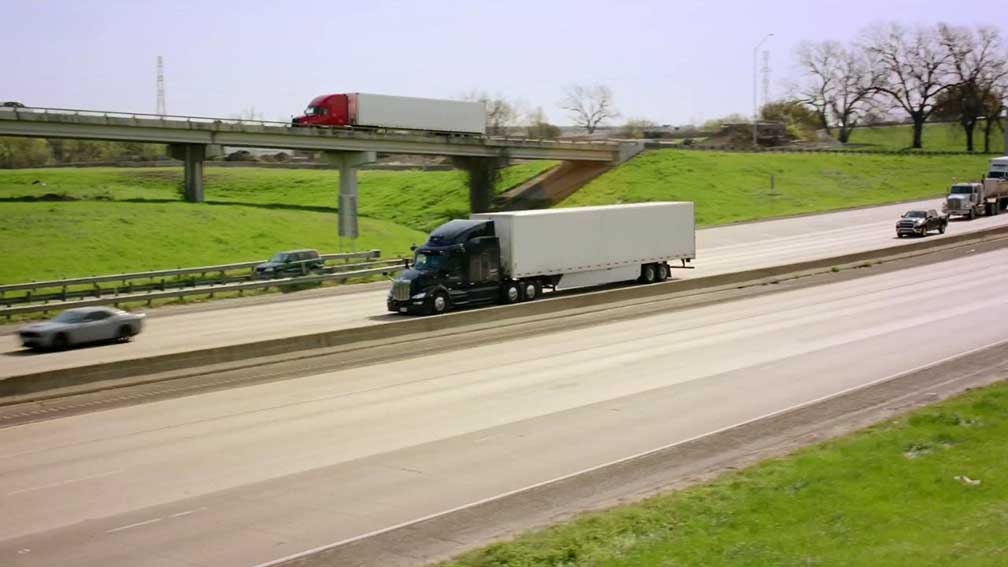
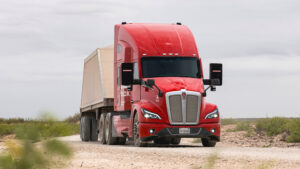
A new era in transportation has arrived as fully autonomous big rigs begin hauling commercial loads across Texas highways. Aurora, a major player in the self-driving vehicle industry, has moved beyond testing and is now operating driverless trucks on routes between Dallas and Houston. This leap forward is raising urgent questions about road safety, regulatory oversight and the future of trucking jobs. With plans to expand into New Mexico and Arizona, the impact of these robotrucks is about to get even bigger.
What’s happening?
Aurora’s autonomous trucks now operate on routes between Dallas and Houston, hauling commercial loads. This isn’t just a test program; it’s a full deployment of driverless technology. Additional trucks will start operating on public roads in New Mexico and Arizona by the end of 2025, traveling at speeds ranging from 25 to 75 mph.
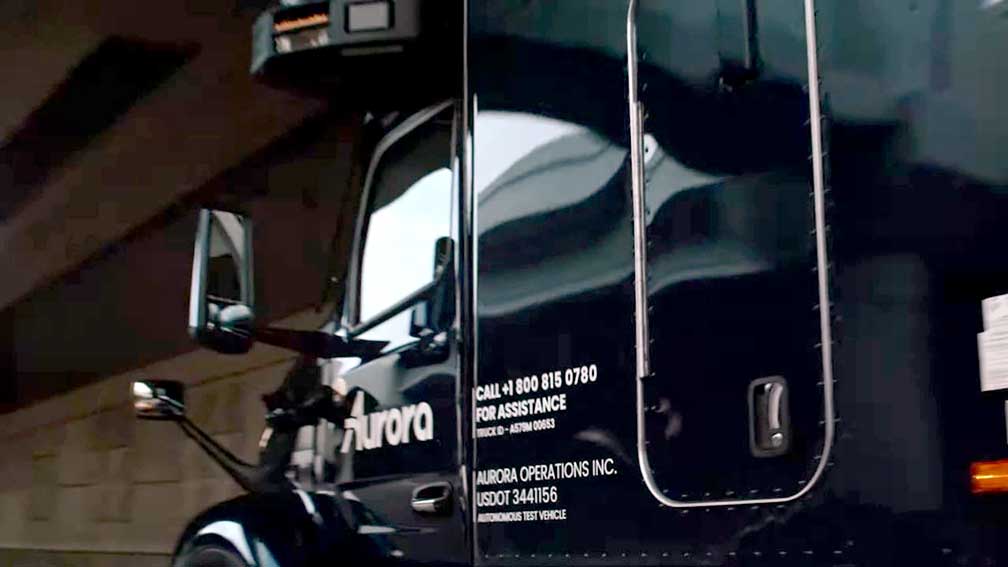
BIG RIGS DELIVER CARGO WITH NO HUMANS AT THE WHEEL
How safe are these trucks?
The safety of autonomous trucks is a primary concern. Aurora’s 2025 Driverless Safety Report outlines five key principles to ensure safe operation:
- Proficiency
- Fail-safety
- Continuous improvement
- Resilience
- Trustworthiness
The company uses high-resolution cameras, radar and lidar to understand the environment, with their FirstLight lidar detecting objects from over 1,470 feet away, offering nearly nine seconds of reaction time at highway speeds.
Aurora’s fail-safe system includes multiple redundancies, while the company’s approach to continuous improvement involves regular software updates and incident reviews. They’ve driven over 2.6 million miles autonomously, hauling over 9,500 commercial freight loads with a nearly 100% on-time rate and no major safety incidents.
Safety case and validation
Aurora’s safety approach is evaluated through a “safety case” method, commonly used in aviation and nuclear industries. A third-party audit by TÜV SÜD validated Aurora’s Safety Management System, confirming alignment with SAE Level 4 and 5 standards. This audit also praised Aurora’s safety culture and oversight practices.
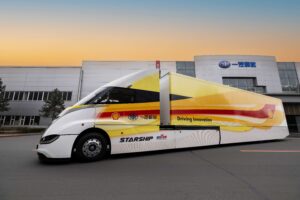
THE FUTURE OF TRUCKING ROLLS FORWARD IN SHELL’S EXPERIMENTAL BIG RIG
Industry pushback: OOIDA and Teamsters raise concerns
The Owner-Operator Independent Drivers Association (OOIDA), representing over 150,000 truckers, strongly questions Aurora’s safety claims.
“Simulations and supervised testing aren’t enough,” OOIDA states. “Phantom braking and unpredictable road conditions make autonomous trucks a risky proposition. Until there’s mandatory, transparent oversight, these safety claims are premature.”
OOIDA also criticizes the lack of robust federal regulation, pointing to voluntary data programs like NHTSA’s AV TEST as inadequate.
“Exemptions from FMCSA safety rules weaken proven standards,” OOIDA argues.
The association wants mandatory crash and disengagement reporting and warns against removing trained drivers from the cab entirely.
The International Brotherhood of Teamsters, a labor union representing over 1.2 million workers in North America, shares similar safety concerns. Matt McQuaid, project manager from the Teamsters, notes:
“The Aurora Driver can’t operate in severe weather like ice, unplowed snow, or torrential rain.” McQuaid also pointed out that “Teamsters are professional drivers who safely handle all conditions with miles driven in the real world.”
The National Highway Traffic Safety Administration (NHTSA) issued a Second Amended Standing General Order 2021-01 requiring manufacturers and operators of vehicles with Automated Driving Systems (ADS) or Level 2 Advanced Driver Assistance Systems (ADAS) to report crashes to the agency.
This order mandates the reporting of specific crash-related information when ADS or Level 2 ADAS is engaged or was recently in use, enabling NHTSA to monitor potential safety defects in these vehicles and ensure compliance with safety standards. The goal is to proactively address safety concerns related to these technologies as they evolve, in accordance with the National Traffic and Motor Vehicle Safety Act.
What this means for the future
There are undeniable upsides. Autonomous trucks could operate 24/7, slash delivery times, reduce costs and help address the growing driver shortage. They may even improve road safety by eliminating accidents caused by human error.
But risks remain. Public trust in driverless tech is still shaky. Many worry about what happens to jobs when machines take the wheel.
The Teamsters are particularly vocal about this. McQuaid warns:
“Tens of millions of people turn a key for a living, but companies like Aurora couldn’t care less if they lose their livelihoods. Eliminating all driving jobs would be disastrous for our communities and the middle class.”
That said, a Department of Transportation study from the Trump administration projected long-haul autonomous trucking could increase U.S. employment by 26,400-35,100 jobs per year, as new logistics and tech roles emerge. Aurora, for its part, claims both human drivers and AVs are needed to meet demand.
Still, consistent federal regulation is lacking. DOT Secretary Sean Duffy has called for nationwide standards:
“We can’t fall behind China or other countries. After safety, we need to give a wide runway for innovation.”
AI DASHCAMS ENHANCE TRUCKER SAFETY WHILE RAISING PRIVACY CONCERNS
Industry voices weigh in
John D. Esparza, president of the Texas Trucking Association, praised Aurora for its rigorous safety protocols:
“Their attention to safety is evident. The pursuit of perfection is necessary.”
Jeff Farrah, CEO of the Autonomous Vehicle Industry Association, emphasized the broader significance:
“Autonomous trucks are a triumph of American ingenuity and will ease supply chain issues.”
SUBSCRIBE TO KURT’S YOUTUBE CHANNEL FOR QUICK VIDEO TIPS ON HOW TO WORK ALL OF YOUR TECH DEVICES
Kurt’s key takeaways
The arrival of driverless trucks on public roads is both exciting and unsettling.
While the promise of improved efficiency, fewer accidents and round-the-clock deliveries is appealing, there are still many unanswered questions about safety, job security and public trust.
As the technology advances, it will be crucial to demand transparency, independent safety evaluations and thoughtful regulation. The future of freight transport may be changing, but it is up to all of us to make sure that progress does not come at the expense of safety or livelihoods.
Do you believe autonomous trucks can make our roads safer, or do you worry about the risks and impact on jobs? What steps do you think are most important to ensure this technology is introduced responsibly? Let us know by writing to us at Cyberguy.com/Contact.
For more of my tech tips and security alerts, subscribe to my free CyberGuy Report Newsletter by heading to Cyberguy.com/Newsletter.
Copyright 2025 CyberGuy.com. All rights reserved.
Kurt the CyberGuy is an award-winning tech journalist who helps people make smart tech decisions from his contributions to Fox News & FOX Business, beginning mornings on “FOX & Friends.”
Ask Kurt a question or let us know what stories you’d like us to cover.
Follow Kurt on his social channels:
Facebook • YouTube • Instagram

Kurt Knutsson — best known as “Kurt the CyberGuy” — has a deep love of technology that makes life better. Because of this, along with a passion for helping others, he created the largest syndicated tech lifestyle franchise on television. As a trusted source, Kurt’s unique insider access to major tech launches and industry visionaries has helped earn him two Emmy Awards and a Golden Mic.
Kurt lives between his home in California and New York City, where he is also the chief tech contributor on Fox News & Fox Business networks beginning his mornings on Fox & Friends.
Kurt’s a curious guy. Like many entrepreneurs in life, he wears several hats like running a private investment fund, giving inspirational talks, mentoring start-ups and traveling the world chasing down the next breakthrough.


Came across one of these trucks and it nearly caused a crash after passing me and barely missing the front of my truck at 75 mph. I concluded that a truck driver would have never taken such a risky maneuver. It’s only a matter of time before a fatal accident occurs from such aggressive driving.
I drove for many years and 80 percent of docks were off the blacktop road and angled and designed for 48 ft trailers with cabover. Will business owners need to renovate? I dont see autonomous managing that. And 4 way sto signs. Tractor doesnt move if cars are easing out in front. Only well marked paved driveways will allow drop hook
One thing should be clear. Humans don’t matter. At least not those who can be still considered “useful eaters”. When this tendency to replace humans with technology continues, truckers will join the masses of “useless” eaters.
They’re capable of “traveling at speeds ranging from 25 to 75 mph”? Does that mean they can’t come to a full stop?
what happens if the sensor gets dirty, rain, snow, ice and strong winds it can cause some major damage
I’m thinking four-wheelers should stay off I-45 for a few years. (Dallas to Houston)