




In the medical field, continuity of care is the gold standard. It is an ongoing partnership between a patient and a healthcare team that fosters deeper trust, fewer mistakes and significantly higher satisfaction.
When a patient feels truly known, they stay. This is a foundational pillar of the patient-centric model.
As the transportation industry peers over a demographic cliff of retirements, we need to borrow this philosophy for the next generation of professional truck drivers.
For decades, trucking has suffered from an expensive, exhausting cycle of driver churn.
Fleet managers are all too familiar with the routine: A driver leaves Company A for a $5,000 sign-on bonus at Company B, only to hop to Company C six months later when the next shiny offer appears.
This transactional relationship treats drivers like interchangeable parts.
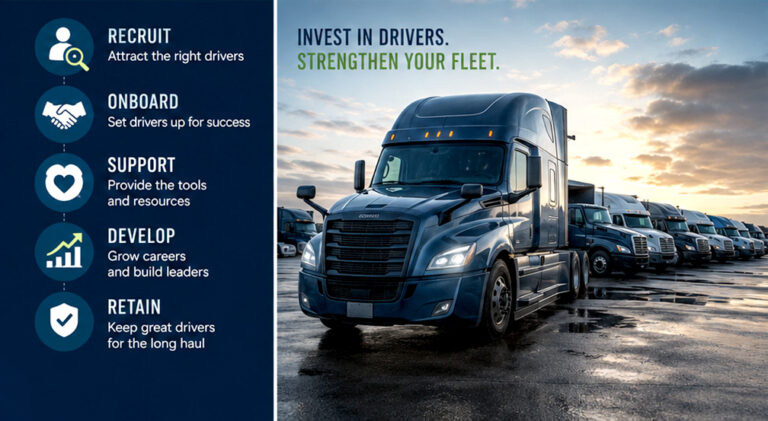
If we want to attract and keep the next generation, we must shift from a transactional model to a continuity of care model across the entire driver lifecycle.
1) Recruiting: Setting the Baseline
In medicine, continuity begins with an accurate intake.
In trucking, it starts with honest recruiting.
Instead of baiting next-gen drivers with unrealistic mileage promises or fleeting bonuses, recruiting should focus on predictable lanes, lifestyle and company culture compatibility, and clear career pathways. We must market trucking as a stable, long-term career where the driver’s preferences actually matter.
For both medicine and trucking, coordination is key. Outcomes improve when a CDL school trains a student who is ready and willing to commit to their future.
Take that one step further: Developing a team early — from recruiter, trainers, and coaches invested in their student from Day 1, with a school that works directly with hiring companies — strengthens the pipeline. Company ethos and expectations can be set and met during CDL training, before a driver starts their first day of work.
Driver and company satisfaction improves.
2) Training: The Warm Handoff & Continuing Education
A patient experiences a “warm handoff” when their primary doctor introduces them directly to a specialist. In trucking, a new hire shouldn’t just be handed a set of keys after getting their CDL, company orientation and told “good luck.”
Continuity means matching them with a dedicated mentor — but it shouldn’t stop there.
Just as medical professionals undergo continuous training to maintain their licenses, we must empower drivers with ongoing professional and industry education.
When we invest in drivers’ growth — teaching them about macro freight trends, advanced efficiency and the why behind changed regulations — we treat them like the specialized professionals they are, rather than alienating them and risking a toxic game of telephone and rumormongering, which threatens company morale.
3) Compliance & Retention: The Dedicated Care Team
The heart of continuity of care is the relationship.
For a driver, the “care team” is their dispatcher, safety director and fleet manager. If a driver speaks to a different dispatcher every week (and who may not even know their name) or only hears from safety when something goes wrong, they feel invisible.
True care requires proactive, positive reinforcement.
Instead of treating safety and compliance as a game of “Gotcha!” a healthy fleet culture actively celebrates operational excellence. Recognizing and rewarding clean roadside inspections, safe driving miles and other accomplishments transforms compliance from a top-down mandate into a point of professional pride.
The Cost of Churn
Replacing a single professional driver costs an estimated $8,000 to $12,000 in recruiting, onboarding and idle equipment costs.
Chasing sign-on bonuses is a leaking bucket.
Investing that same capital into driver relationship infrastructure, ongoing education and robust reward systems yields far higher, long-term returns.
The retiring generation of drivers hold a deep pride in the highway.
The next generation wants to feel that same value, but these drivers expect it through modern support systems, continuous professional development and mutual respect.
By treating drivers with a philosophy of continuity — knowing them, educating them and rewarding their diligence — we can finally stop the revolving axle (plenty of motion, but no progress forward) and build a sustainable future for freight.

Alix Miller is senior principal at TSG Transportation Advisors. In her prior position as president and CEO of the Florida Trucking Association, she helped secure record funding for CDL training and truck parking for the state. She has been featured nationally on Fox News, SiriusXM radio and Forbes. She serves on the Atlanta Federal Reserve Bank Transportation and Advisory Council, Florida International University’s Logistics and Supply Chain Management Advisory Board, and as senior advisor for FleetForce Truck Driver Training.