




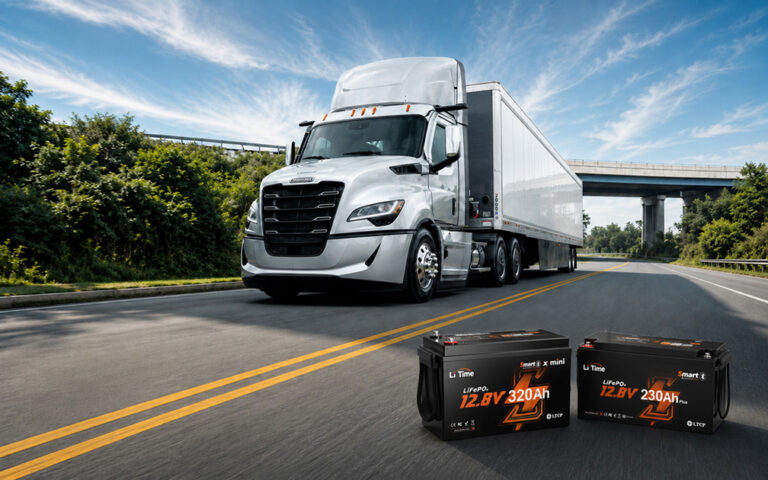
For long-haul truck drivers, the cab is more than a workplace — it is also a place to rest and live between shifts. However, powering air conditioning, refrigeration and essential electronics during extended stops often requires engine idling or fuel-powered auxiliary systems, increasing fuel costs, noise, emissions and maintenance.
Providing stable onboard power without continuously running the engine has become an increasingly important need for modern trucking operations.
To address this challenge, LiFePO4 power solutions expert LiTime is developing an integrated lithium auxiliary power solution that combines LiFePO₄ batteries, high-power inverters and DC-DC alternator chargers. Covering energy storage, appliance power and on-the-road recharging, the system helps reduce idling, lower fuel consumption and create a quieter, more comfortable mobile living space.
Why Long-Haul Trucks Need Reliable Auxiliary Power
The United States has more than 11.6 million trucks, including approximately 2.75 million Class 8 heavy-duty trucks used for long-haul freight, container transport, hazardous materials and refrigerated logistics.
When a truck stops, its power demand does not. Under Federal Motor Carrier Safety Administration hours-of-service rules, property-carrying drivers may drive for up to 11 hours after taking 10 consecutive hours off duty. During these required rest periods, the cab must continue powering essential comfort and living equipment.
Common electrical loads include:
- Parking air conditioner: approximately 720-960W
- Refrigerator: approximately 45-100W
- Microwave: approximately 700-900W
- Coffee maker: approximately 600-1,000W
- Television, phone and laptop: approximately 20-300W
- LED lighting and ventilation: generally below 50W
For an overnight stop of approximately 13 hours, air conditioning and refrigeration account for most of the continuous load. After allowing for conversion losses and reserve capacity, a complete overnight system may require around 7.26kWh of usable battery capacity.
This level of demand requires more than a conventional starter battery. It calls for a dedicated heavy-duty truck battery system designed for extended auxiliary loads.
The Limitations of Traditional Truck Power Systems
Many drivers have traditionally relied on engine idling to power cab air conditioning and electrical equipment. However, idling restrictions have expanded as regulators seek to reduce fuel waste and emissions. As of 2024, 31 states and Washington, D.C., had adopted truck idling regulations.
Extended idling also creates significant operating costs. A heavy-duty truck may consume approximately 0.8-1 gallon of fuel per idling hour. With annual idling time reaching around 1,800 hours for some long-haul trucks, yearly fuel costs can approach $7,500.
A diesel APU can reduce main-engine idling, but it still consumes fuel, requires routine maintenance, adds weight and produces noise and mechanical wear.
As a result, more drivers and fleet operators are looking for an electric APU for trucks that can provide dependable cab power with fewer operating and maintenance demands.
LiTime Provides a Complete Lithium Auxiliary Power System for Long-Haul Trucks
LiTime’s approach goes beyond supplying a single replacement battery. The company is building a complete auxiliary energy system around the real-world requirements of long-haul drivers.
LiFePO₄ batteries serve as the primary energy source, while high-power inverters support 120V AC appliances. DC-DC chargers replenish the battery bank from the vehicle’s alternator while the truck is moving.
Together, these components create an independent electrical system that can support everyday cab equipment without continuous engine operation.
3 Configurations for Different Energy Needs
LiTime offers several system configurations based on the driver’s equipment, operating schedule and comfort requirements.
Essential Cab Power
Designed for basic overnight electrical needs:
- One LiTime 12V 400Ah lithium battery or two LiTime 12V 200Ah lithium batteries
- LiTime 12V 2000W inverter
- LiTime12V 40A DC-DC charger
This configuration supports refrigerators, lighting, mobile devices, laptops and other everyday equipment.
Diesel APU Replacement Upgrade
Designed for long-haul drivers seeking to reduce diesel APU operation:
- One LiTime 12V 460Ah lithium battery or two LiTime 12V 230Ah lithium batteries
- LiTime 12V 3000W inverter
- LiTime 12V 60A DC-DC charger
The larger battery bank can support parking air conditioning and additional onboard appliances for longer rest periods.
High-Comfort Mobile Living System
Designed for drivers seeking a more complete cab living experience:
- Two LiTime 12V 320Ah lithium batteries or three LiTime 12V 200Ah lithium batteries
- LiTime 12V 3000W inverter
- LiTime 12V 60A DC-DC charger
This configuration offers greater energy reserves for air conditioning and multiple high-power appliances.
For semi-truck and tractor-trailer applications, LiTime LiFePO₄ batteries provide a dedicated auxiliary power system. Compared with conventional lead-acid battery banks, they offer higher usable capacity, longer cycle life and more stable power output, helping reduce replacement and maintenance costs.
Reducing Operating Costs and Improving Long-Term Value
A large part of the U.S. trucking market consists of owner-operators and small fleets. Approximately 587,000 truck drivers are self-employed, making fuel costs, maintenance expenses and investment returns especially important purchasing considerations.
By reducing engine idling and the use of diesel-powered auxiliary systems, LiTime’s lithium solution can provide long-term economic value.
Based on estimated operating conditions:
- Replacing engine idling may provide a return on investment in approximately 1 year
- Replacing a diesel APU may provide a return in approximately 1.5 years
- Replacing a lead-acid auxiliary battery system may provide a return in approximately 2.5 years
Actual payback periods will vary depending on fuel prices, equipment loads, vehicle usage, climate and charging conditions.
Turning the Truck Cab Into a More Efficient Mobile Living Space
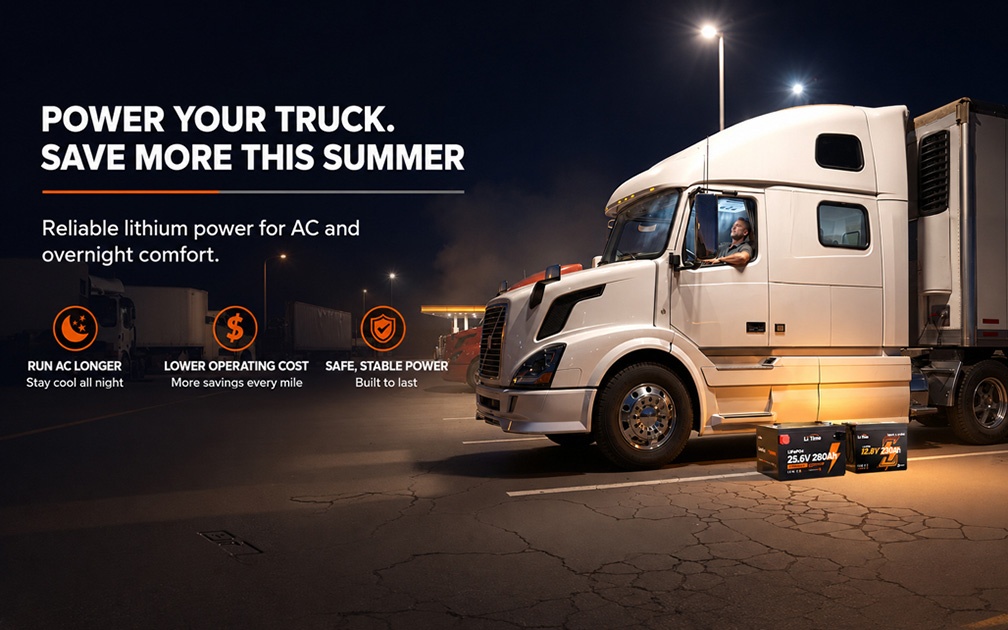
For truck drivers, lithium auxiliary power means resting without continuously running the engine. Air conditioning, refrigeration, lighting and daily appliances can operate in a quieter and more comfortable environment.
For owner-operators and fleets, it means lower fuel consumption, reduced maintenance and improved long-term operating efficiency.
By combining LiFePO₄ battery technology with inverters and intelligent on-the-road charging, LiTime is helping long-haul drivers build more reliable and efficient onboard energy systems — making every journey more comfortable, practical and independent.

The Trucker News Staff produces engaging content for not only TheTrucker.com, but also The Trucker Newspaper, which has been serving the trucking industry for more than 30 years. With a focus on drivers, the Trucker News Staff aims to provide relevant, objective content pertaining to the trucking segment of the transportation industry. The Trucker News Staff is based in Little Rock, Arkansas.