




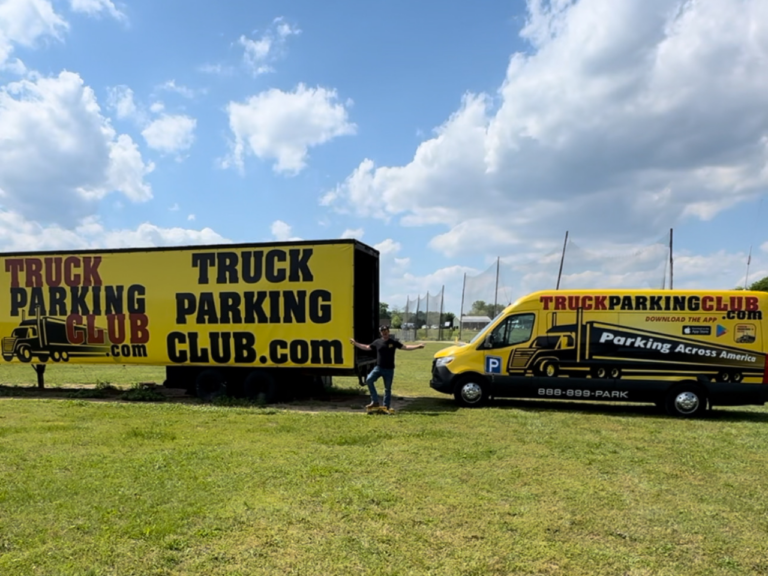
CHATTANOOGA, Tenn. — Truck Parking Club has surpassed 2,000 Property Member locations across all lower 48 states, providing over 40,000 instantly reservable truck parking spaces to address the critical shortage that forces drivers to spend 56 minutes daily searching for safe parking.
“This isn’t just about hitting a number – it’s about solving a decades-old problem that costs the trucking industry billions annually,” said Evan Shelley, co-founder, CEO of Truck Parking Club. “Every new location means drivers spend less time searching and more time earning. Our goal is clear: reduce parking search time to under 10 minutes per day.”
Locations Double in Six Months
The milestone represents a doubling of locations in just six months, driven by urgent demand from truck drivers seeking reliable parking and property owners looking to monetize unused space. With drivers losing an estimated $5,500 annually in wasted fuel while searching for parking, Truck Parking Club’s rapid expansion offers significant economic relief to both independent owner-operators and fleet drivers, according to a company press release.
The company’s network includes diverse property types from trucking companies and repair shops to storage facilities and real estate investors, creating a scalable solution to a problem traditionally addressed through expensive and slow infrastructure projects. New truck parking construction typically costs $100,000-$200,000 per space and takes years to complete, while Truck Parking Club can activate existing spaces within a day.
“We’re transforming unused space into income-generating property while giving drivers the certainty they need,” Shelley said.
Parking Reservation Options
The platform offers hourly, daily, weekly and monthly reservations through its website and mobile apps, backed by 24/7 customer service staffed by former truck drivers.
“As the company sets its sights on 10,000 locations, it continues to address one of the trucking industry’s most persistent challenges through marketplace innovation rather than traditional infrastructure development,” the company said.

Dana Guthrie is an award-winning journalist who has been featured in multiple newspapers, books and magazines across the globe. She is currently based in the Atlanta, Georgia, area.