



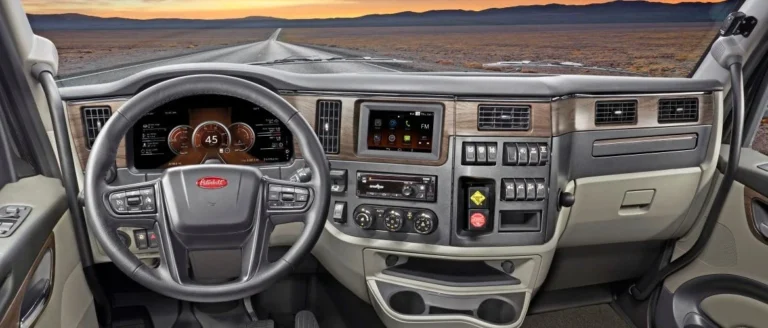
DENTON, Texas — Peterbilt is announcing the availability of the Bendix Intellipark Electronic Parking Brake (EPB) System on its Class 8 and medium duty products.
“Safety is a core value and part of Peterbilt’s culture,” said Erik Johnson, Peterbilt assistant general manager, sales & marketing. “The Electronic Parking Brake advanced functions and custom interlocks are the latest in several Peterbilt standard and optional driver-assistance features available to assist our customers in mitigating potential driving risks.”
Designed to enable electronic safety interlocks, the EPB features advanced functions including:
- Rollaway mitigation: Automatic application of the parking brakes on both the vehicle and trailer if the driver exits the vehicle without setting the parking brake.
- Auto Trailer brake disengagement: Automatic release of the trailer brakes when tractor movement is detected.
- Smart Unpark: Utilizes interlocks to confirm the vehicle is ready to be parked or unparked through sensors that monitor door position, seat belt status and vehicle movement.
Electronic Parking Brake
“With ergonomic, easy-to-actuate switches and clear status indication, the new EPB offers an intuitive operation,” Peterbilt said. “Other core features include quieter valve operation due to electronic activation, less parts complexity for ease of maintenance, as well as the availability of actionable information for analysis and future driver training.”
According to a Peterbilt press release, Bendix emphasizes that advanced technologies, including the Bendix Intellipark Electronic Parking Brake System, complement safe driving practices.
“No commercial vehicle safety technology, including Bendix safety technologies, replaces a skilled, alert driver exercising safe driving techniques and proactive, comprehensive driving training,” the release said. “Responsibility for the safe operation of the vehicle remains with the driver at all times. Never wait for the system to intervene. Every driver should carefully review the operator’s manual and be trained by the fleet or vehicle owner on the proper operation and limitations of the ADAS system during operation.”

Dana Guthrie is an award-winning journalist who has been featured in multiple newspapers, books and magazines across the globe. She is currently based in the Atlanta, Georgia, area.