





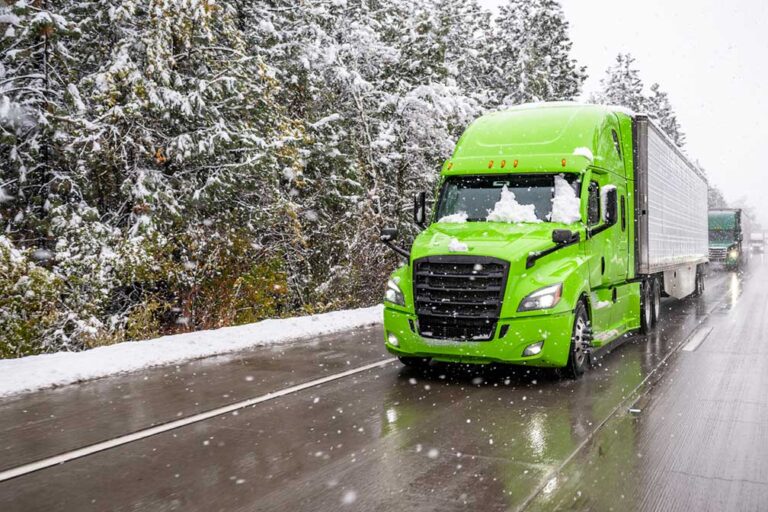
In life, some lessons are best learned the hard way. When it comes to diesel engines and winter, however, those hard lessons might mean being stranded in the worst of weather conditions, a late delivery and loss of a day or two of work (and pay).
In extreme cases, frostbite and even death are possible. That’s why understanding how diesel fuel reacts to cold weather and what you can do about it can be critical to keeping your truck rolling and producing revenue.
Even if the weather is still warm along your routes, don’t wait until Old Man Winter strikes in earnest to protect your engine from damage that can be caused by below-freezing temperatures.
A good starting place is understanding the fuel itself.
Diesel fuel contains paraffin wax. It’s a hydrocarbon that helps increase the energy content of the fuel. If you’re old enough, you might remember a thin coating of paraffin used to seal jars of homemade jelly, but it’s also used in spa treatments, as a preservative coating on fresh fruits and vegetables, and to make candles and wax figurines.
Paraffin is susceptible to temperature changes. That’s why candles are solid objects — at least until heat from a burning wick melts the wax, changing it to a liquid form.
The type of paraffin in diesel fuel stays mixed until the fuel is cooled. In cold weather, the paraffin begins to crystalize, giving the fuel a cloudy appearance. This is called the “cloud point.” How cold it has to be before you reach the cloud point depends on the type and quality of fuel and what additives it contains.
The next step in the process is gelling, when the paraffin crystals begin clumping together (think of the pulp in a glass of orange juice). These wax clumps can quickly clog up fuel filters, blocking the flow of diesel to the engine. If the truck isn’t running, fuel that’s already in the fuel lines can gel, forming a sludge that can’t be pumped through injectors. It can take days in a warm garage for the fuel to re-liquify and allow the engine to run.
Another problem with any fuel is water. While truck stops usually take the blame for water in fuel, the condition is usually caused by condensation in the fuel tanks. As fuel is withdrawn, air is allowed in to replace it. When temperatures drop, moisture in the air forms droplets, much like the condensation on a cold glass of your favorite beverage. Water droplets in fuel can freeze and particles of ice can clog filters and injectors.
Strategies exist to help prevent gelling and other cold-weather issues.
Fortunately, fuel retailers prepare for colder weather by either mixing additives that lower the cloud point of the diesel and absorb water or by blending the fuel with kerosene (labeled as #1 Diesel), and sometimes both. This practice can vary in different areas, however — so the fuel you bought in a southern state may not be blended to handle the cold as you travel northward.
A feature of the truck’s fuel system also helps combat the lower temperatures. To make sure that enough fuel is always available to meet engine demands, more fuel is pumped to the engine that is normally needed. The amount injected into the cylinders is closely controlled by an electronic control module and the excess is returned to the fuel tank. In the process, the unused fuel is warmed by heat from the engine, and it helps warm the fuel in the tank when it is returned.
These measures are not foolproof.
While additives lower the cloud point of the fuel, they don’t prevent it altogether. If it gets cold enough, gelling WILL occur, and the warming effect of the fuel return line only helps so much.
Fuel tanks are often exposed to cold winds and difficult to keep warm. Trucks that are parked for any length of time may not start at all. Trucks that seem to be running fine can begin sputtering or “cutting out,” a sign that fuel delivery to the engine is being restricted.
The safest practice is to carry spare fuel filters (along with the tools needed to change them), as well as bottles of diesel additives during months when encountering winter weather seems likely.
Some company drivers might feel like changing filters is the job of the maintenance department, but that’s a foolish attitude. When the engine isn’t running, there’s no heat for the cab. Service trucks can be delayed by the number of calls during a winter storm. The ability to change a fuel filter could be a critical skill when the weather is at its worst.
Diesel additives typically come in two forms:
- Those that help prevent diesel gelling; and
- “Emergency” treatments that reliquefy gelled fuel.
It’s a good idea to carry both — and both are widely available at truck stops, farm supply stores and other retailers.
When added to the fuel tank, additives like Howe’s Diesel Treat, Lucas Anti-Gel or Power Service Diesel Fuel Supplement lower the cloud point of the fuel and help remove water that can form ice crystals. If you’re unsure about the last fuel you purchased, or if unusually cold temperatures are expected, these products and others like them can improve your confidence that your vehicle will run strong when needed.
Emergency treatments like Howe’s Diesel Lifeline or Power Service Diesel 9-1-1 are must-have supplies for winter weather. These additives can dissolve crystalized paraffin, turning it back to liquid so that it remixes with diesel fuel and flows through filters and fuel lines.
When a new fuel filter isn’t available, filling the old one with emergency treatment and allowing a little time for it to work can liquify the contents, rendering the filter usable again. When the engine is cranked, the additive in the filter gets sucked through fuel likes, helping eliminate any problems there, too.
When winter weather turns severe, fuel icing and gelling can cause problems at the worst times, jeopardizing your delivery and even your life. Make sure your vehicle can get the job done by knowing what fuel you’re buying, stocking the right additives and by having the equipment and knowledge to change fuel filters when necessary.

Cliff Abbott is an experienced commercial vehicle driver and owner-operator who still holds a CDL in his home state of Alabama. In nearly 40 years in trucking, he’s been an instructor and trainer and has managed safety and recruiting operations for several carriers. Having never lost his love of the road, Cliff has written a book and hundreds of songs and has been writing for The Trucker for more than a decade.





fully agree safely navigate through these weather conditions and know your vehicle capabilities