WASHINGTON — The American Trucking Associations is applauding the passage of the National Defense Authorization Act that includes language for which ATA strongly advocated.
“This bill requires military installations to provide restroom access to truck drivers delivering munitions for DoD and includes several provisions intended to address waste, fraud, and abuse in the transportation of military freight,” said Mike Matousek, director of the ATA Government Freight Conference. “Our members provide a vital service to DoD, and these reforms should improve highway safety, national security, and our partnership with a customer that our carriers are honored to serve. We appreciate Reps. Sam Graves and Derek Schmidt for their leadership on these issues, our GFC members for their continued advocacy efforts, and HASC and SASC for their consideration and support.”
Supporting Truckers
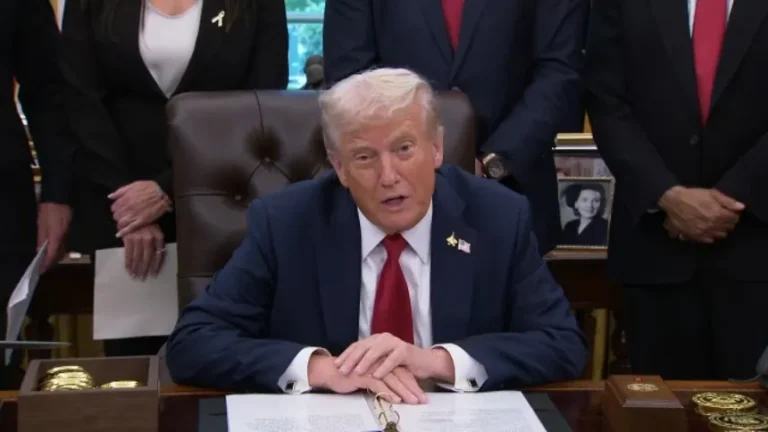
The ATA is supporting the move to enhance national security, support truck drivers and add transparency and efficiency to the process of moving military families. President Trump signed the bill on Dec. 18.
“In spite of the increasingly challenging political and legislative environment, ATA continues to grind out wins for the trucking industry,” said Henry Hanscom, ATA’s senior vice president of legislative affairs. “Truck drivers and motor carriers are critical to our national security, delivering military personnel and supplies where they need to be safely, securely, and on time. The significant reforms that ATA successfully secured in the annual defense bill will strengthen this essential partnership between trucking and the Pentagon.”
Moving and Storage Industry
“The moving and storage industry is indispensable to military readiness, yet recent actions by DoD have made it increasingly difficult for our members to serve the brave men and women in our armed forces,” said Dan Hilton, executive director of the ATA Moving and Storage Conference. “Our industry takes pride in facilitating hundreds of thousands of seamless moves each year, relocating military families and their possessions wherever and whenever duty calls. We appreciate Congress’ willingness to listen to our concerns and address these issues by enacting measures that will improve the process of military moves and ensure proper oversight is in place.”
Enhancing National Security
According to the ATA the bill:
- Requires DoD to establish a complaint process for government and industry stakeholders to notify the Department of potential noncompliance with federal laws and agency rules regarding the transportation of military freight.
- Requires the DoD to provide training to Transportation Officers and industry service providers that use the Global Freight Management system.
- Gives the Commander of Surface Deployment and Distribution Command authority to override improper or excessive actions against a transportation service provider by a military installation.
- Requires DoD to audit the Freight Carrier Registration Program to ensure that service providers have active DOT operating authority, and that users of the system can easily identify asset-based carriers and freight brokers.
Mandating Restroom Access for Munitions Haulers
According to the ATA, the bill requires DoD to provide restroom access to truck drivers that haul arms, ammunition, and explosives and are required to enter a secure hold or safe haven parking location at a military installation. The restrooms are required to be well lit, address gender specific needs and be located near the parking areas. It also requires DoD to create a process for drivers and carriers to notify the agency of potential noncompliance.
Improving Relocation of Military Families
The bill contains a provision establishing the Defense Personal Property Management Office under the Office of the Under Secretary of Defense for Personnel and Readiness. The Secretary of Defense will be tasked with deciding where the DPPMO will be located within the Department of Defense and will be required to brief Congress on his plan.
Setting Benchmarks for Relocation Contracts
“The bill adds oversight requirements following the failed Global Household Goods Contract, which DoD cancelled in June 2025,” ATA said. “GHC was a sole-source contract for the movement of service members and their families from one duty station to another that was plagued by poor planning and implementation and failed to account for the economics of the moving and storage industry meant to support the contract. The bill requires any future contracts to ensure that moving and storage companies can support military readiness and ensure the safe, reliable transportation of the possessions of military families.”
Studying the Adequacy of Reimbursement Costs
The bill requires a report to Congress on the adequacy of reimbursement for expenses incurred by service members undergoing a permanent change of station. This report will provide helpful insights into these costs for military families and the armed services.
Additionally, the bill will help improve the relocation processes and services available for Coast Guard permanent changes of station by mandating a study of the current process. The report must include an evaluation of the “effectiveness of using contracted movers” for these moves, including the estimated costs associated with:
- Lost/damaged personal property.
- Delays in scheduling these moves through a contracted mover.
- Delayed deliveries.
- Other related challenges, along with recommendations to improve the Coast Guard’s permanent change of station process.

Dana Guthrie is an award-winning journalist who has been featured in multiple newspapers, books and magazines across the globe.