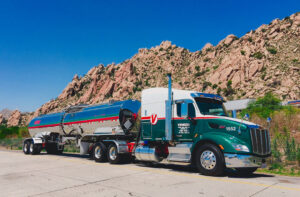





Each day, it seems, there’s a news story about a crash involving a semi-truck.
While concern for the safety of the parties involved is paramount, another thought is often top of mind for motor carriers: “I hope that wasn’t one of MY trucks!” — often followed by, “Ouch — someone’s insurance rates just went through the roof.”
Does this sound a little cold-hearted? Perhaps — but when you also factor in headlines about staged crashes targeting big rigs — often resulting in lawsuits and exorbitant settlements — it’s more likely that industry stakeholders are simply working to protect themselves and their companies.
Depending on the type of cargo hauled, motor carriers are required by the Federal Motor Carrier Safety Administration to carry liability insurance ranging anywhere from $750,000 to $5 million. The premiums on such policies are not inexpensive.
How can carriers ensure they’re getting the best rates possible? It helps to know what insurers look for. We talked to experts with Sentry Insurance and All Solutions Insurance to find out.
Of course, a carrier’s claims history, CSA scores, driver hiring practices, equipment, cargo and routes all play a role, but there are other considerations as well.
“Managing risk is not just about safety,” said Sarb Gill, account executive for All Solutions. “It is a critical factor in securing better insurance rates and maintaining long-term profitability.”
Risk Factors & Loss Ratio
A company’s loss ratio over an extended period of time is one of the most telling signs when determining risk, according to Steve Bojan, director of transportation safety/loss control for Sentry.
“At the end of the day, when we talk about safety, we look at what you’re doing — but we look at your losses,” he said. “And we want to get a good picture of what’s going on. At about a year, you start to see the losses develop and you can see from an insurance standpoint where you’re going to be.”
Training Protocols
In addition to employing drivers with favorable safety records, it’s important for trucking companies to implement systems for onboarding and training their new hires.
“New hires need that onboarding, and it needs to be longer than a day. We expect at least a couple of days,” Bojan said, adding that training doesn’t end after orientation; it should be an ongoing process.
“Investing in structured safety and training programs is essential,” Gill added. “No two drivers are trained the same way, and ensuring that company safety protocols align with driver practices is key to reducing accidents.”
Once drivers have been vetted, successfully completed orientation and placed behind the wheel of a truck, training should continue. Regulations change, technology evolves and, of course, drivers have accidents. Why else would “million-mile” driver rewards programs provide such an incentive for safe practices on the road?
Drivers with crashes or other violations should be retrained, according to Bojan. In addition, he says, that training should be more than just a case of, “Well, I talked to him.”
“Really? What did you talk about? How did you coach him,” he said. “Did you do anything to teach them your expectations? Did you give them tools to not do this again?”
Don’t Delay or Fail to Report Claims
One mistake drivers, and even carriers, may make is thinking that if a crash isn’t reported to insurance, it’s not going to count against their record.
“Delayed or unreported claims can also negatively impact insurance rates, as carriers may be forced to seek coverage while managing open claims,” Gill said. “(This) could lead to higher rates on renewal or declinations by most insurance companies.”
Gill agreed. “A minor fender bender today could escalate into a heavily litigated case years later if not properly documented,” he said.
“The worst thing that can happen is getting a call like this: ‘Hi, I’m (insert name here) with the law firm of (insert name here), and your truck hit my client six months ago,’” Bojan said.
The first thing an insurer will do is check the original claim report. If that report doesn’t exist … well, it’s not good.
“You can’t go back and re-create this (record) — and you know, that perjury thing is bad,” Bojan said. “It’s really important that we [as the insurer] know that your drivers know to report stuff, that staff knows how to handle it.”
Use of Technology
“One of the most effective ways for motor carriers to mitigate risk is by installing cameras on all units from multiple angles,” Gill said. “Side-swipe accidents are among the most common claims in the industry and often become contentious disputes.”
The ability to review video evidence gathered before, during and following a crash or other incident can help insurers quickly determine liability. In the case of litigation, this evidence provides concrete proof of the events.
In addition, fleets can take advantage of safety features available for Class 8 tractors, such as automatic emergency braking, blind-spot monitoring, lane-keep assist and more.
However, Bojan says carriers should be realistic in their expectations of the tech and shouldn’t overlook the human factor in safety.
“We put in a telematics system in 1998, and it was gonna take care of everything,” said Bojan, who began his career at a trucking company.
“It was gonna revolutionize — it was gonna drive the trucks. I think it was gonna make the drivers breakfast,” he said with a laugh. “And it never really worked out that way. So, understanding what the technology can do and how to use it effectively is huge.”
The Right Coverage Counts
Finally, it is vital that motor companies do their due diligence when selecting a policy, Gill noted.
“Before finalizing your coverage, verify that all the commodities you typically haul are accurately listed and covered, all drivers are scheduled with the appropriate experience and all units are valued correctly,” he said.
“Be sure to review coverage limits for essential areas such as towing, storage, debris removal and earned freight,” he continued. “Taking the time to thoroughly assess these details up front can help minimize gaps in coverage and prevent costly surprises down the road.”
This story originally appeared in the May/June 2025 print edition of Truckload Authority, the official publication of the Truckload Carriers Association.

Linda Garner-Bunch has been with The Trucker since 2020, picking up the reins as managing editor in 2022. Linda has nearly 40 years of experience in the publishing industry, covering topics from the trucking and automotive industry to employment, real estate, home decor, crafts, cooking, weddings, high school sports — you name it, she’s written about it. She is also an experienced photographer, designer and copy editor who has a heartfelt love for the trucking industry, from the driver’s seat to the C-suite.