



NEW YORK — Optimal Dynamics (OD) is launching Scale, the industry’s first Decision-Native Agentic System (DNAS), a new class of software that unifies optimization intelligence and autonomous agents to drive profitable growth, network balance and high service levels.
“As a carrier, the hardest part isn’t finding freight, it’s knowing which freight actually improves your network,” said Karen Smerchek, president at Veriha Trucking. “With Scale, we expect to move from reactive decision-making to a system that continuously tells us where freight is needed ahead of time, and then works the market to secure it. Shifting towards proactive, network-aware procurement will help us stay balanced and profitable as conditions change.”
A Decision Optimization Engine
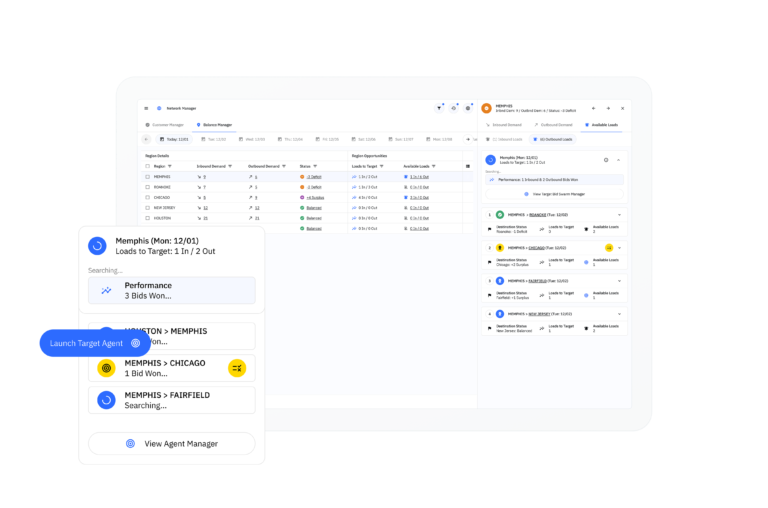
Unlike traditional agentic tools that react to individual requests or operate in isolation, Scale is built around a decision optimization engine that continuously understands a carrier’s network. It identifies where capacity is constrained, where imbalance is developing, and where additional freight is proactively needed to improve utilization, service and profitability, according to OD.
“From that foundation, Scale deploys an always-on, autonomous agentic workforce that operates continuously on a customer’s behalf,” OD said. “It searches, negotiates, bids and procures freight across load boards, direct shipper channels, email and EDI, aggregating opportunities across multiple sources into a single execution layer. This decision-native foundation determines which freight should be secured, from where, and when it should move, to keep the network balanced and ensure every action directly supports the network’s strategic needs.”
Breaking the “Accept Everything” Trap
“In today’s market, the pressure to accept more freight is intense, but accepting the wrong freight creates downstream problems,” said Daniel Powell, CEO, OD. “Carriers don’t just need automation; they need a system that understands their network and proactively works to improve it. Scale makes smarter decisions earlier in the order lifecycle, where imbalance and profit erosion often begin.”
Traditional freight procurement relies on manual effort, gut feel, or reactive tools that treat each load as a standalone decision. Scale replaces this approach with a shared decision system that continuously aligns revenue growth with utilization, service performance, and profitability, according to OD.
“By proactively identifying where freight is needed, and autonomously working the market to secure it, Scale helps carriers avoid costly deadhead, protect service commitments, and grow profitably,” OD said.
Optimization Decides. Agents Act.
“While conventional agents follow learned patterns or scripted workflows, Scale is decision-native by design,” OD said. “Optimal Dynamics’ core optimization engine continuously evaluates opportunities across the entire network. In parallel, the Atlas agentic layer executes the necessary actions by sourcing, negotiating, or declining freight autonomously and at scale.”
This tight coupling of decision intelligence and execution ensures that Scale’s agents are not just fast, but intentional, coordinated and operationally sound, according to OD.
“What excites us most about Scale is the idea of an always-on agentic workforce that’s working for us across load boards, direct channels, and inbound requests at the same time,” said Michael McGovern, COO, Leonard’s Express. “Instead of our team chasing opportunities manually, we expect Scale’s agents to aggregate freight from many places, act autonomously, and secure the loads that align with our network strategy without us having to intervene on every decision.”
Comprehensive Transportation Decision System
“With the launch of Scale, Optimal Dynamics completes the third and most critical component of the industry’s first comprehensive Transportation Decision System (TDS),” OD said. “Together, these components form a decision-native architecture that bridges the gap between optimization and execution by delivering real-time actions that keep carrier networks balanced and profitable.”

Dana Guthrie is an award-winning journalist who has been featured in multiple newspapers, books and magazines across the globe. She is currently based in the Atlanta, Georgia, area.